

The Bitcoin mining industry is entering one of the most complex transition periods in its history. Over the past twelve months, miners have contended with a combination of economic pressure, escalating energy costs, hardware competition, and the rapid rise of alternative compute markets. The result is a reshaping of the mining landscape that extends far beyond short-term profitability cycles. Recent data illustrates this shift with unusual clarity. The hashprice—representing miner revenue per unit of computational power—fell to a fourteen-month low as it dropped below forty dollars per petahash per second. This decline occurred even as Bitcoin’s market price remained near ninety-five thousand dollars, reflecting that revenue compression is primarily driven by elevated global hashrate and sustained competition rather than weak demand for Bitcoin itself.
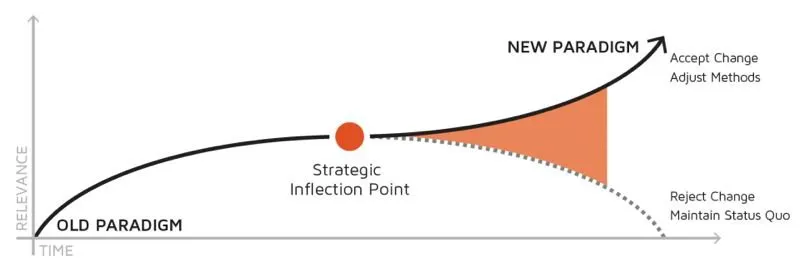
Evidence from research firms and industry publications shows that this profitability squeeze is structural rather than temporary. TheMinerMag, for example, notes that the global hashrate remains historically high, meaning that competition among miners effectively neutralizes the upside from rising Bitcoin prices. The resulting pressure is particularly acute for operators with power-intensive sites, less efficient hardware, or limited access to low-cost electrical infrastructure. These dynamics have triggered accelerated consolidation across the sector, as seen in market analyses from LBank and multiple institutional reports. Firms with superior access to capital, optimized power contracts, and large-scale hosting capabilities are increasingly absorbing smaller operators or expanding their share in deregulated energy markets.
| Region | Avg Industrial Power Cost (USD/kWh) | Hosting Cost (USD/kW-month) | Breakeven Hashprice (USD/PH/s) | Common Strategy |
|---|---|---|---|---|
| North America | $0.045–0.065 | $75–120 | $45–55 | Deregulated markets, renewables |
| Europe | $0.18–0.30 | $150–210 | $80–110 | Hosting-heavy, regulation-sensitive |
| Asia-Pacific | $0.07–0.12 | $95–160 | $60–75 | Hydro & mixed energy |
| Middle East | $0.025–0.045 | $70–110 | $35–45 | Stranded gas, low-cost power |
This consolidation trend aligns with broader research pointing to economies of scale as a dominant competitive factor. Large industrial miners have direct access to wholesale power markets and can negotiate long-term agreements unavailable to smaller facilities. Several case studies from U.S. states with deregulated energy markets show that miners strategically colocate near power generation hubs, leveraging stranded, curtailed, or seasonally surplus energy. Meanwhile, research from ChainUp highlights how miners in the Middle East and parts of Asia are turning to underutilized natural gas resources or solar infrastructure to maintain competitive energy costs. These examples demonstrate how energy geography influences network composition and business sustainability.
Energy, however, is not the only driver of change. One of the clearest signals of strategic realignment emerged when Bitfarms, one of the world’s major mining companies, announced its intention to pivot away from Bitcoin mining entirely by 2027. Reporting from Tom’s Hardware attributes this decision to a forty-six million dollar quarterly loss and the rising opportunity cost of dedicating megawatts of data-center capacity exclusively to mining. The firm plans to transition to AI-oriented compute, leveraging its three-hundred-forty-one-megawatt infrastructure footprint. This shift exemplifies a broader trend: mining infrastructure increasingly resembles general-purpose high-density compute facilities rather than single-purpose crypto operations. As high-performance computing demand accelerates globally, mining sites with robust cooling, grid interconnections, and modular designs are in a position to serve alternative markets.
This crossover between mining and general compute infrastructure is also reflected in hardware market research. Frost & Sullivan’s recent white paper on global blockchain mining machines highlights expanding demand for specialized hardware used not only for crypto mining but also for artificial intelligence and quantum computing applications. The report argues that the line between mining hardware, accelerators, and high-density compute systems is becoming increasingly blurred. In practical terms, this means that future mining facilities may operate as hybrid environments capable of supporting both proof-of-work hashing and non-crypto workloads during periods of low mining profitability. This trend further indicates that hardware investment decisions are shifting from purely crypto-oriented capital expenditure to more flexible, multi-purpose planning.
As the economic profile of mining shifts, questions about long-term network security are becoming more prominent. Bitcoin’s design relies on declining block rewards, with transaction fees eventually serving as the dominant incentive for miners. Academic research published on arXiv examines the statistical properties of mempool activity and its relationship to miner incentives in periods of volatile block rewards. The findings indicate that as rewards diminish, the distribution of fees and the congestion of the network will materially influence miner behavior. This transition has significant implications for both network economics and public policy. If mining incentives weaken, security risks may rise, affecting users, infrastructure providers, and policymakers tasked with overseeing digital asset markets.
The approach of this “transaction-fee era” adds complexity to miners’ strategic planning. Profitability will no longer depend solely on hardware efficiency or energy price, but also on the variability of transaction volume and fee-market behavior. This shift introduces new forms of risk, particularly for miners located in regions with high fixed operating costs or rigid regulatory environments. For example, miners operating in jurisdictions with strict carbon accounting requirements or limited access to flexible energy markets may find it difficult to maintain competitive margins as block subsidies decline. Research from multiple policy institutes shows that ESG considerations increasingly affect mining site selection, influencing both public perception and regulatory requirements. As energy-intensive industries face heightened scrutiny, mining firms are pressured to demonstrate carbon-offset strategies, renewable power sourcing, or grid-stabilization benefits.
Hosting emerges as another strategic dimension in this evolving landscape. Reports from Soluna show that hosting—where miners lease rack space or power capacity rather than constructing their own sites—is becoming more attractive as capital intensity rises. Hosting allows firms to scale more sustainably and respond to market conditions without tying their performance to infrastructure ownership. For hosting providers, mining becomes part of a broader portfolio of compute services, aligning with the growing trend of modular data centers capable of shifting between various compute workloads. This model supports risk diversification and positions hosting operators to expand into AI or high-performance computing markets.
Meanwhile, global distribution of mining continues to shift. United States regions with deregulated power markets have become dominant due to access to competitive electricity prices and advanced grid interconnections. States such as Texas benefit from large-scale renewable generation, flexible demand-response programs, and direct wholesale market access. At the international level, Middle Eastern countries emphasize stranded natural gas utilization, which reduces flaring while providing miners with consistent low-cost power. These developments reflect a broader policy and energy infrastructure context that shapes mining economics. Jurisdictions with regulatory clarity, energy market flexibility, and renewable expansion strategies stand to attract increased mining investment, while regions with restrictive policies or high retail electricity costs are likely to contract.
The profitability squeeze raises additional questions about the lifecycle of mining hardware. ASIC miners, designed for maximum hashing efficiency, require substantial upfront capital. When hashprice declines, older-generation machines quickly become uneconomical. Several industry analyses show that mining hardware lifespans are shortening, driving demand for rapid-cycle hardware upgrades or refurbishment programs. This trend places pressure on supply chains and affects broader semiconductor industry dynamics. The Frost & Sullivan report notes that ASIC production increasingly overlaps with supply for other accelerated compute markets, suggesting that mining hardware may play a secondary role in broader semiconductor investment patterns.
Case studies from the United States, Canada, and Kazakhstan show how miners adapt in response to grid constraints or policy changes. In several U.S. states, utilities have begun requiring miners to participate in load-flexibility programs, curtail operations during peak demand, or justify grid-upgrade contributions. These developments underscore that mining is no longer viewed as an isolated activity but as an integrated part of regional energy and infrastructure planning. In some regions, strategic partnerships between miners and renewable-energy developers help stabilize project economics. In others, concerns about grid stress lead to regulatory hesitation or moratoriums.
Looking ahead, the mining industry is likely to continue shifting toward infrastructure flexibility, energy optimization, and capital discipline. Hashprice volatility may increasingly encourage firms to maintain diversified revenue streams. AI data-center demand, HPC workloads, and cloud hosting represent adjacent markets that miners can access with relatively modest architectural adjustments. At the same time, Bitcoin’s security model will continue to rely on a robust and geographically diverse mining ecosystem. Policymakers and institutional users must account for these dynamics when considering the long-term reliability of the network.
The next five years will test the industry’s ability to adapt to economic pressure, regulatory scrutiny, and technological convergence. While profitability cycles will remain part of the sector’s identity, the structural shifts underway—energy geography, consolidation, diversification into HPC, and long-term security considerations—suggest that mining is evolving beyond its original scope. As Bitcoin becomes more integrated into institutional and global economic systems, mining will operate increasingly as a component of the broader digital infrastructure economy.
Key Takeaways:
• Declining hashprice and elevated competition are driving structural profitability pressure across the mining industry.
• Energy geography has become a decisive factor, with deregulated markets and stranded-energy regions gaining importance.
• Mining infrastructure is transitioning toward flexible, multi-purpose compute capacity, including AI and HPC workloads.
• Hosting models are expanding as capital intensity and deployment risk rise.
• The approach of the transaction-fee era introduces new incentive and security considerations for the Bitcoin network.
Sources:
• TheMinerMag: Bitcoin Hashprice Sinks to 14-Month Low Below $40/PH/s as BTC Falls to $95K – Link
• Tom’s Hardware: Major Bitcoin mining firm pivoting to AI, plans to fully abandon crypto mining by 2027 – Link
• Frost & Sullivan: 2025 Global Blockchain Mining Machine Industry White Paper – Link
• LBank: Bitcoin Mining in 2025: Supply, Security, and Market Trends – Link
• ChainUp: The State of the Crypto Mining Industry in 2025 – Link
• Soluna: What Mining Disrupt 2025 Revealed About the Future of Bitcoin – Link
• arXiv: Bitcoin Under Volatile Block Rewards – Link