

The Internet of Things has redefined how cities operate, integrating data, devices, and digital infrastructure into everyday governance. In 2025, the leading connected cities show that success depends not just on technology, but on coordination, inclusivity, and trust. IoT is now the invisible layer that powers mobility, energy, and sustainability systems, turning cities into responsive digital platforms.
 1. Zürich, Switzerland
Zürich is one of Europe’s most data-driven cities, and its IoT strategy is tightly linked to utility management and energy efficiency. The municipal utility, ewz, operates a LoRaWAN network covering nearly the entire metropolitan area, enabling connected devices for public lighting, waste bins, water systems, and parking sensors. These data streams converge into an integrated dashboard that city planners use to optimize routes, reduce emissions, and monitor real-time infrastructure performance.
The city’s smart-district model, particularly in Zürich-West, combines high-speed connectivity with sustainable architecture and transport automation. Collaboration between startups, academia, and the city government allows Zürich to test and deploy technologies quickly while maintaining strict privacy and governance standards. Its approach emphasizes that IoT success relies not only on devices but on institutional alignment that allows data to become actionable policy.

2. Singapore
Singapore’s Smart Nation program remains one of the most comprehensive government-led digital transformations in the world. The city-state’s Open Digital Platform integrates sensors across buildings, utilities, and transport, forming a living network of real-time data that underpins urban operations. The government uses this network to anticipate energy needs, monitor public health, and manage traffic congestion.
A hallmark of Singapore’s approach is inclusivity—digital systems are designed to serve citizens first. Public housing developments feature sensor-enabled homes that track energy efficiency and improve accessibility for the elderly. City planners test urban digital twins before deploying infrastructure changes, reducing costs and disruptions. This national-level governance model illustrates how IoT, when paired with institutional foresight, can scale sustainably across all aspects of urban life.

3. Tokyo, Japan
Tokyo’s dense infrastructure and aging population make it a natural laboratory for IoT innovation. The city’s technology ecosystem supports thousands of connected systems across transport, waste, utilities, and healthcare. Sensors embedded in buildings monitor structural health, while the Tokyo Metropolitan Government’s data platform aggregates urban data for predictive modeling and service optimization.
Tokyo’s success lies in applying IoT to societal challenges rather than novelty projects. Autonomous buses, adaptive traffic lights, and AI-driven energy grids improve daily operations in ways that citizens notice. By integrating smart systems into the existing urban fabric, Tokyo demonstrates how large legacy cities can modernize without rebuilding from scratch. The focus is on precision and reliability—core values in Japan’s broader digital strategy.

4. Amsterdam, Netherlands
Amsterdam pioneered the concept of open data and citizen co-creation in smart cities. The Amsterdam Smart City platform links citizens, researchers, and technology providers to jointly develop solutions for air quality, mobility, and resource management. Its IoT networks collect data from public lighting, parking systems, and waterways, helping authorities respond to environmental changes in real time.
What distinguishes Amsterdam is its emphasis on openness and human-centered design. Projects are designed to align with local needs rather than top-down mandates, and results are shared publicly to encourage replication. This model has made Amsterdam a benchmark for participatory digital governance. It shows that IoT adoption succeeds most where technology builds civic trust and transparency, not just efficiency.
5. Dubai, United Arab Emirates
Dubai’s Smart Dubai strategy represents one of the most ambitious efforts to unify all government services under a single digital framework. The city has integrated IoT systems into transport corridors, water management, policing, and healthcare. Public buildings and infrastructure are continuously monitored for performance, while autonomous mobility corridors support next-generation transport initiatives.
Beyond infrastructure, Dubai focuses on creating a data-driven economy. Its Smart Data Initiative encourages private firms to use city data for developing innovative services, from logistics to hospitality. With strong political leadership and rapid policy implementation, Dubai demonstrates the potential of centralized governance in achieving urban IoT at scale. The city’s transformation illustrates how digital infrastructure can become the foundation of a modern economic strategy.

6. London, United Kingdom
London has built one of the most extensive IoT networks in Europe, linking environmental sensors, public transport systems, and energy grids through the Connected London initiative. The city’s dense fiber network supports over a million connected devices used for air-quality tracking, waste optimization, and public safety. The real-time data helps authorities address pollution peaks, improve traffic flows, and reduce maintenance downtime.
A defining feature of London’s approach is integration. IoT is embedded within existing infrastructure projects, such as Crossrail and Transport for London’s modernization. Partnerships with private firms have accelerated deployment while keeping oversight under public regulation. London’s strategy reveals how cities with complex regulatory environments can still innovate through adaptive, layered governance.

7. Stockholm, Sweden
Stockholm’s digital ecosystem ties IoT closely to environmental sustainability. The city’s Smart and Connected Communities initiative links smart grids, public transport, and housing developments through an open data architecture. By combining IoT with renewable energy systems, Stockholm reduces emissions while improving energy efficiency across the urban core.
Its regulatory environment encourages interoperability and open standards, making it easier for startups and civic developers to plug into municipal networks. The city’s public digital twin enables testing of environmental policies virtually before implementation. Stockholm’s focus on inclusivity ensures that technology supports welfare goals—connecting IoT deployment directly to public well-being and climate resilience.

8. Abu Dhabi, United Arab Emirates
Abu Dhabi has quietly built one of the Middle East’s most cohesive IoT ecosystems. Its digital governance model integrates utilities, water, and energy into a shared analytics framework managed by its Smart City Command Center. This allows predictive maintenance of public infrastructure and proactive energy management, reducing both cost and downtime.
The city’s strength lies in its platform-first design. Instead of isolated pilots, Abu Dhabi has pursued system-wide interoperability, ensuring that every sensor contributes to a unified urban intelligence layer. Its approach shows how emerging smart cities can leapfrog traditional development paths by building digital infrastructure before legacy systems take root.

9. Geneva, Switzerland
Geneva’s urban strategy centers on coordination and integration. The city’s IoT architecture connects public transport, waste management, and utilities to a shared data platform managed by municipal agencies. This allows real-time monitoring and cross-department collaboration, improving efficiency without expanding bureaucracy.
Geneva’s experience highlights the power of governance in digital transformation. Rather than pursuing isolated high-tech projects, the city aligns IoT with environmental and public-service goals. The result is a stable and transparent system that scales gradually but reliably—a model suited for medium-sized cities aiming to achieve high digital maturity without overextension.
10. Oslo, Norway
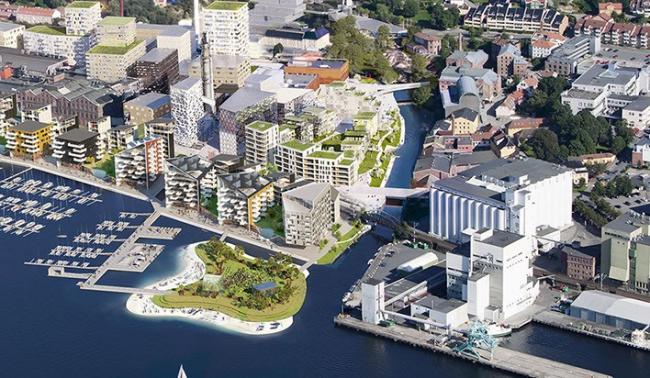
Oslo’s IoT ecosystem combines digital innovation with its strong sustainability agenda. The city has connected lighting networks, smart waste management systems, and mobility hubs that share data to optimize urban operations. Environmental sensors continuously monitor air quality, energy consumption, and traffic density, guiding urban policy toward measurable outcomes.
The city’s emphasis on public-private partnership allows broad experimentation without compromising standards. Oslo’s 5G and fiber infrastructure provides the backbone for these services, while open-data frameworks enable civic innovation. The integration of IoT with its zero-emissions goal makes Oslo a model for environmentally conscious connectivity—showing how technology and sustainability can evolve together.