
Digital markets expanded under a model in which governments used fiscal restraint and regulatory leniency as instruments of economic development. Tax moratoriums, exemptions for digital trade, and permissive regulatory environments encouraged the rapid scaling of online platforms and increased consumer participation in global digital markets. By 2022, e-commerce sales across 43 major economies reached approximately 27 trillion dollars, up from 17 trillion dollars in 2016, according to UNCTAD. These figures reflect how policy choices shaped a maturing digital economy.
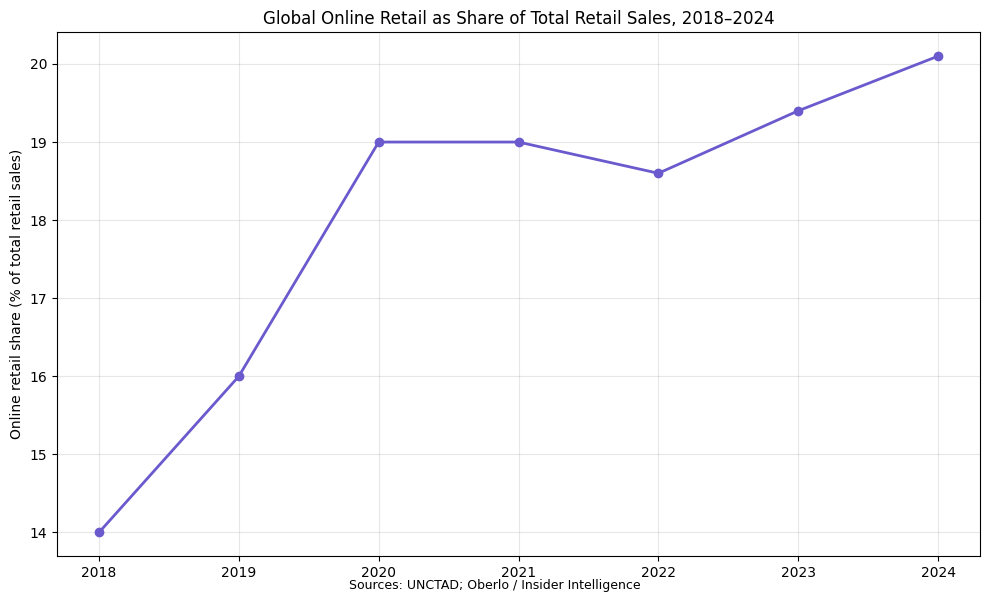
Yet the long-run implications of these early policies include a fragmented global regulatory structure, weakened consumption tax bases, and widening asymmetries between regions with differing digital capacities. As digital activity becomes central to economic output, governments are reassessing long-standing exemptions and exploring calibrated approaches that balance growth with predictable governance and sustainable public finance.
| Economy | Year Adopted | Foreign Supplier Threshold | Marketplace Liability | Region |
|---|---|---|---|---|
| European Union | 2015 (expanded 2021) | No minimum | Yes | Europe |
| Australia | 2017 | AUD 75,000 | Yes | Asia-Pacific |
| New Zealand | 2016 | NZD 60,000 | Yes | Asia-Pacific |
| Japan | 2015 | JPY 10M | Partial | Asia-Pacific |
| South Africa | 2014 (revised 2019) | ZAR 1M | Yes | Africa |
| Mexico | 2020 | No minimum | Yes | Latin America |
Tax Moratoriums and the Early Digital Growth Model
Understanding how the digital economy evolved requires examining the early fiscal and legal structures that shaped its development. Tax moratoriums and tariff exemptions played central roles in reducing market frictions and accelerating adoption.
The United States: Internet Access as a Subsidized Good
The Internet Tax Freedom Act (ITFA), first enacted in 1998 and later made permanent, prohibits state and local governments from taxing internet access services. Economically, this policy reduces consumer prices by preventing any form of broadband-specific levy. Broadband adoption rose from about 41 percent of households in 2000 to more than 92 percent by 2023, supported by declining real prices and widespread infrastructure expansion.
However, treating internet access as tax-exempt restricts state fiscal capacity. Broadband deployment requires substantial investment, with Federal Communications Commission estimates placing universal high-speed coverage at 60 to 80 billion dollars. States cannot levy targeted broadband taxes, forcing reliance on the Universal Service Fund (USF), an industry-funded mechanism contributing roughly 8 billion dollars annually. This financing method places the cost burden disproportionately on communications users rather than progressive tax systems.
The long-term effect is a divergence between national digital priorities and subnational fiscal capability. States with geographically dispersed populations face higher per-capita deployment costs yet possess fewer tools to raise revenue, shaping regional differences in broadband availability and quality.
The WTO E-Commerce Moratorium: Zero Tariffs by Design
The WTO moratorium on customs duties for electronic transmissions has preserved tariff-free digital trade for more than two decades. Digitally delivered services accounted for more than 54 percent of global services exports in 2023. The moratorium supported predictable conditions for cross-border investment and enabled the emergence of internationally integrated cloud, software, and digital services markets.
Advanced economies benefited significantly, with the United States exporting more than 625 billion dollars in digitally delivered services in 2023. This reflects how tariff stability encouraged global scaling.
For developing economies, however, the moratorium restricts potential customs revenue. Institutional estimates suggest that lifting the moratorium may generate between 4 and 10 billion dollars annually in tariff revenue, much of it accruing to lower-income countries reliant on customs duties. The uneven distribution of benefits and constraints has intensified debate about the long-term viability of the policy.
The Economic Costs: Eroded Tax Bases and Competitive Distortions
As digital transactions expanded, longstanding assumptions underpinning consumption tax systems and competitive structures proved increasingly insufficient. The fiscal and market implications have become more visible as digital reliance grows.
Fiscal Pressure Across Income Levels
Digital consumption challenges VAT and GST frameworks originally designed for physical goods and domestic establishments. As cross-border consumption grew, significant tax leakage emerged. OECD analysis indicates that during the 2010s, billions in potential consumption tax revenue went uncollected each year because foreign digital suppliers fell outside domestic tax nets.
By 2024, more than 100 jurisdictions implemented destination-based mechanisms requiring foreign suppliers to collect VAT or GST. The European Union’s reforms generated an estimated 7 billion euros in additional annual revenue, demonstrating how formalizing digital taxation can support public budgets without hindering commerce.
Developing economies face administrative challenges in enforcing cross-border VAT collection. Limited digital infrastructure and enforcement capacity restrict revenue recovery, amplifying existing disparities in fiscal resilience and digital readiness.
Competitive Imbalances and Market Distortions
Tax exemptions can distort market competition by favoring foreign e-commerce firms or digital platforms operating under different fiscal obligations. In South Africa, foreign platforms leveraged low-value import exemptions to reduce costs by up to 20 percent relative to domestic retailers, accelerating market penetration and pressuring local firms.
Domestic policy constraints can have similar effects. In the United States, ITFA’s prohibition on broadband taxation prevents states from implementing targeted fiscal tools that might support regional infrastructure projects. This dynamic can entrench regional inequalities and influence investment decisions.
Over time, structural advantages for firms benefiting from exemptions contribute to market concentration. Stronger incumbents may reduce competitive dynamism, posing long-term risks to productivity and innovation.

Regulatory Lag: Innovation Outpacing Governance
Digital innovation has expanded substantially faster than governance structures could adapt, producing regulatory fragmentation and institutional uncertainty. As platforms scaled, a mismatch emerged between technological complexity and regulatory reach.
A Fragmented Response to Rapid Platform Growth
Platform-based business models expanded across sectors that historically operated under discrete regulatory regimes. Ride-hailing, marketplace commerce, fintech, and digital media each pushed against legacy frameworks. OECD research highlights persistent gaps in data governance, algorithmic oversight, and cross-border regulatory cooperation.
These gaps facilitated significant market concentration. The five largest technology firms exceeded a combined market capitalization of 7 trillion dollars by 2022, reflecting both economic dynamism and the absence of early structural constraints. Once mature, markets characterized by network effects become resistant to new entrants, raising barriers and reducing competitive pressure.
Small firms face considerable compliance burdens in navigating fragmented regulatory requirements. The result is a marketplace where incumbents hold disproportionate advantages, influencing economic outcomes well beyond their core sectors.
Movement Toward Structured Digital Regulation
Governments have increasingly adopted comprehensive frameworks to manage digital transformation. The European Union’s Digital Markets Act, Digital Services Act, and forthcoming AI Act collectively represent a shift toward risk-based governance. These frameworks strengthen competition, enhance consumer protections, and align incentives across member states.
Other regions are adopting similar reforms. Australia, Japan, South Korea, and emerging economies in Latin America have introduced new rules addressing platform conduct, data management, and digital taxation. These frameworks reduce uncertainty and improve market predictability for firms.
Structured regulation supports economic stability by integrating digital transactions into standard legal and fiscal systems. This represents a transition away from treating digital markets as exceptional and toward embedding them within national and regional institutions.
| Region | Digitally Delivered Services Exports (2023) | Share of Global Digital Exports (%) | Customs Revenue Share of Total Revenue (%) | Estimated Revenue Loss Under WTO Moratorium (Annual) |
|---|---|---|---|---|
| North America | USD 625B+ | ~30% | < 2% | Low |
| Europe | USD 550B–600B | ~28% | 2–4% | Low–Moderate |
| Asia-Pacific | USD 350B–400B | ~25% | 4–7% | Moderate |
| Latin America | USD 40B–50B | ~3% | 7–12% | Moderate–High |
| Africa | < USD 20B | < 2% | 12–30% | High |
AI Sandboxes: Innovation Incentives with Emerging Safeguards
The rise of artificial intelligence accelerated the need for governance models capable of supporting innovation while addressing systemic risks. AI sandboxes represent a central instrument in this evolving framework.
Singapore’s Principle-Based Governance Model
Singapore’s governance strategy combines voluntary frameworks with public-sector investment in digital capabilities. The Model AI Governance Framework sets expectations for accountability, data integrity, testing, and risk mitigation, enabling firms to align with international standards.
Regulatory sandboxes, supported by the AIDA Grant and related programs, offer controlled environments for experimentation. These initiatives reduce barriers for startups, support talent development, and provide regulators with empirical insights into emerging AI risks. The approach strengthens Singapore’s digital competitiveness while maintaining governance oversight.
The model’s strength lies in flexibility and clarity, though reliance on voluntary adherence may require future legislative reinforcement to ensure consistency across sectors.
The United Kingdom’s “Supercharged Sandbox”
The UK launched a high-capacity AI sandbox through collaboration between the Financial Conduct Authority and Nvidia. Firms gain access to advanced computing infrastructure and regulatory guidance tailored to financial services, a sector contributing more than 10 percent of UK GDP.
The sandbox aims to accelerate productivity gains by enabling rapid testing of fraud detection models, risk analytics, and compliance systems. Regulators benefit from observation of real-world deployment practices, informing future rulemaking around algorithmic accountability and systemic risk.
Potential drawbacks include concerns about privileged access for well-resourced firms and the risk that reliance on sandboxes may delay the development of binding standards where necessary.
| Jurisdiction | Sandbox Type | Regulator Involvement | Data Access Requirements | Testing Scope | Notable Strength |
|---|---|---|---|---|---|
| Singapore | Voluntary regulatory sandbox | High | Guidelines-based | AI risk testing; model evaluation | Strong public-private coordination |
| United Kingdom | Supervised FCA sandbox | Very High | Regulator-approved datasets | Financial services AI; compliance | Advanced compute partnership (Nvidia) |
| European Union | Pilot AI sandbox (AI Act) | High | Strict, risk-tiered obligations | High-risk AI systems | Uniform standards across 27 states |
Regional Perspectives: Comparative Advantages, Constraints, and Emerging Convergence
As digital governance evolves, regional variations reflect differing economic structures, institutional capacities, and developmental priorities. Each region demonstrates a blend of advantages and constraints shaped by policy choices and market conditions.
North America
North America’s digital economy benefits from flexible regulatory frameworks, strong venture ecosystems, and high consumer connectivity. In the United States, ITFA-supported price reductions helped expand broadband adoption and supported digital service exports. The region’s technology sector remains globally competitive, driven by market openness and innovation incentives.
However, constraints emerge from fragmented regulatory systems and limited fiscal tools for addressing regional connectivity gaps. The USF places financial burdens on communications users rather than broad-based tax mechanisms, creating regressive outcomes. Canada’s adoption of digital services tax proposals offers a counterexample, aiming to secure fiscal resilience, but may introduce economic friction for firms operating across an integrated regional market.
The region’s overarching challenge is aligning innovation-driven growth with equitable fiscal and regulatory structures that address digital divides and ensure stability across sectors.
Europe
Europe’s integrated governance framework offers stability, predictable compliance structures, and a harmonized fiscal environment. VAT modernization, platform regulation, and data protection laws create clear expectations for firms. These measures strengthen consumer protections, improve competition, and expand public revenue through enhanced enforcement mechanisms.
The advantages include reduced regulatory fragmentation and strengthened trust in digital markets. Europe’s risk-based AI and platform regulations aim to protect smaller firms and consumers without inhibiting overall technological development.
However, structured governance brings higher compliance costs. Firms operating in multiple EU states must navigate detailed reporting obligations and risk management requirements. Smaller enterprises may face disproportionate burdens, and regulatory rigidity may slow the introduction of emerging technologies if frameworks are not continually adapted.
Asia-Pacific
Asia-Pacific’s digital landscape is shaped by varied economic priorities and governance models. Singapore’s strategy promotes innovation through sandboxes, guidance frameworks, and targeted public investment. This approach attracts global firms, strengthens domestic capabilities, and provides regulatory clarity.
China and India pursue more interventionist models. China emphasizes platform governance, data localization, and national security considerations. These controls support domestic industry development and oversight but may deter foreign investment or constrain market flexibility. India employs a hybrid model that encourages digital entrepreneurship while introducing platform liability and data governance reforms.
Advantages for the region include large consumer bases and rapid digital adoption, supporting economies of scale. Constraints include uneven digital readiness across countries, differing regulatory philosophies, and the potential for overregulation to restrict innovation in some jurisdictions.
Africa and Latin America
Africa and Latin America face distinct structural challenges as they navigate digital transformation. Limited participation in global digital exports and high reliance on customs revenue create tensions with policies such as the WTO moratorium. While tariff-free digital access reduces costs for consumers and businesses, it restricts fiscal space for infrastructure and public-sector investment.
Potential revenue gains from revising moratorium policies are significant for developing economies. Some estimates suggest billions in annual revenue could be captured through modest digital tariffs. However, administrative capacity to enforce digital taxation remains limited, constraining practical implementation.
The long-term benefits of digital openness must be weighed against fiscal needs. Policymakers in these regions increasingly advocate for differentiated global frameworks that support development objectives, strengthen public revenue, and promote more equitable participation in the digital economy.
Conclusion: Rebalancing Growth and Governance
Digital exceptionalism facilitated rapid expansion but introduced long-run fiscal and regulatory challenges. Governments across regions are now integrating digital activity into standard governance systems, reflecting a shift toward more sustainable and balanced digital policy. Structured VAT mechanisms, risk-based AI regulations, digital services taxation, and targeted sandbox environments form the basis of emerging regulatory convergence.
The future of digital governance depends on aligning innovation incentives with fiscal capacity, competitive neutrality, and institutional resilience. This requires clear policy coordination, sustained investment in regulatory capacity, and frameworks that evolve alongside technological change. A stable, equitable, and growth-oriented digital economy will hinge on the ability of policymakers to strike this balance.
Key Takeaways
- Tax moratoriums and permissive regulation accelerated adoption but weakened fiscal capacity and created market distortions.
- The WTO moratorium supported digital trade yet imposed asymmetric constraints on developing economies.
- More than 100 jurisdictions redesigned VAT and GST systems to align taxation with digital consumption.
- AI sandboxes enhance innovation and regulatory learning but may pose fairness concerns without broader governance frameworks.
- Regional digital strategies differ, yet global policy is converging toward structured and risk-sensitive governance models.
Sources
-
UNCTAD; Digital Economy Report 2024 – Link
-
UNCTAD; Business E-commerce Sales and the Role of Online Platforms – Link
-
WTO; World Trade Statistical Review 2024 – Link
-
Congressional Research Service; The Internet Tax Freedom Act and Federal Preemption – Link
-
Center on Budget and Policy Priorities; The Internet Tax Freedom Act and the Digital Divide – Link
-
OECD; Tax Challenges Arising from Digitalisation – Link
-
European Commission; VAT in the Digital Age (Reform Overview) – Link
-
OECD; Regulatory Sandboxes in Artificial Intelligence – Link
-
UK Financial Conduct Authority; AI Sandbox Announcement – Link
-
Monetary Authority of Singapore; Artificial Intelligence and Data Analytics (AIDA) Grant – Link
-
International Institute for Sustainable Development; WTO Moratorium Analysis – Link
-
South Centre; WTO MC13 E-commerce Outcomes – Link