

While robotics is still frequently framed through automation and labor displacement, that framing no longer captures where the technology is actually advancing. Across sectors, deployment is shifting into environments defined less by repetition and more by unpredictability, where systems must operate alongside people rather than in isolation. Global installations of industrial robots have stabilized above 500,000 units annually, yet growth in service robotics is accelerating faster, exceeding 30 percent year-over-year in several segments.
What makes this transition notable is not just scale, but placement. Hospitals, farms, urban corridors, and disaster zones are now active sites of robotics deployment, each presenting conditions that traditional automation struggled to address. In 2024, medical robotics systems expanded sharply, with surgical platforms and assistive devices recording some of the highest growth rates across all robotics categories, reinforcing a broader repositioning of robotics into real-world environments.
Rather than remaining behind factory walls, robotics is becoming embedded in everyday systems, influencing how services are delivered, how risk is managed, and how physical work is structured. That presence feels less mechanical than before and more integrated into how economic systems operate.
Precision in Medicine

Within surgical environments, robotics has moved beyond experimentation into routine infrastructure, with millions of procedures now supported annually and global system installations exceeding 8,500 units. Precision remains central, as robotic platforms convert human input into scaled movements that reduce tremor and variability, particularly in procedures where millimeter-level accuracy determines outcomes.
Because recovery time directly affects cost, hospitals are increasingly evaluating robotics through an economic lens, where minimally invasive procedures have been associated with reductions in hospital stays of up to 20 percent in certain categories. These gains improve throughput and reduce post-operative resource demands, allowing systems to operate more efficiently at scale.
Yet the financial barrier remains substantial. Full system costs frequently surpass $2 million when installation and operational expenses are included, concentrating adoption within large, capital-rich networks while smaller institutions face slower integration due to structural constraints. Robotics is therefore improving outcomes while simultaneously reshaping access to advanced care.
Operating in High Risk Environments
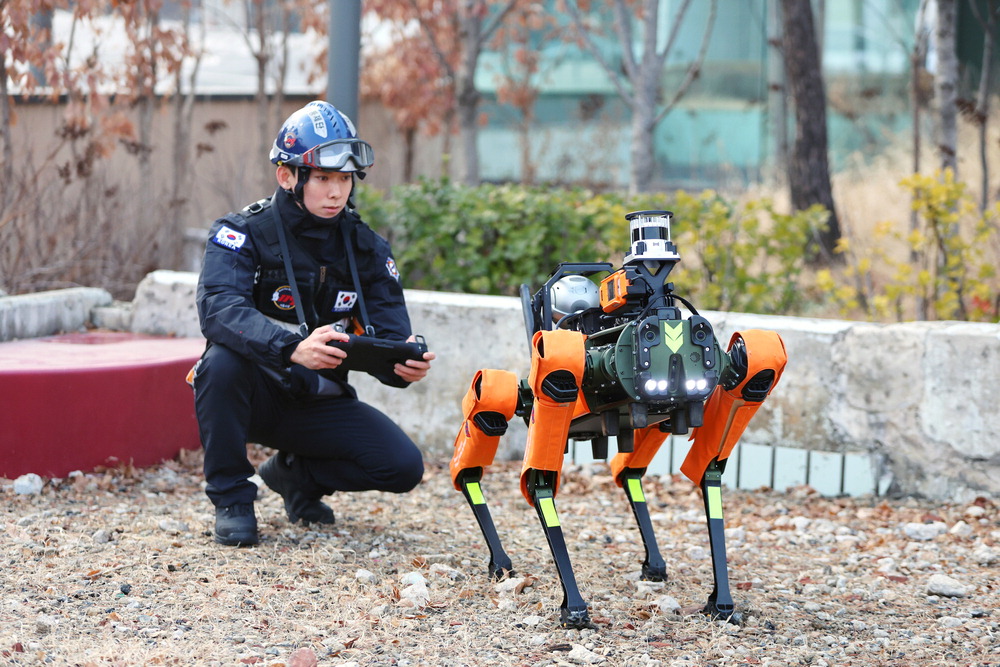
Where conditions become unstable, robotics tends to become indispensable. In nuclear facilities, radiation levels can exceed safe human exposure thresholds by orders of magnitude, making robotic inspection the only viable option for sustained operations. Following major industrial incidents, remotely operated systems have mapped structural damage and contamination in areas where human entry would carry unacceptable risk.
Disaster response reflects a similar pattern. Equipped with thermal imaging and environmental sensors, robotic systems can locate survivors or hazards in environments where visibility is compromised and structures remain unstable. In wildfire monitoring, autonomous systems have reduced response times while limiting exposure for frontline personnel operating under rapidly changing conditions.
The value here is not measured in output per hour but in avoided failure, where reduced downtime, improved situational awareness, and lower liability costs reshape operational planning in sectors where risk carries material financial consequences.
Agriculture and Resource Efficiency

Pressure within agriculture is no longer cyclical but structural, driven by labor shortages, input volatility, and environmental constraints that are forcing a shift toward precision-based models. Efficiency is measured in incremental gains applied across large-scale operations, where even small improvements materially affect output and cost.
Robotic systems equipped with vision and sensor capabilities now apply water, fertilizer, and pesticides with far greater accuracy than conventional methods, with controlled deployments demonstrating input reductions of up to 70 percent in certain crop management scenarios. These improvements translate directly into cost savings while reducing environmental impact, particularly in water-constrained regions.
Market projections reinforce the trajectory. The agricultural robotics sector, valued at approximately $18.6 billion in 2025, is expected to exceed $120 billion within the next decade, reflecting both adoption momentum and structural demand. Larger operations continue to lead adoption, but pressure is spreading across the sector as efficiency becomes a requirement rather than an advantage.
Urban Logistics and Autonomous Movement

Movement within cities is gradually being redefined by systems capable of continuous operation. Autonomous delivery platforms, already deployed in controlled environments such as campuses and planned districts, are completing thousands of deliveries daily, supported by advances in mapping, sensing, and real-time navigation.
Efficiency gains appear modest at the level of a single delivery, yet they accumulate quickly across dense urban networks. Continuous operation, dynamic routing, and system-level coordination allow these platforms to reduce delivery times and operational costs in ways that traditional models cannot easily replicate.
The constraint is not technical capability but integration. Regulatory frameworks, pedestrian safety considerations, and data governance policies continue to shape deployment pace, particularly in complex urban environments where infrastructure and policy must evolve alongside technology.
Adaptive Systems and Learning Integration

Beneath these visible applications, a more fundamental shift is occurring. Robotics is moving away from fixed instruction sets toward adaptive systems capable of learning through interaction, allowing machines to function in environments where variability is constant.
In warehouse operations, robots that once required predefined object models can now identify and manipulate unfamiliar items, reducing setup time while increasing operational flexibility. This shift lowers deployment costs and expands the range of tasks that can be automated, particularly in sectors with high variability.
At the same time, adaptability introduces new layers of complexity. Systems that learn must also be monitored, validated, and governed, particularly in safety-critical applications, requiring new approaches to reliability and oversight as capability continues to expand.
Robotics in Elder Care

Demographic pressure is accelerating demand for alternative care models. By 2030, individuals aged 65 and older are expected to account for more than 20 percent of the population in many developed economies, creating sustained strain on healthcare systems and labor supply.
Robotic systems are being deployed to support mobility, monitoring, and routine tasks, particularly in regions where aging trends are most advanced. Even partial automation in these environments can reduce pressure on staff and infrastructure, improving system-level efficiency while maintaining baseline care standards.
Acceptance remains uneven and influenced by cultural expectations around caregiving. While economic benefits are clear, the integration of robotics into care environments continues to raise questions related to human interaction, autonomy, and long-term care quality.
Automation in Construction

Construction remains resistant to full automation due to its inherent variability, where each project introduces unique environmental and structural conditions that limit standardization. This has slowed the adoption of robotics compared to more controlled industries.
Targeted applications, however, are beginning to reshape workflows. Robotic bricklaying systems can place thousands of bricks per day with consistent precision, while autonomous mapping tools improve planning accuracy and coordination across sites. Additive construction techniques are also reducing material waste and compressing project timelines in specific use cases.
Progress remains incremental rather than uniform, with robotics entering construction through discrete functions that gradually improve efficiency without fully replacing traditional processes.
Robotics in Space Operations
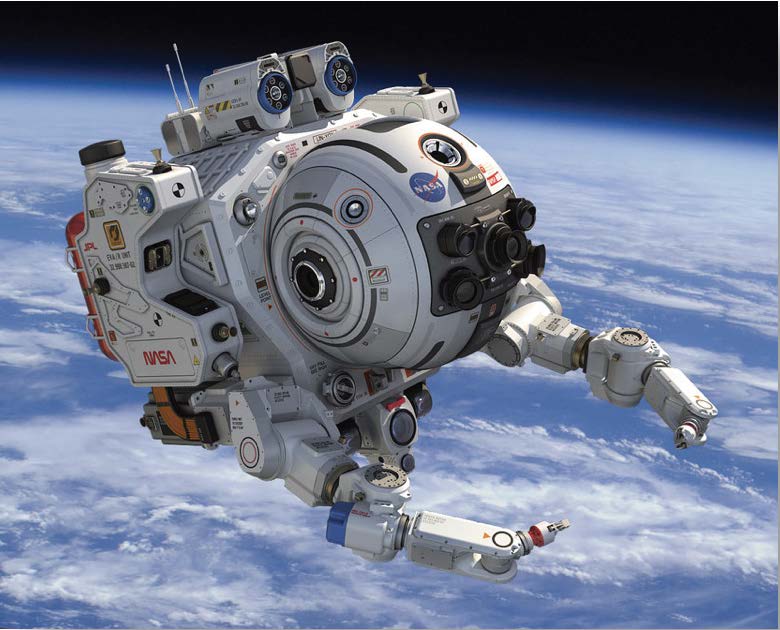
Robots in SpaceIn environments where human presence is constrained by both cost and biology, robotics becomes essential. Autonomous systems now conduct exploration, maintenance, and assembly tasks in space, operating continuously without the limitations associated with human life support.
This capability allows missions to extend in duration while reducing operational costs, supporting both scientific research and commercial infrastructure development. As investment in space continues to grow, robotics is becoming central to sustained activity beyond Earth.
The shift is moving from exploration toward operation, where robotics enables continuity rather than isolated missions, positioning space as an increasingly active economic domain.
Robots in Art & Creativity

Creative industries are beginning to reflect the same structural shifts seen in other sectors. Systems combining robotics with generative algorithms can now produce visual and audio content at scale, often at significantly lower cost than traditional production methods.
Output volume is expanding rapidly, altering supply dynamics in markets where scarcity once defined value. This does not eliminate human creativity but changes its role, shifting emphasis toward direction, curation, and integration within hybrid production models.
As costs decline and output increases, economic frameworks surrounding ownership, valuation, and authorship are beginning to evolve alongside the technology itself.
Human Augmentation Through Exoskeletons
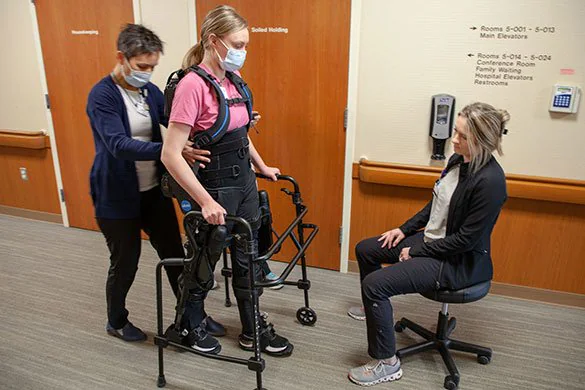
Not all robotics is oriented toward replacement. Exoskeleton systems are designed to enhance human capability, improving strength and endurance in both medical and industrial contexts while reducing the risk of injury.
Industrial deployments have demonstrated reductions in musculoskeletal strain, particularly in repetitive or physically demanding tasks, while medical applications support rehabilitation and mobility recovery for patients. These systems extend human capability rather than substituting it.
This approach reflects a broader shift in how robotics is integrated, emphasizing augmentation and collaboration rather than displacement, particularly in environments where human involvement remains essential.
Conclusion
Robotics is expanding into environments that were once considered incompatible with automation, moving beyond controlled settings into systems defined by variability, interaction, and uncertainty. Across sectors, it is enabling new forms of work rather than simply optimizing existing ones.
The economic impact extends beyond productivity gains. Robotics is reshaping how risk is managed, how resources are allocated, and how systems are structured under constraint, influencing both operational models and long-term planning.
As adoption continues, integration will determine scale. Regulatory frameworks, capital access, and social acceptance will shape how broadly these systems are deployed, positioning robotics as a distributed capability embedded across modern economic activity.
Sources
- •International Federation of Robotics; World Robotics 2024 Service Robots Report; – Link
- • UK Government Office for Science; Robotics and Autonomous Systems: Economic Impact; – Link
- • OECD; OECD Employment Outlook; – Link
- • World Bank; Harvesting Prosperity: Technology and Productivity Growth in Agriculture; – Link
- • Research Nester; Agriculture Robots Market Size & Forecast Report 2035; – Link
- • NASA; Robotics and Autonomous Systems Technology Overview; – Link
- • European Commission; Robotics Policy and Development in the EU; – Link