
You Probably Don’t See It, But Data Science Is Running Everything in Health
Everything. Health care, health outcomes, e-health—everything.
Most people do not associate healthcare with data science, yet it has become one of the most consequential forces shaping how modern medicine actually functions. Behind clinical workflows, patient interactions, and system operations sits an expanding layer of analytical work that increasingly determines what decisions are made, when they are made, and how effective they ultimately become.
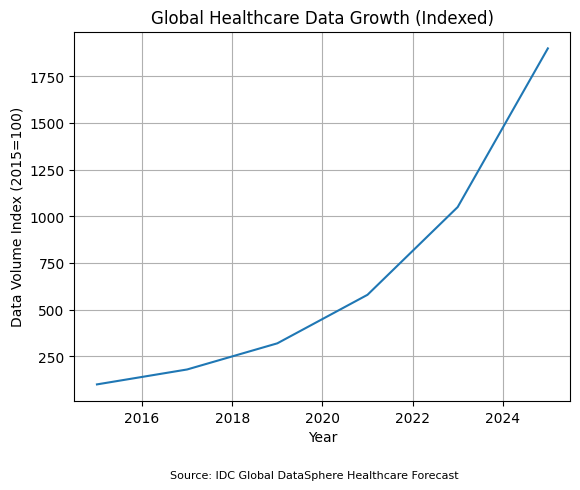
Healthcare now generates data at a scale that rivals any other sector, with global volumes growing at over 30 percent annually. Electronic health records, imaging systems, wearable devices, and patient-facing applications continuously produce streams of information. Yet the existence of data does not inherently translate into better care. The constraint has shifted. It is no longer about access, but about interpretation.
Information, in this context, has become capital—arguably the most important form of capital within healthcare systems today. Like any form of capital, its value depends entirely on how it is structured, deployed, and evaluated. This is where data scientists operate, not as peripheral contributors, but as central actors responsible for converting fragmented, imperfect information into decisions that carry clinical and economic consequence.

Suzie Is Modeling What We Can’t See Clearly
- Where she works: United Nations / International Public Health Organization
- Job Title: Epidemiologist / Population Health Modeler
- Impact: She’s estimating deaths that were never recorded and outbreaks that haven’t been confirmed.
Where structured hospital systems end, Suzie’s work begins. Operating across international health environments, she works with data that is incomplete by design, shaped by inconsistent reporting standards, delays, and gaps that often obscure the underlying reality. In some regions, where underreporting can exceed 50 percent, the datasets she receives are not a record of events but a partial signal of them.
Her role is to reconstruct that signal. Using statistical modeling approaches, often grounded in Bayesian inference, she estimates disease spread and mortality across populations where direct observation is not possible. Rather than producing single-point forecasts, her models generate ranges that reflect varying assumptions about reporting completeness and transmission dynamics.
Something Suzie Predicts:
The true mortality rate in a population where a significant portion of deaths are never formally recorded.
These estimates shape real decisions. In outbreak scenarios, early intervention informed by accurate modeling can reduce total economic impact by more than half compared to delayed response. Suzie’s work sits upstream of clinical systems, influencing where resources are deployed and how quickly interventions are triggered, often in environments where the margin for error is minimal.


Luki Is Predicting What You’re About to Do Next
- Where he works: Digital Health Platform / Health Insurer
- Job Title: Behavioral Data Scientist / Machine Learning Engineer
- Impact: He’s figuring out who’s about to stop taking their meds before they actually do.
Luki operates in a domain that feels closer to consumer technology than traditional medicine, yet its implications are deeply clinical. His work focuses on predicting behavioral change—specifically, when patients are likely to disengage from treatment.
With medication non-adherence costing the U.S. healthcare system over $100 billion annually, predicting behavior has become one of the most economically consequential problems in healthcare. Luki’s models are built on behavioral data, capturing patterns in interaction frequency, response timing, and device usage to identify subtle signals of disengagement before they manifest as clinical events.
Something Luki Predicts:
The likelihood that a patient will stop following a treatment plan within the next two weeks.
While structurally similar to recommendation systems used in consumer platforms, these models serve a different purpose. They trigger interventions—messages, reminders, adjustments to care pathways—that aim to maintain adherence and prevent deterioration. In some implementations, these systems have reduced acute care utilization by up to 20 percent among high-risk populations, demonstrating how predictive analytics can shift care from reactive to proactive.
None of this is visible to patients. All of it affects them.
Javier Is Modeling the Future of Entire Populations
- Where he works: Global Health Institute / Policy Research Organization
- Job Title: Demographic Data Scientist / Health Economist
- Impact: He’s calculating how long entire populations will live—and what that changes.
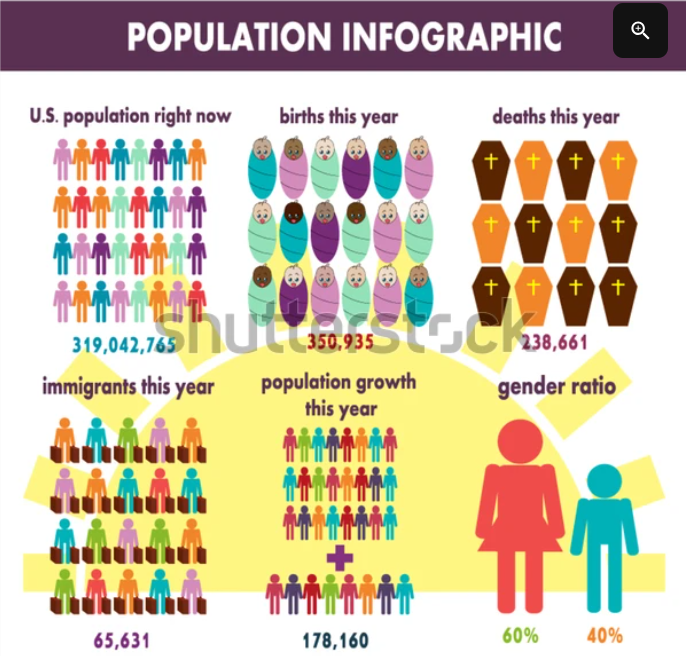
Javier’s work moves away from individuals entirely, focusing instead on populations over time. In his domain, even basic metrics such as mortality and life expectancy are often estimates rather than direct measurements. Globally, millions of deaths each year go unregistered or are misclassified, requiring analytical reconstruction before meaningful conclusions can be drawn.
He integrates census data, survey inputs, and fragmented health records to model long-term trends in life expectancy, fertility, and disease burden. These projections inform policy decisions that shape healthcare systems, labor markets, and economic planning.
Something Javier Calculates:
Projected changes in life expectancy over the next decade based on evolving health and demographic conditions.
The implications are structural. Even a one-year shift in life expectancy can influence pension systems, workforce dynamics, and national healthcare demand. Unlike real-time analytics, Javier’s work unfolds gradually, but its impact is both broad and enduring.
Elena Is Watching for the Outbreak Before It Happens
- Where she works: City Governance / Public Health Agency / Regional Surveillance System
- Job Title: Epidemiologist / Disease Surveillance Analyst
- Impact: She’s spotting outbreaks days before hospitals even know something’s wrong
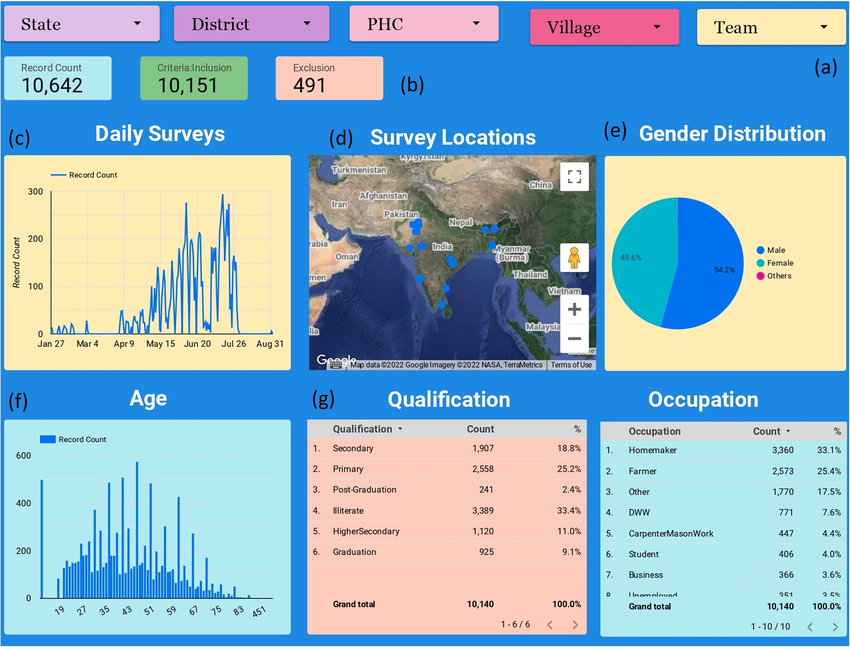
Elena operates at the intersection of immediacy and uncertainty, working within surveillance systems designed to detect disease spread before it becomes clinically visible. Unlike long-term epidemiological modeling, her work functions in near real time, identifying deviations from expected patterns across multiple data streams.
Her inputs include emergency department visits, pharmacy activity, and laboratory data, which together form an early signal layer. In many systems, syndromic surveillance can identify anomalies several days before confirmed diagnoses begin to rise, providing a critical window for intervention.
Something Elena Predicts:
The probability of a localized disease outbreak based on early deviations in symptom-related data.
The challenge lies in distinguishing meaningful signals from seasonal variation, requiring continuous recalibration as baseline patterns evolve. When successful, even a short lead time can improve response coordination and reduce transmission in densely populated environments.
Daniel Is the One Asking If Any of This Actually Works
- Where he works: Payer-Provider Network / Healthcare Analytics Group
- Job Title: Outcomes Analyst / Health Systems Evaluator
- Impact: He’s the one who proves whether all this data actually saves money or just looks good on paper.
At the end of the analytical chain sits Daniel, whose role is to determine whether predictive systems translate into measurable outcomes. While model development often focuses on statistical performance, real-world value depends on whether those models influence care delivery and system efficiency.
It is common for models to demonstrate improvements in metrics such as ROC-AUC without producing corresponding changes in patient outcomes. Daniel’s work addresses this gap by linking predictions to measurable indicators through cohort comparisons and controlled implementation strategies.
Something Daniel Measures:
Whether deployment of a predictive model leads to measurable reductions in readmissions or other key outcomes.
In many systems, this is where most models fail. Those that succeed demonstrate both clinical and economic impact, with some implementations achieving reductions in readmissions of 5 to 10 percent when fully integrated into care processes.
Real Data Economy in Healthcare
All of these roles exist within a broader system in which data has become a defining asset. Global digital health investment has surpassed $20 billion annually, reflecting the increasing importance of analytics in shaping healthcare performance.
Access to data determines what can be modeled, while quality and scale influence how effectively those models perform. Increasingly, healthcare data is treated both as a shared resource for improving outcomes and as a controlled asset that defines competitive advantage across organizations.
At the same time, the risks associated with data have intensified. Cybersecurity incidents have affected over 190 million individuals in the United States alone, underscoring the system’s dependence on continuous and secure data availability.
If current trends continue, healthcare systems will move further toward continuous, model-driven decision environments, where predictive systems operate alongside clinical workflows. Without effective data science, the system does not revert to neutrality. Signals arrive too late, interventions become reactive, and costs rise without corresponding improvements in care quality.
| Title | Works At | Impact |
|---|---|---|
| Epidemiologist / Population Health Modeler | UN, WHO, Public Health Agencies | Estimates disease spread and mortality where data is incomplete, guiding large-scale intervention and resource allocation. |
| Behavioral Data Scientist | Digital Health Platforms, Insurers | Predicts patient adherence and engagement, preventing drop-off before it becomes a clinical or financial problem. |
| Demographic Data Scientist / Health Economist | Global Health Institutes, Policy Organizations | Models life expectancy, fertility, and long-term health trends that shape national policy and economic planning. |
| Disease Surveillance Analyst | City Health Departments, CDC, Regional Agencies | Detects outbreaks early using real-time data signals, enabling faster response and reduced transmission. |
| Health Outcomes Analyst | Payer-Provider Networks, Healthcare Systems | Measures whether predictive models actually improve outcomes or reduce costs in real-world settings. |
| Clinical Data Scientist | Hospitals, Health Systems | Builds predictive models for readmissions, deterioration, and treatment pathways within clinical workflows. |
| NLP / Unstructured Data Scientist | Health AI Companies, Diagnostics Firms | Extracts critical insights from physician notes, reports, and imaging that are not captured in structured data. |
| Machine Learning Engineer (Healthcare) | Health Tech Firms, Large Providers | Deploys and scales predictive models into production systems that support real-time decision-making. |
| Health Data Engineer | Hospitals, Cloud Health Platforms | Builds pipelines that make fragmented healthcare data usable, reliable, and accessible for analysis. |
| AI Agent Developer (Healthcare) | Digital Health Startups, Enterprise Health Systems | Designs automated decision systems that trigger interventions, triage workflows, and patient engagement actions. |
Key Takeaways
- Data science has become central to how healthcare systems operate and make decisions
- Analytical work spans clinical, behavioral, and population-level domains
- Predictive models influence outcomes only when integrated into real-world workflows
- Much of healthcare’s most valuable data remains unstructured and underutilized
- Measuring real-world impact is essential to determining analytical value
- The healthcare data economy depends on converting information into actionable insight
Sources
- IDC; Worldwide Global DataSphere Healthcare Forecast; – Link
- Centers for Medicare & Medicaid Services (CMS); Hospital Readmissions Reduction Program (HRRP); – Link
- New England Healthcare Institute (NEHI); Thinking Outside the Pillbox: Medication Adherence as a Priority for Health Care Reform; – Link
- Annals of Internal Medicine; The Economic Burden of Medication Nonadherence: A Systematic Review; – Link
- Nature Digital Medicine; Remote Patient Monitoring and Clinical Outcomes Review; – Link
World Health Organization (WHO); Ethics and Governance of Artificial Intelligence for Health; – Link - The Lancet Digital Health; Bias and Transparency in Health AI Systems; – Link
Rock Health; 2023 Digital Health Funding Report; – Link - U.S. Department of Health and Human Services (HHS); Change Healthcare Cybersecurity Incident Overview; – Link
- Institute of Internet Economics; Digital Health and E-Health State of the Industry 2025; – Link
- Institute of Internet Economics; Standardizing Health Data and Interoperability; – Link