

In less than two decades, e-commerce has evolved from a convenience for early adopters into a central pillar of global retail. Its growth trajectory has been powered not only by digital storefronts and shifting consumer habits but by an arms race in logistics. Delivery speed has become the ultimate differentiator, with next-day and same-day shipping turning into industry benchmarks. Yet this relentless pursuit of convenience conceals significant hidden costs—economic, environmental, and labor-related—that are reshaping the balance sheets of corporations and the broader marketplace alike.
Profit Margins Under Pressure
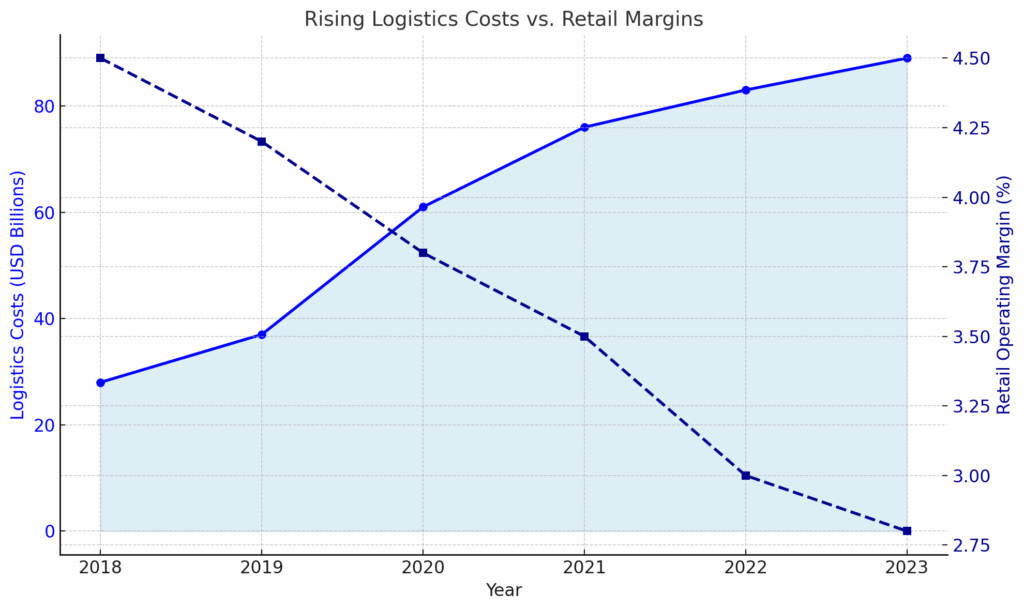
The promise of free or ultra-fast shipping has conditioned consumers to expect speed without added cost. For businesses, however, these services are rarely sustainable. Logistics expenditures for packaging, warehousing, last-mile delivery, and returns have ballooned, squeezing margins across the sector.
Amazon provides the most visible example. In 2022, its global shipping expenses exceeded $83 billion, nearly double its logistics costs just five years earlier. While its scale allows Amazon to absorb these expenses and retain customer loyalty, the company’s profitability is increasingly dependent on higher-margin services such as cloud computing (AWS) rather than retail operations. The economics of its Prime model demonstrate the challenge: annual subscription fees offset some delivery costs, but analysts estimate that for each Prime member, Amazon still subsidizes dozens of packages each year.
For smaller retailers, the pressures are harsher. Matching Amazon’s delivery speeds often requires partnerships with third-party logistics providers (3PLs) or reliance on costly courier services. Margins that might once have been 10 percent can shrink to 2–3 percent after factoring in free shipping, packaging, and the cost of processing returns. In sectors like apparel, where return rates can reach 30–40 percent, the economics are even more strained. The burden of speed often shifts from retailers to suppliers, who are pressured to absorb logistics costs to retain contracts.
Case studies highlight the risks. In 2023, a mid-sized U.S. electronics retailer that expanded into two-day shipping through a 3PL reported a 22 percent increase in sales volume but a 15 percent decline in operating margins. Rising logistics costs, driven by fuel surcharges and labor rates, consumed the benefits of higher revenue. Analysts warn that this story is common: sales growth through fast delivery is often achieved at the expense of long-term financial health.
Shifting Costs Along the Supply Chain
The hidden costs of speed are not borne equally. E-commerce companies frequently externalize financial, environmental, and human costs along the supply chain. Suppliers must maintain higher inventory levels to meet rapid turnaround requirements, tying up working capital. Logistics providers are pressured to operate with tighter schedules, forcing them to reduce margins or rely on gig-economy labor models that minimize direct employment costs. Municipalities absorb infrastructure strain, with roads, traffic systems, and waste management networks bearing the brunt of increased activity.
In the grocery sector, the economics of “instant delivery” services provide a striking example. Companies promising 10–20 minute deliveries often rely on subsidized business models backed by venture capital. The operational costs—courier pay, urban micro-warehousing, spoilage—are rarely covered by order revenues. Many operators, such as Gorillas and Getir in Europe, reported heavy losses in 2022–23 despite surging consumer demand. Analysts argue that these models function more as land-grabs for market share than sustainable businesses. Consumers enjoy convenience, but the financial reality is deferred, with investors and, ultimately, workers absorbing the losses.
The Economics of Returns
Another often overlooked cost is the economics of returns. E-commerce return rates are dramatically higher than in physical retail, particularly in fashion, where online shoppers frequently order multiple sizes with the intention of returning unwanted items. Processing returns involves reverse logistics, inspection, repackaging, or disposal—activities that are labor-intensive and expensive.
In 2023, the National Retail Federation estimated that returns cost U.S. retailers over $816 billion annually. Many returned items are unsellable due to damage or obsolescence, creating not only financial losses but environmental waste. Fast delivery exacerbates this problem, as consumers emboldened by frictionless returns policies are more likely to over-order.
Some retailers have begun to push back. Zara, H&M, and other fashion brands introduced return fees in Europe to recoup part of the cost. Yet this shift carries reputational risks in markets where free returns have become ingrained. The tension illustrates the economic trade-offs of convenience: consumer expectations for speed and flexibility clash with the financial realities of fulfillment.
Local Economic Displacement
The race for fast delivery also reshapes local economies. As consumers migrate to online platforms, brick-and-mortar stores suffer declining foot traffic. The resulting store closures erode local tax bases and reduce employment opportunities in retail and ancillary services. Studies in mid-sized American cities show a direct correlation between rising e-commerce adoption and the hollowing out of urban commercial districts.
Meanwhile, logistics infrastructure expands—fulfillment centers, delivery depots, and distribution hubs proliferate on city peripheries. These create jobs but often at lower wages, with fewer benefits, and under conditions less stable than traditional retail employment. Municipalities, eager for investment, provide tax incentives or subsidies to attract logistics facilities, effectively shifting costs from corporations to public coffers.
Case in point: Chicago’s south suburbs have seen a surge in fulfillment center development since 2018, supported by tax abatements. While these facilities provided thousands of jobs, wage levels lagged behind the retail jobs they replaced, and infrastructure strain has increased. For local governments, the trade-off is complex: short-term job creation versus long-term fiscal sustainability.
Toward a Sustainable Model
Despite the economic challenges, some companies are experimenting with models that align speed with sustainability and profitability. Walmart’s hybrid logistics strategy blends physical stores with e-commerce, allowing consumers to pick up online orders in-store. This reduces last-mile costs while keeping foot traffic in retail locations. Target has pursued a similar model, reporting that in-store pickup and curbside delivery accounted for more than half of its digital sales growth in 2022.
Others are investing in green logistics. DHL has rolled out electric vehicle fleets in Europe, reducing fuel costs and emissions. UPS and FedEx are testing route-optimization AI to cut delivery miles, which directly reduces expenses. These innovations reflect a recognition that long-term profitability depends not only on speed but on balancing costs with efficiency gains.
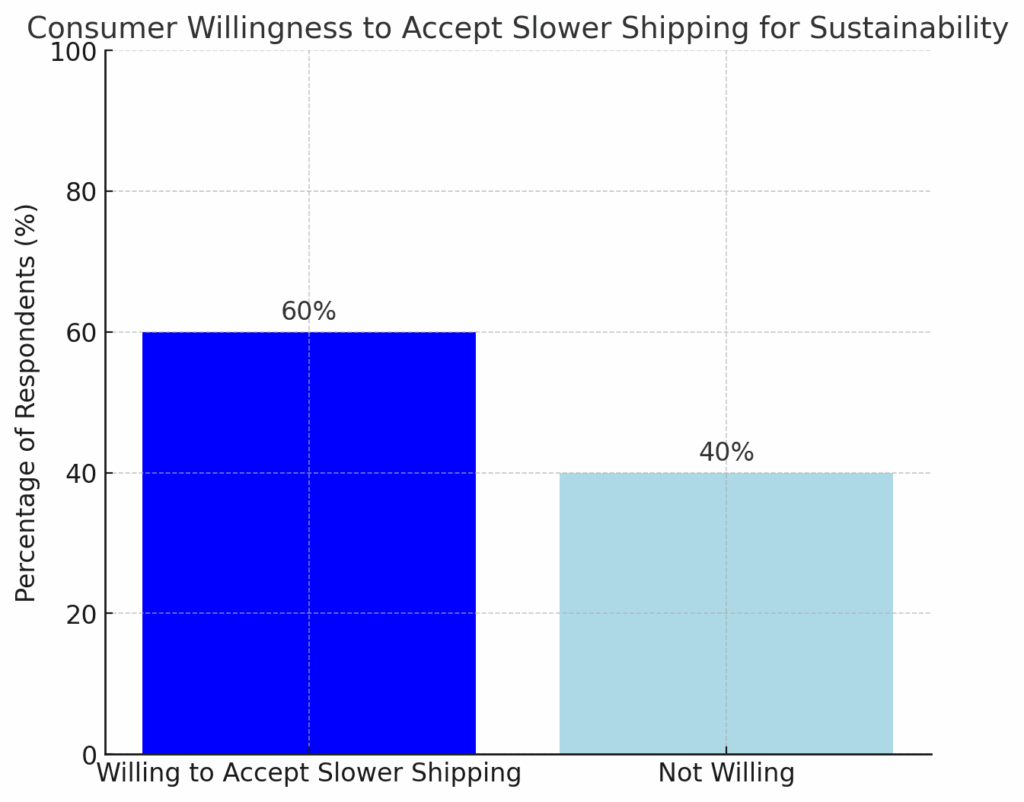
Consumers may also hold part of the solution. A 2023 McKinsey survey found that 60 percent of U.S. shoppers were willing to accept longer delivery times for sustainable practices. Retailers that align transparency with consumer values—offering slower shipping for greener or cheaper options—may find opportunities to reset expectations. The shift from “fastest is best” to “fast enough and sustainable” could prove decisive for future margins.
The Economic Crossroads
E-commerce logistics is at an inflection point. For now, speed remains a competitive necessity, but its financial sustainability is under question. The hidden costs—shrinking margins, externalized labor risks, infrastructure burdens, and mounting returns—reveal a system under strain. Companies face difficult choices: subsidize delivery at the expense of profitability, pass costs to consumers and risk loyalty, or innovate toward sustainable models that balance efficiency with responsibility.
What is clear is that the true cost of convenience extends far beyond a delivery fee. It reshapes labor markets, taxes public systems, and compresses business margins in ways that will influence the global economy for years to come. The challenge for both corporations and policymakers is to chart a course that preserves consumer access while addressing the structural weaknesses embedded in the logistics race.
Key Takeaways
- The economics of free and fast shipping squeeze retailer margins, with logistics costs often eroding sales gains.
- Smaller businesses face disproportionate risks, while global giants like Amazon subsidize delivery through other revenue streams.
- Costs are frequently shifted down the supply chain to suppliers, gig workers, and municipalities.
- Returns create massive hidden expenses, costing U.S. retailers an estimated $816 billion annually.
- Hybrid logistics models and consumer transparency may offer a path toward sustainability and profitability.
Sources
- eMarketer
- Amazon annual reports
- National Retail Federation
- McKinsey & Company
- International Labour Organization
- World Economic Forum
- Reuters, Financial Times