

The internet economy is frequently described in language that makes it feel almost immaterial. Digital platforms host services in the cloud, commerce moves through global networks, and daily life increasingly unfolds through screens that appear detached from the physical world. Yet the digital economy is built upon hardware—phones, laptops, routers, servers, sensors, and batteries—each assembled from materials that originate in mines, factories, and industrial supply chains. Every device that enables digital life carries with it an environmental lifecycle that begins deep within the earth and ends somewhere within the waste stream.
That lifecycle is expanding rapidly. Global electronic waste generation reached 62 million tonnes in 2022, according to the Global E-waste Monitor produced by the International Telecommunication Union and the United Nations Institute for Training and Research. Only 22.3 percent of this waste was formally collected and recycled. The remainder moved through less visible pathways—household storage, mixed municipal waste, informal dismantling networks, or landfill streams that scatter electronic components across the physical environment.
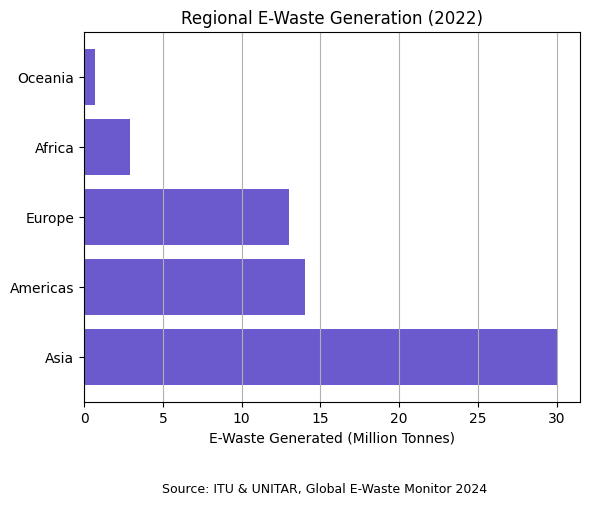
The growth trajectory is striking. In 2010, the world generated approximately 34 million tonnes of e-waste, meaning discarded electronics have increased by more than 80 percent in just over a decade. At the same time, the number of devices embedded in everyday life continues to rise. Estimates suggest the global number of connected devices—spanning smartphones, industrial sensors, household appliances, vehicles, and infrastructure—could exceed 50 billion units by 2030.
Electronic waste therefore represents more than a disposal problem. It reflects the broader physical footprint of the internet economy itself, alongside semiconductor manufacturing, data center expansion, global logistics networks, and the rising energy demand of digital infrastructure. Understanding e-waste requires looking beyond the moment when a device is thrown away and instead tracing the full lifecycle of digital hardware—from mineral extraction to manufacturing, from use to recovery, and ultimately to the environmental consequences of what remains.
Extraction and Manufacturing The Environmental Beginning
Long before a device is purchased, its environmental story has already begun. Modern electronics rely on a wide array of materials—copper, aluminum, lithium, cobalt, nickel, gold, tin, and rare earth elements that enable displays, circuit boards, processors, and battery systems. These materials must be mined, refined, transported, and processed through complex global supply chains before they ever reach an assembly line.
Mining operations represent the first major environmental footprint in this lifecycle. Open-pit mining can reshape entire landscapes in order to reach mineral deposits, while ore processing generates large quantities of waste rock and tailings that must be carefully managed to prevent soil and water contamination. In regions where environmental governance is limited, these mining activities can place long-term pressure on ecosystems and nearby communities.
Manufacturing introduces additional environmental intensity. Semiconductor fabrication plants require ultra-pure water and sophisticated chemical processes to produce advanced chips, while battery manufacturing relies on energy-intensive refining of lithium, cobalt, and nickel compounds. Electronics assembly plants then integrate these materials into finished devices that travel through global logistics systems to reach consumers.
A growing body of environmental research suggests that a majority of the lifetime environmental impact of many electronic products occurs during production rather than during the years they remain in use. By the time a smartphone reaches a consumer’s hand, the most resource-intensive stages of its lifecycle—mining, refining, and manufacturing—have already occurred.
| Device Category | Typical Replacement Cycle | Primary Drivers of Replacement |
|---|---|---|
| Smartphones | 2–3 years | Battery degradation, software compatibility, hardware upgrades |
| Laptops | 4–6 years | Performance limitations, operating system support |
| Desktop Computers | 5–7 years | Enterprise refresh cycles, processing requirements |
| Data Center Servers | 3–5 years | Energy efficiency improvements, computing demand |
| Household Electronics (TVs, appliances) | 5–8 years | Technological upgrades, product durability |
| Sources: UN Trade and Development (UNCTAD); OECD Digital Economy Research; International Energy Agency | ||
Table 2: Valuable Materials Embedded in Electronic Waste
This early environmental burden becomes more significant when devices are replaced frequently. Shorter upgrade cycles mean that the extraction and manufacturing stages are repeated more often, intensifying the ecological footprint of digital consumption long before devices appear in the waste stream.
The Consumption Cycle and Device Turnover
The next phase of the lifecycle unfolds quietly in homes, offices, and industrial systems where electronics are used every day. Device turnover rates vary by product category, yet across most segments the pattern is the same: technological innovation shortens the period between purchase and replacement.
Smartphones are commonly replaced every two to three years, often because battery performance declines or software updates become incompatible with older hardware. Laptops, televisions, and other household electronics generally remain active for four to six years, though new features, higher performance expectations, and shifting software requirements can accelerate replacement decisions.
| Device Category | Typical Replacement Cycle | Primary Drivers of Replacement |
|---|---|---|
| Smartphones | 2–3 years | Battery degradation, software compatibility, hardware upgrades |
| Laptops | 4–6 years | Performance limitations, operating system support |
| Desktop Computers | 5–7 years | Enterprise refresh cycles, processing requirements |
| Data Center Servers | 3–5 years | Energy efficiency improvements, computing demand |
| Household Electronics (TVs, appliances) | 5–8 years | Technological upgrades, product durability |
| Sources: UN Trade and Development (UNCTAD); OECD Digital Economy Research; International Energy Agency | ||
Enterprise infrastructure follows a different rhythm but contributes significantly to global e-waste volumes. Data center servers and networking equipment are frequently replaced every three to five years as improved computing performance and energy efficiency make older hardware less competitive. As cloud computing platforms and artificial intelligence systems expand worldwide, these enterprise refresh cycles are becoming an increasingly important source of electronic waste.
Even during use, devices remain part of the environmental footprint of the digital economy. Billions of active devices consume electricity every day, linking consumer electronics to global energy systems. Batteries degrade, components fail, and eventually most devices reach the limits of their functional lifespan. At that point they move from the consumption stage of the lifecycle toward disposal and recovery.
The speed of this transition depends heavily on product design and consumer behavior. Longer lifespans slow the growth of the waste stream, while rapid upgrade cycles accelerate the movement of materials toward recycling systems or landfills.
When Electronics Become Waste
The environmental consequences of the device lifecycle become most visible when electronics leave active use. Electronic products contain both valuable materials and hazardous substances, including lead, mercury, cadmium, and brominated flame retardants. When devices are properly processed through regulated recycling facilities, these materials can be separated and managed safely.
However, a significant share of global e-waste never enters formal recycling systems. Instead, devices may be dismantled through informal recycling networks where workers manually extract valuable metals from circuit boards, cables, and components. These operations often rely on techniques such as open burning of wires or chemical extraction using acids to separate metals from plastic and composite materials.
| Hazardous Substance | Common Electronic Sources | Environmental and Health Impact |
|---|---|---|
| Lead | Circuit boards, solder, batteries | Neurological damage and soil contamination |
| Mercury | Displays, switches, lighting components | Water contamination and bioaccumulation in ecosystems |
| Cadmium | Rechargeable batteries, semiconductors | Long-term soil toxicity and kidney damage |
| Brominated Flame Retardants | Plastic casings and electronic components | Persistent pollutants affecting air and soil quality |
| Sources: World Health Organization; Basel Convention Secretariat; ITU Global E-Waste Monitor 2024 | ||
The environmental consequences can extend far beyond the dismantling site itself. Toxic residues may settle into soil, migrate into groundwater, or disperse through airborne particulates released during burning processes. Over time, these contaminants can accumulate within local ecosystems, affecting agricultural land, water supplies, and surrounding communities.
Battery waste adds another layer of environmental complexity. Lithium-ion batteries used in smartphones, tools, and electric vehicles can ignite if damaged or improperly disposed of. Waste management systems increasingly report fires linked to discarded batteries entering recycling facilities or landfill streams.
The human consequences are closely intertwined with these environmental risks. The World Health Organization estimates that roughly 18 million children and adolescents worldwide may be exposed to hazardous substances linked to informal e-waste recycling activities, with exposure to heavy metals associated with neurological and respiratory health risks.
What begins as a discarded electronic device can therefore become part of a much broader environmental system—one in which the impacts of digital consumption extend far beyond the original point of use.
Regional Differences in the E Waste Economy
The global geography of e-waste illustrates how unevenly these environmental consequences are distributed. Wealthier economies tend to generate the largest volumes of discarded electronics because device ownership is higher and replacement cycles are faster. At the same time, these regions often maintain stronger recycling systems capable of safely processing a portion of that waste.
Asia generated approximately 30 million tonnes of e-waste in 2022, representing the largest regional share of global electronic waste. Europe produced smaller volumes overall but recorded the highest per-capita levels at roughly 17.6 kilograms per person annually, while also achieving one of the strongest documented recycling rates at 42.8 percent.
In contrast, African countries generated much smaller quantities of electronic waste—approximately 2.5 kilograms per person annually—yet frequently face the greatest environmental challenges associated with processing discarded electronics. Limited recycling infrastructure and weaker regulatory enforcement can lead to greater reliance on informal dismantling and scrap recovery systems.
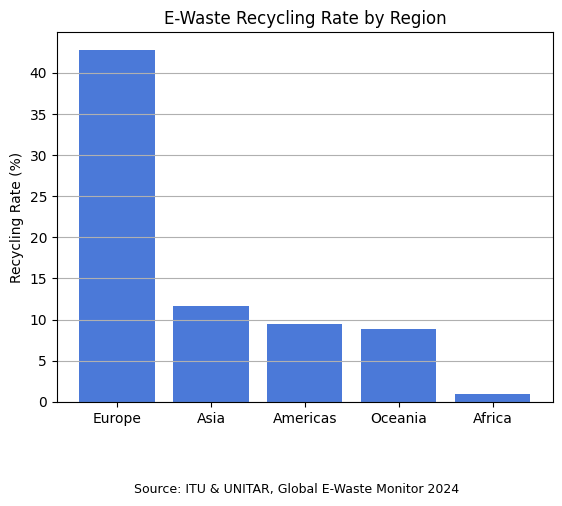
These regional contrasts reveal an important feature of the digital economy. The consumption of electronics is concentrated in wealthier markets, while some of the most environmentally risky stages of the device lifecycle—manual dismantling and materials extraction—often occur in regions with fewer resources to manage pollution safely.
Yet these same recycling hubs also support local economies. Informal networks collect, sort, and trade electronic components through global scrap markets, recovering valuable materials that would otherwise remain unused. The challenge for policymakers is therefore not simply to eliminate these systems but to transition them toward safer industrial practices that protect both environmental and human health.
Recovery and the Circular Opportunity
Despite the risks associated with electronic waste, discarded devices also represent a vast reservoir of recoverable materials. Analysts estimate that the global e-waste stream generated in 2022 contained approximately US$62 billion worth of recoverable resources, including copper, iron, aluminum, gold, and rare earth elements used in advanced electronics.
Recovering these materials can significantly reduce the environmental pressure associated with primary mining. Recycling metals from electronic waste typically requires far less energy than extracting the same materials from ore deposits, meaning improved recovery systems can reduce both emissions and resource depletion.
Printed circuit boards illustrate this opportunity particularly well. In some cases they contain more than 100 grams of gold per tonne of material, a concentration higher than many natural gold ores. For this reason, electronics recycling has increasingly been described as a form of urban mining—an industrial process that extracts valuable materials from the infrastructure of modern cities rather than from underground deposits.
| Material | Role in Electronic Devices | Industrial Importance |
|---|---|---|
| Copper | Wiring, circuit boards, electrical components | Critical conductor used across electronics and energy systems |
| Aluminum | Device casings, structural components | Highly recyclable lightweight industrial metal |
| Gold | Circuit board connectors and microelectronic contacts | Extremely conductive and corrosion resistant |
| Cobalt | Lithium-ion batteries | Strategic mineral used in battery technologies |
| Rare Earth Elements | Magnets, displays, sensors | Essential for advanced electronics and renewable energy technologies |
| Sources: ITU and UNITAR Global E-Waste Monitor 2024; International Energy Agency; European Commission Circular Economy Research | ||
Table 3: Environmental Risks Associated With Electronic Waste Components
Industrial recovery systems are beginning to scale in response. In the United Kingdom, the Royal Mint opened a facility capable of processing approximately 4,000 tonnes of electronic waste annually, focusing on extracting precious metals from printed circuit boards. Technology companies are also experimenting with automated disassembly systems. Apple, for example, has developed robotic technologies capable of processing roughly 200 iPhones per hour, separating components and recovering materials such as cobalt and rare earth elements.
Yet the circular potential of e-waste remains largely unrealized. Less than 1 percent of global rare earth demand is currently met through recycling, demonstrating how much of the material embedded in discarded electronics still remains outside formal recovery systems.
The environmental opportunity lies not only in recycling but also in extending product lifespans. Repair, refurbishment, and secondary markets can keep devices in use longer, slowing both waste generation and the need for new resource extraction.
Policy and the Future of the Device Lifecycle
Managing the environmental lifecycle of electronics increasingly requires coordinated policy responses that extend beyond traditional waste management systems. More than 80 countries now maintain legislation governing electronic waste, covering roughly 70 percent of the global population.
One of the most widely adopted policy mechanisms is extended producer responsibility, which requires manufacturers to finance the collection and recycling of products they place on the market. By shifting end-of-life costs back toward producers, these policies encourage companies to design products that are easier to repair, reuse, and recycle.
Europe’s Waste Electrical and Electronic Equipment Directive remains one of the most comprehensive regulatory frameworks currently governing e-waste management. The directive establishes collection targets, recycling requirements, and reporting obligations across several categories of electronics, creating incentives for stronger recovery systems across the region.
International trade governance has also evolved. Amendments to the Basel Convention governing transboundary waste shipments took effect in January 2025, strengthening oversight of cross-border movements of electronic scrap and related materials. These measures aim to reduce the practice of exporting electronic waste to countries lacking sufficient environmental safeguards.
As the number of connected devices continues to expand, the lifecycle of electronics will become an increasingly central environmental policy issue. The digital economy may appear intangible, but the infrastructure supporting it leaves a material legacy. The challenge now is whether societies can manage that lifecycle responsibly—ensuring that the technologies shaping the future do not leave an expanding environmental burden behind.

Key Takeaways
- Global electronic waste reached 62 million tonnes in 2022, up from 34 million tonnes in 2010.
- Only 22.3 percent of e-waste is formally recycled despite containing roughly US$62 billion in recoverable materials.
- Mining and manufacturing stages account for a large share of the environmental footprint associated with electronics.
- Consumer and enterprise upgrade cycles—often two to three years for smartphones and three to five years for servers—accelerate global waste generation.
- Informal recycling systems expose roughly 18 million children to hazardous substances linked to electronic waste processing.
- Circuit boards can contain over 100 grams of gold per tonne, illustrating the resource value embedded in discarded electronics.
- More than 80 countries now regulate electronic waste, reflecting growing recognition that the lifecycle of digital devices carries significant environmental consequences.
Sources
- ITU and UNITAR; The Global E-waste Monitor 2024; https://ewastemonitor.info/the-global-e-waste-monitor-2024/
- World Health Organization; Children and Digital Dumpsites E-Waste Exposure and Child Health; https://www.who.int/publications/i/item/9789240023901
- UN Trade and Development; Digital Economy Report 2024; https://unctad.org/publication/digital-economy-report-2024
- OECD; Extended Producer Responsibility; https://www.oecd.org/en/publications/extended-producer-responsibility_67587b0b-en.html
- Basel Convention Secretariat; E-Waste Amendments Overview; https://www.basel.int/Implementation/Ewaste/EwasteAmendments/Overview/tabid/9266/Default.aspx
- Reuters; Britain’s Royal Mint to Extract Gold from E-Waste; https://www.reuters.com/sustainability/britains-royal-mint-extract-gold-e-waste-part-decarbonising-operations-2024-08-07/
- WEEE Forum; Stop Trashing Electronic Products with Ordinary Garbage; https://weee-forum.org/ws_news/e-waste-experts-urge-public-stop-trashing-electronic-products-with-ordinary-garbage/
- Institute of Internet Economics; Electronic Waste in the Digital Economy and the Future of Resource Security; https://instituteofinterneteconomics.org/electronic-waste-in-the-digital-economy-and-the-future-of-resource-security/
- Institute of Internet Economics; Impact on the Environment; https://instituteofinterneteconomics.org/category/impact-on-humanity/ecological-impact/