

A superapp is a digital command center for everyday economic life. Within a single mobile interface, users can pay for transport, order food, transfer money, settle utility bills, book services, and access short-term credit. The core engine is a built-in wallet that stores value and moves it seamlessly across services. Rather than functioning as a single-purpose tool, a superapp acts as a financial gateway linking money directly to commerce, mobility, and daily transactions.
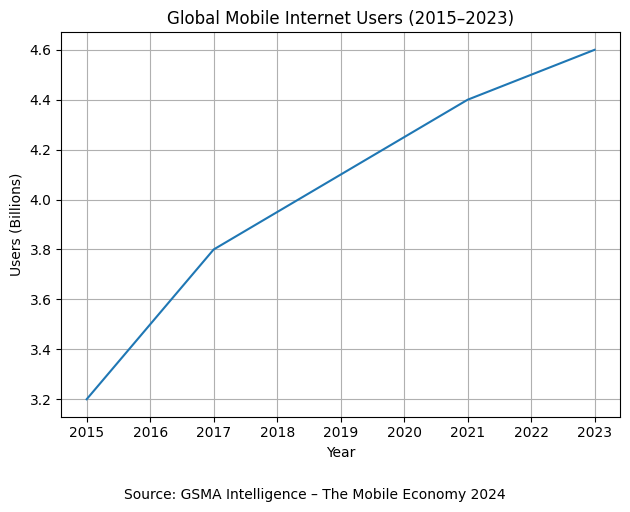
In markets where mobile connectivity expanded faster than traditional banking infrastructure, this model created more than convenience; it established a parallel monetary channel embedded in routine activity. In China, Alipay processed an estimated $20.1 trillion in transaction volume in 2025, while WeChat Pay handled more than one billion transactions daily. Together, they account for over 90 percent of the country’s mobile payments market. In Kenya, Safaricom’s M-Pesa processes more than 30 billion transactions annually, with payment value equivalent to over half of national GDP in certain years. Across Southeast Asia, e-wallets account for more than half of online transaction value in markets such as Indonesia and Thailand, and by mid-2024 an estimated 954 million Chinese users were active in mobile payment ecosystems. These figures reflect infrastructure scale, not app popularity.
Operationally, superapps embed a stored-value wallet inside a broader service environment. Once funds are loaded or linked, the wallet becomes the access point for ride-hailing, e-commerce, food delivery, bill payment, ticketing, and microcredit. Tencent’s WeChat integrates payments with merchant mini-programs used by millions of businesses. Ant Group’s Alipay layers wealth-management and consumer lending onto QR acceptance networks. In Latin America, Mercado Pago processed more than $190 billion in payment volume in 2023, linking marketplace commerce with digital finance. A consumer can scan a QR code at a street vendor, settle rent, purchase transport tickets, and repay a microloan within the same interface. For merchants, onboarding may require little more than a smartphone and printed QR code.
Superapps as Gig Economy Infrastructure
| Platform | Worker Type | Payment Integration Model | Economic Role |
|---|---|---|---|
| Grab | Drivers, delivery riders | Direct wallet settlement, daily payout options | Urban mobility and micro-entrepreneur income |
| Gojek | Drivers, food couriers, service providers | Integrated wallet earnings and service payments | Platform-mediated employment |
| Meituan | Delivery riders, local service workers | Digital payout through integrated accounts | On-demand local services economy |
| Uber (Wallet-linked ecosystems) | Drivers | Instant pay linked to digital wallet systems | Global gig mobility infrastructure |
Sources: Company Investor Reports (Grab, GoTo, Meituan, Uber); Earnings Calls; Public Filings (2022–2024).
Adoption is strongest in emerging and middle-income economies where banking penetration remains uneven but smartphone use is widespread. World Bank Global Findex data show hundreds of millions of adults in low- and middle-income countries made their first digital payment through mobile money or wallet apps over the past decade. BIS research finds faster payment systems materially increase finance app usage in jurisdictions where mobile access substitutes for branch networks. Superapps normalize seamless digital transfer of money for goods and services without routine reliance on traditional banks.
Defined by function rather than branding, superapps operate as mobile-based monetary systems coordinating everyday exchange. When earning, spending, and settling obligations converge inside a single digital wallet, participation in commerce shifts structurally, not cosmetically.
Human, Business, and Humanitarian Impact of Wallet Centered Ecosystems
The impact of wallet-centered systems is visible in ordinary transactions. A commuter in Jakarta pays for transport, lunch, and electricity with one balance. A vendor in Nairobi accepts QR payments without investing in card hardware. A migrant worker in Manila transfers wages home instantly. These behaviors reflect broad adoption. The World Bank’s Global Findex 2021 reports that 79 percent of adults globally now have a financial account, up from 51 percent in 2011, with much of the increase in developing economies driven by digital payments and mobile money. In low- and middle-income countries, 42 percent of adults made a digital merchant payment in 2024. Those percentages translate into reduced travel time, lower transaction costs, improved security, and faster liquidity.
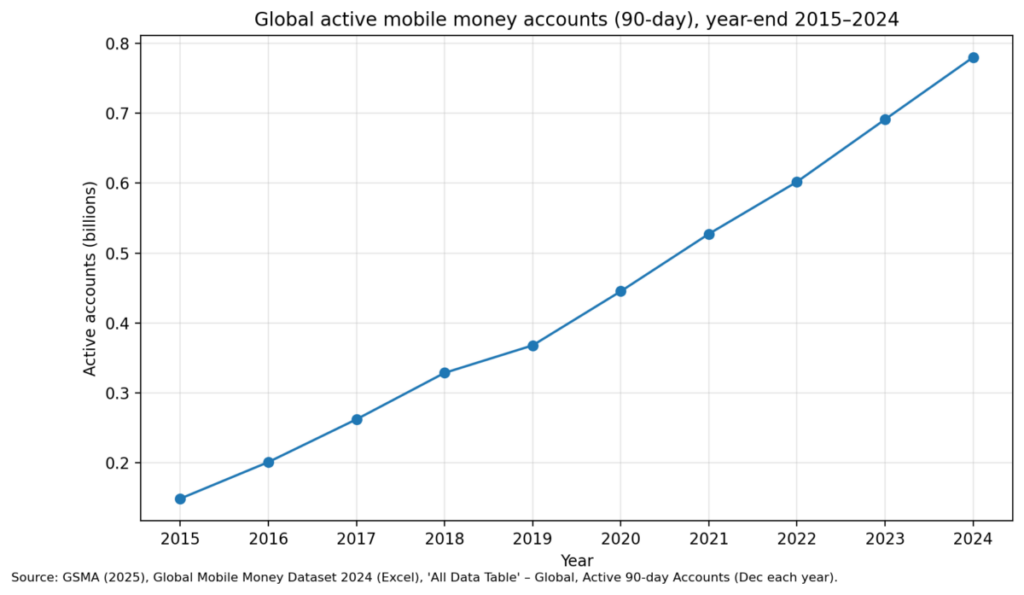
Financial resilience improves when digital wallets replace informal cash storage. Research on Kenya’s M-Pesa found that expanded access to mobile money lifted an estimated 194,000 households out of extreme poverty by enabling safer savings and more efficient remittance flows. Liquidity during illness or income disruption becomes immediate. School fees can be paid remotely, medical consultations settled digitally, and insurance premiums maintained without physical cash. In lower-income markets, the smartphone increasingly serves as a primary interface to the formal economy.
Sectoral Expansion of Superapps Beyond Financial Services
| Sector | Typical Services | Example Superapps | Strategic Rationale |
|---|---|---|---|
| Mobility | Ride-hailing, ticket booking | Grab, Gojek | High-frequency daily engagement |
| Food & Grocery | Restaurant delivery, grocery logistics | Meituan, Grab | Recurring consumer demand integration |
| Travel & Hospitality | Hotel booking, travel packages | Meituan, WeChat | Service bundling and cross-selling |
| Healthcare | Appointment booking, prescription services | WeChat, Alipay | Integration of digital identity and payment |
| E-Commerce | Marketplace sales, seller logistics | Mercado Libre, Tokopedia | Monetization of transaction data |
Sources: Company Annual Reports; Investor Presentations
For businesses, the transformation is structural. A market stall operator who once relied on cash can now generate a verifiable digital revenue record. That history can support access to working capital inside the same ecosystem. Embedded lending products provide liquidity based on transaction data rather than physical collateral. Platforms such as Mercado Pago, processing over $190 billion annually, convert payment volume into merchant financing and installment credit at scale. Data becomes underwriting infrastructure.
Operational adaptation follows. Restaurants integrate delivery logistics with wallet settlement. Ride-hailing drivers receive daily earnings into digital accounts. Utility providers embed bill payment within wallet interfaces. Settlement cycles compress and reconciliation becomes automated. Platform ecosystems increasingly control the customer interface, reshaping competitive dynamics between banks and digital intermediaries.
Superapps therefore influence socioeconomic mobility as much as convenience. By combining payments, savings, credit, and insurance within a single mobile channel, they reduce entry barriers to the formal economy. A vendor’s digital transaction trail becomes proof of income. A gig worker’s earnings become immediately deployable. A household previously dependent on informal lenders gains access to structured microcredit.
In advanced economies where banking penetration exceeds 90 percent, the benefit is incremental efficiency. In emerging markets, the effect is structural transformation. Digital wallet ecosystems provide a pathway from cash dependency toward data-backed financial participation, supporting entrepreneurship, income stability, and access to essential services. Economic opportunity increasingly flows through digital financial infrastructure embedded in daily transactions.
Governance Concerns and Emerging Pressures
As superapps evolve into digital financial infrastructure, governance expectations intensify. Most jurisdictions regulate them through payment and e-money frameworks rather than bespoke statutes, yet scale alters classification. In the United States, major wallet platforms fall under Bank Secrecy Act compliance, state money transmission licensing, and expanding federal supervision. The CFPB’s 2024 rule established oversight thresholds for large digital payment providers, signaling recognition that these platforms now function as systemic consumer finance infrastructure. In Europe, PSD2 governs payment institutions, the Digital Markets Act constrains ecosystem dominance, and MiCA regulates crypto-assets intersecting with wallet functionality. The CMS GDPR Enforcement Tracker reports 2,245 recorded fines totaling roughly €5.65 billion as of March 2025.

Cross-border remittances sit at the center of governance pressure. Global remittance flows reached approximately $905 billion in 2024. Yet the global average cost of sending $200 remains about 6.49 percent, and costs to Sub-Saharan Africa have approached 8.78 percent in recent reporting. Digital wallet corridors promise efficiency, but instant settlement increases compliance complexity. Sanctions screening, FX transparency, beneficiary verification, and capital controls must align across jurisdictions.
Illicit finance risk compounds the challenge. The UN Office on Drugs and Crime estimates global money laundering represents between 2 and 5 percent of world GDP, roughly $800 billion to $2 trillion annually. FATF assessments show uneven compliance with digital asset supervision standards, and Reuters reporting indicates illicit crypto wallet addresses may have received up to $51 billion in 2024. When superapps intersect with high-velocity corridors or stablecoin pathways, transaction monitoring architecture becomes central to system legitimacy.
Data sovereignty and personal rights introduce additional constraints. Superapps aggregate granular transaction histories and behavioral signals at scale. GDPR imposes strict lawful processing and transfer requirements, and cumulative fines totaling billions of euros demonstrate regulatory seriousness. Emerging data protection regimes in India and Southeast Asia increasingly introduce localization and consent requirements that reshape analytics models. For users, the ability to contest account freezes, correct records, and understand algorithmic risk flags affects trust in platforms that mediate income and spending.
Taxation enforcement is rising in parallel. Digital transaction trails enhance VAT monitoring, revenue reporting, and informal sector visibility. The same data that enables merchant credit underwriting strengthens state capacity to detect underreporting. As superapps deepen commercial integration, compliance obligations expand accordingly.
Competition policy remains active. In India, regulators extended implementation of a 30 percent UPI transaction cap for single firms to end-2026, reflecting sensitivity to concentration risk. In Brazil, the central bank-operated Pix system processed more than 26 trillion reais, roughly $4.61 trillion, in 2024, demonstrating how public payment rails can reduce ecosystem lock-in while maintaining speed and scale.
Regional divergence shapes emphasis. High-income economies prioritize competition, systemic risk classification, and data protection. Middle-income Southeast Asia and Latin America balance innovation with stability and corridor oversight. Lower-income African markets emphasize safe inclusion and operational resilience as transaction volumes approach infrastructure scale. Gulf economies maintain strict AML and capital flow supervision.
Governance has shifted from reactive compliance to structural integration. In the near future, sustainability will depend less on feature expansion than on regulatory alignment across payments licensing, AML controls, data sovereignty, and cross-border coordination. Platforms that embed compliance, transparency, and resilience into the same interface that handles wages, remittances, and daily consumption will secure institutional legitimacy. Those that cannot will encounter fragmentation and heightened constraint in precisely the markets where reliance is greatest.
Key Takeaways
-
Superapps function as mobile-based monetary systems, consolidating payments, commerce, credit, and daily services into a single wallet-centered interface operating at infrastructure scale.
-
Adoption is structural rather than incremental: Alipay processed over $20 trillion in 2025, M-Pesa handles transaction volumes equivalent to large shares of national GDP, and e-wallets dominate online payments in parts of Southeast Asia.
-
Digital wallets materially expand financial participation, with 79 percent of adults globally holding an account and 42 percent in developing markets making digital merchant payments.
-
Human impact is tangible: digital liquidity improves resilience during shocks, enables remote medical and educational payments, and creates transaction histories that unlock access to formal credit.
-
Business models shift as embedded finance converts transaction data into underwriting infrastructure, lowering barriers to working capital and integrating merchants into platform ecosystems.
-
Governance pressures span AML compliance, remittances, FX oversight, taxation, competition policy, and data sovereignty as superapps are increasingly treated as critical digital financial infrastructure.
-
Regional divergence shapes regulatory emphasis, but institutional trust and compliance architecture will determine long-term sustainability.
Sources
- World Bank; Global Findex Database 2021: Financial Inclusion, Digital Payments, and Resilience in the Age of COVID-19; – Link
- World Bank; Remittance Prices Worldwide – Quarterly Report (Q1 2025); – Link
- Migration Data Portal; Remittances Data Overview; – Link
- Bank for International Settlements; Fast Payments: Enhancing the Speed and Availability of Retail Payments; – Link
- UN Office on Drugs and Crime; Money Laundering Overview; – Link
- Financial Action Task Force; Targeted Update on Implementation of the FATF Standards on Virtual Assets and VASPs (2025); – Link
- CMS; GDPR Enforcement Tracker Report – Numbers and Figures; – Link
- Consumer Financial Protection Bureau; CFPB Finalizes Rule on Federal Oversight of Digital Consumer Payment Applications (2024); – Link
- Reuters; India Delays UPI Payments Market Share Cap; – Link
- Reuters; Brazil’s Pix Set for Next Leap with Recurring Payments (2025); – Link
- Tencent Holdings; Annual Report 2024; – Link
- Ant Group; Ant Group Sustainability and Annual Reports; – Link
- Mercado Libre; Form 10-K Annual Report 2023; – Link