

Political campaigns still describe themselves as contests of persuasion. The structure underneath does not behave that way anymore. What matters is not whether a message resonates broadly, but whether a system can identify where action is most likely and concentrate effort there. That distinction shifts the center of gravity. Messaging becomes visible output. Allocation becomes the mechanism.
This shift did not begin with new mathematics. The statistical foundation has been stable for decades. Phone polling, developed in the 1950s, relied on random sampling to estimate population behavior, and for a long period it worked with reasonable consistency. The breakdown is not in the equations. It sits in the inputs. Response rates have eroded. Participation skews toward certain demographic groups. Outreach itself is no longer neutral; it tends to reach those who are easier to contact or more willing to respond. Weighting adjusts for this, but weighting is itself an assumption layered on top of a compromised sample. The result is a system that maintains statistical form while drifting in substance. It still looks objective. It is no longer clean.
What replaces it is not a different logic, but a different environment in which that logic operates. Campaigns no longer depend on inference drawn from limited samples. They work from observed behavior at scale. Millions of signals – consumption patterns, location traces, interaction histories – feed into models that update continuously. The difference is not theoretical. It is computational. Instead of asking what a small group might represent, systems track what large populations actually do, and they do so in real time.
Traditional Polling vs Predictive Political Analytics
| Dimension | Traditional Polling | Predictive Analytics |
|---|---|---|
| Data Source | Survey-based random sampling | Large-scale behavioral data |
| Update Frequency | Periodic (static snapshots) | Continuous and real-time |
| Accuracy Constraints | Dependent on sample representativeness | Dependent on data volume and model quality |
| Granularity | Group-level insights | Individual-level predictions |
| Operational Use | Inform messaging strategy | Drive allocation and targeting decisions |
Source: Federal Trade Commission; Proceedings of the National Academy of Sciences; Pew Research Center
Once that scale is introduced, the structure begins to change in ways that are less visible but more consequential. The model does not need to generalize as aggressively. It can differentiate. With enough behavioral predictors, distinctions that were previously treated as noise become usable signals. That is where microtargeting emerges, not as a tactic layered onto campaigns, but as a consequence of resolution. Individuals are no longer approximations within a segment. They become distinct probability profiles.
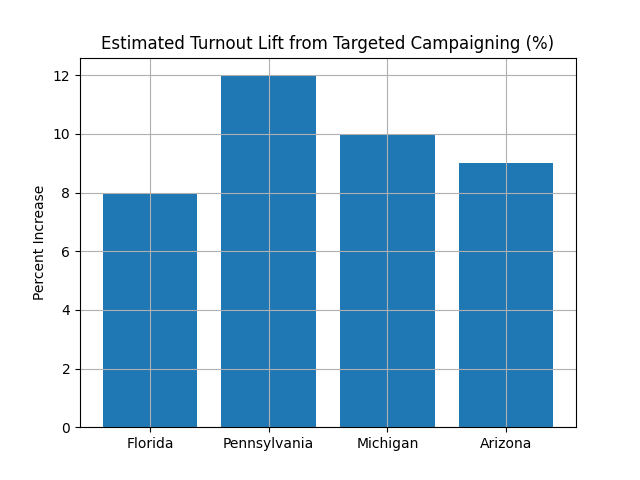
The implications are operational before they are political. Academic work suggests that, under certain conditions, targeted strategies can improve persuasive efficiency by more than 70%. The number matters less than what it implies. If prediction improves even marginally, and those improvements are applied across millions of individuals, the effect compounds. Campaigns are not seeking to persuade uniformly. They are selecting where persuasion is most likely to succeed, and often where it is least necessary.
At that point, communication itself starts to fragment. There is still a campaign platform, still a set of positions that can be described publicly, but the way those positions are presented becomes contingent. Microtargeting is not a single method applied consistently; it is a set of adjustments made at the level of the individual. One voter sees an issue framed in economic terms, another in social terms, a third may not encounter it at all. The campaign remains intact at the surface. Underneath, it behaves more like a series of parallel interactions.
This begins to resemble something familiar, though it is not usually described in those terms. The logic is closer to commercial marketing than to traditional political messaging. Data is collected, refined, and acted upon. Outcomes are measured. Adjustments are made. The difference is not in the process, but in the domain to which it is applied.
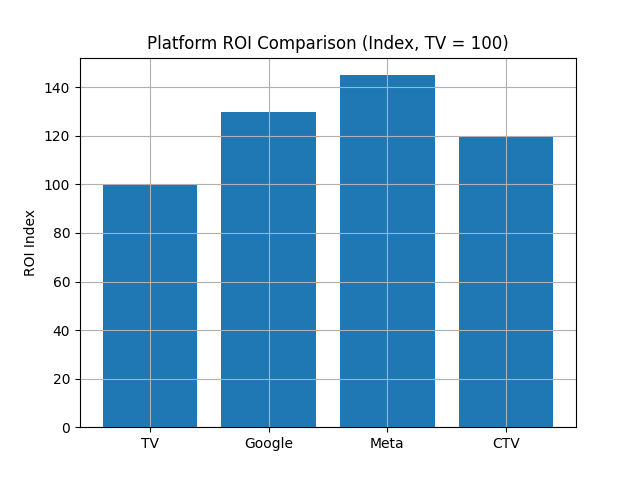
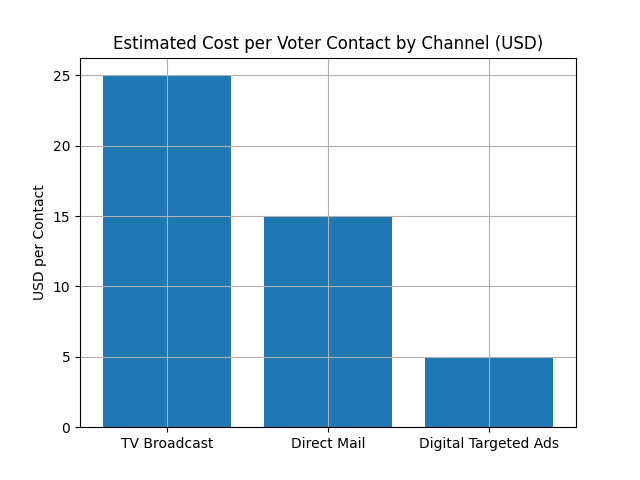
That shift carries through into spending. Broadcast channels still exist, and they still provide reach, but they do not offer the same level of control. Digital systems do. They allow campaigns to decide not just what to say, but who should see it, when they should see it, and how often. The result is a gradual reallocation of resources toward environments where those decisions can be optimized and measured.
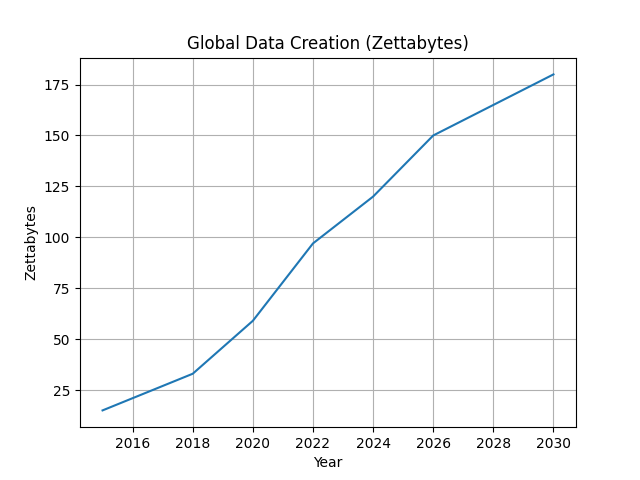
The scale of data supporting this is difficult to overstate. Data brokers maintain hundreds, sometimes thousands, of attributes per individual. At the same time, global data creation has surpassed 120 zettabytes annually. The volume does not eliminate uncertainty, but it reduces reliance on assumption. Models are updated continuously, not periodically. Decisions follow from those updates.
Campaigns, in practice, stop trying to reach everyone. They begin excluding. Individuals who fall below certain probability thresholds are removed from targeting pools. Others are prioritized, sometimes within hours of a behavioral signal. Efficiency replaces exposure as the governing metric. Cost per action matters more than total impressions.
What emerges from this is not simply a more efficient campaign. It is a different structure altogether. Voters are treated as probabilistic entities, each assigned a likelihood of taking a specific action. Resources are allocated accordingly. The system begins to resemble a market, not in the sense of exchange, but in the way decisions are made under conditions of scarcity and information asymmetry.
The competition is no longer over messaging alone. It is over who can measure and act with greater precision.
Microtargeting Implications for Political Communication
| Area | Observed Effect | Strategic Implication |
|---|---|---|
| Message Consistency | Different users receive different versions of messaging | Reduced uniformity in public political discourse |
| Engagement Optimization | Content tailored to behavioral preferences | Higher interaction and conversion rates |
| Information Exposure | Reinforcement of existing preferences | Potential narrowing of viewpoint diversity |
| Campaign Flexibility | Dynamic adjustment of messaging | Increased responsiveness to real-time data |
| Transparency | Limited visibility into individualized messaging | Challenges for oversight and accountability |
Source: PNAS; Nature; European Commission
Operational Systems and Measurable Efficiency
The mechanics behind this shift are not uniquely political. They are borrowed, almost directly, from digital advertising, where the problem has long been framed in terms of performance rather than persuasion. Politics adapts that structure, but the underlying systems remain largely the same.
There is no single system. It is a set of processes that connect and update continuously. Data is collected, combined, and fed into models that assign probabilities. Those probabilities determine how resources are deployed. The process does not begin and end. It cycles.
Data pipelines sit at the front of that cycle. Campaign data is combined with third-party datasets, often sourced from brokers or commercial providers. The inputs vary – browsing activity, transaction history, location data – but the purpose is consistent: to build profiles that reflect behavior rather than declared preference. These profiles are not static. They change as new signals are captured, sometimes within minutes of an interaction.
Segmentation follows, though the term itself becomes less precise. Traditional demographic categories are still present, but they carry less weight. Behavioral clustering replaces them. Individuals are grouped by how they act – how often they engage, when they respond, how their activity changes over time. In practical terms, this improves efficiency. Measured outcomes suggest gains in the range of 20–50% when compared to demographic targeting, not because demographics are irrelevant, but because behavior provides a more direct signal.
Prediction translates those clusters into decisions. Each individual is assigned a set of probabilities: likelihood to vote, to donate, to engage with a specific issue. These are not static scores. They update as new data is introduced. Campaigns use them to determine intensity. A high-probability individual may receive multiple interactions within a short window. A low-probability individual may receive none. The system is selective by design.
Expansion occurs through similarity. Lookalike modeling identifies individuals who resemble those already classified as high value. This extends reach without requiring direct data on each new individual. In some cases, it expands audiences by a factor of five to ten. The system grows outward, but it remains anchored in observed behavior.
Then there is feedback. Engagement is not simply an outcome; it becomes an input. When an individual interacts with content, that interaction is recorded and fed back into the model. Predictions adjust. Targeting adjusts. Content that performs well becomes more visible. Content that does not is reduced. The system learns, but it also reinforces.
That reinforcement is not neutral. Research shows that engagement-driven ranking can increase content visibility by 200–400%, depending on interaction levels. Over time, exposure becomes shaped by prior behavior. What an individual sees is influenced by what they have already engaged with. The system begins to narrow as it optimizes.
All of this is executed through programmatic systems. More than 70% of digital advertising now operates in this way, and political campaigns follow the same path. Decisions about where to allocate resources are automated, adjusted continuously, and evaluated based on measurable performance. The campaign is no longer a sequence of planned actions. It is a system that updates itself.
It does not stop to reassess. It recalibrates as it moves.
Case Studies and Comparative Performance
The systems behave consistently. The outcomes do not. That difference is less about technology than it is about environment.
Controlled research offers a baseline. A 2023 study found that machine learning–driven microtargeting could improve persuasive efficiency by more than 70% under certain conditions. The qualifier matters. The same study also showed variability depending on context, audience, and issue alignment. A separate field experiment in Europe found that while targeted messaging increased stated support, it did not produce a statistically significant change in actual voting behavior. Engagement is easier to move than outcomes. That distinction holds across most environments.
Where the systems diverge is in how they are deployed.
In the United States, the advantage is built on data availability and integration. Campaigns operate in an environment where behavioral data is extensive, often enriched by third-party brokers. Profiles can include hundreds or thousands of attributes, allowing probability models to refine continuously. The system behaves as a predictive market. Efficiency comes from improving allocation – identifying where engagement is most likely and concentrating effort there. Marginal gains matter. A 10–15% improvement in targeting efficiency, applied across millions of voters, becomes consequential.
India presents a different structure. The scale is larger – approximately 820 million internet users during the 2024 general election – but the system is less uniform. Campaigns rely heavily on mobile-first communication, while regulators attempt to monitor content through keyword tracking and platform coordination. Enforcement capacity varies significantly across regions. The system processes large volumes of information, but it does not apply control evenly. Scale amplifies both reach and inconsistency.
Brazil shifts the focus again, this time toward distribution. During the 2018 election, more than 120 million WhatsApp users created a communication environment that operates largely outside public visibility. Campaigns used these networks to distribute content directly, bypassing traditional media channels. The challenge is not prediction. It is containment. Once content enters these networks, it moves in ways that are difficult to monitor or regulate.
Taken together, the comparison clarifies the structure. The United States emphasizes prediction. India emphasizes scale. Brazil emphasizes distribution through closed networks. The underlying system – behavioral data feeding probabilistic models – remains the same. What changes is where control sits and how it is exercised.
A traditional campaign operating across these environments would behave differently. It would distribute messaging broadly, allocate resources across entire populations, and rely on exposure rather than selection. That approach does not disappear, but it becomes less efficient. When resources are finite, broad allocation creates waste. Data-driven systems reduce that waste by concentrating effort where it is most likely to produce a response.
The advantage is not absolute. It is incremental. At scale, incremental differences accumulate.
Human Impact and Behavioral Feedback Systems
At the level of the individual, the system is not visible as a system. It appears as a sequence of interactions.
A user engages with a piece of content – a video, an article, a post. That interaction is captured. It becomes a signal. The model updates. The individual is reassigned, sometimes subtly, to a different probability category. What follows reflects that reassignment. More content appears, aligned with the initial interaction. Timing adjusts to match usage patterns. Messaging shifts in tone or emphasis.
This is not persuasion in the traditional sense. It is alignment.
Measured outcomes show that engagement increases when delivery is timed to user behavior, often by 20–30%. Reducing friction – simplifying a donation process, for example – can increase conversion rates by approximately 20%. These effects do not require changing underlying preferences. They require identifying when and how those preferences can be activated.
Feedback Loop Dynamics in Political Analytics Systems
| Stage | System Activity | Outcome |
|---|---|---|
| Data Collection | User behavior captured across platforms | Creation of detailed behavioral profiles |
| Model Prediction | Probability scores assigned to individuals | Targeting priorities established |
| Content Delivery | Personalized messaging distributed | Increased likelihood of engagement |
| Engagement Capture | User interactions recorded | Model refinement and recalibration |
| System Reinforcement | High-performing content amplified | Behavioral patterns reinforced over time |
Source: Nature; Salesforce; McKinsey & Company
The system becomes more complex once feedback loops are considered.
Engagement does not simply indicate interest. It influences future exposure. Content that performs well is amplified. Content that does not is reduced. Over time, individuals are exposed to information that aligns with their prior behavior. The system is measuring and shaping simultaneously. The distinction becomes difficult to maintain.
This has implications for how political information is experienced. Microtargeting allows campaigns to deliver different messages to different individuals, not as an exception, but as a standard operating practice. One voter may encounter an issue framed around economic impact. Another may see the same issue framed around identity or security. Both interactions are optimized for engagement. Neither is necessarily representative of the full campaign position.
Generative AI extends this capability further. Content can now be produced in large volumes and adapted quickly. During recent election cycles, synthetic media – including manipulated images and video – has been used in political contexts across multiple countries. Production costs are declining, with estimates suggesting efficiency gains in the range of 30–50%. The barrier is no longer creation. It is distribution and detection.
When combined with predictive targeting, this creates a system where content can be tailored, tested, and scaled rapidly. Performance determines visibility. Accuracy becomes secondary.
Governance, Economics, and Structural Incentives
The system operates within a set of incentives that are not neutral.
Data functions as a competitive asset. Campaigns invest in acquiring and refining it because it improves allocation decisions. In digital operations, between 60% and 80% of spending is routed through programmatic systems, where decisions are automated and evaluated based on measurable outcomes. Efficiency is not an abstract goal. It is a measurable requirement.
This creates asymmetry. Campaigns with access to more data, or with better models, operate more efficiently. That efficiency compounds. Improved predictions lead to better allocation, which generates more data, which improves predictions again. The system reinforces itself.
Governance Approaches to Political Data Systems
| Region | Regulatory Focus | Key Characteristics |
|---|---|---|
| United States | Data privacy and broker oversight | Fragmented framework with market-driven data ecosystem |
| European Union | Platform accountability and transparency | Centralized regulatory approach with enforcement mechanisms |
| India | Content monitoring and electoral oversight | Large-scale digital participation with uneven enforcement capacity |
| Brazil | Platform moderation and misinformation control | High reliance on closed messaging networks |
Source: Reuters; European Commission; Mozilla Foundation
Regulatory frameworks are responding, but not uniformly.
In the United States, oversight has focused on data brokers and surveillance practices. Regulatory actions have increased, including investigations into data aggregation and usage. Proposed legislation seeks to introduce greater transparency and control over personal data. The system remains fragmented, with multiple agencies and partial coverage.
The European Union has taken a more centralized approach. The Digital Services Act introduces obligations that extend beyond content to include platform behavior, including recommender systems and targeting mechanisms. Enforcement actions have already been initiated against major platforms, with requirements for transparency in political advertising.
The difference is not only in rules, but in how those rules are applied.
In practice, regulation tends to address what is visible – messaging, content, disclosure. The underlying allocation systems are less accessible. They operate through models, data flows, and optimization processes that are difficult to observe directly. Compliance becomes a question of interpretation rather than a fixed condition.
The gap between rule and application remains.
Near-Term Outlook and Structural Direction
The direction of the system is relatively clear, even if its boundaries are not.
Predictive models will continue to improve as data volume increases and integration deepens. Campaigns will refine targeting in real time, adjusting allocation as new information becomes available. The distinction between commercial and political systems will continue to narrow, as both rely on the same underlying infrastructure.
Generative AI introduces a different dimension. Content can be produced and adapted at scale, reducing the time between signal and response. Early indications suggest that campaigns are shortening iteration cycles, testing multiple variations of content and adjusting based on engagement metrics. The system becomes faster, but also less stable.
Constraints are emerging alongside these developments. Public concern over data usage remains high. Regulatory scrutiny is increasing, particularly in relation to data brokers and platform practices. These pressures may limit data access, affecting how models are built and maintained.
A more complex issue is beginning to take shape around sovereignty.
Political systems are no longer confined within national boundaries. Data moves across jurisdictions. Platforms operate globally. External actors can engage with domestic audiences using the same tools as campaigns. Influence does not require direct intervention. It can operate through the same predictive and distribution systems already in place.
This changes the problem. It is no longer only about campaign behavior. It is about control over the systems through which behavior is measured and influenced.
At a structural level, the system can be reduced to a loop. Behavior generates data. Data informs prediction. Prediction determines allocation. Allocation influences behavior. The loop continues.
Control over that loop is what defines advantage.
The question is not who persuades more effectively. It is who operates the system with greater precision.
Key Takeaways
-
Political systems are shifting from broad persuasion to predictive allocation based on behavioral data
-
Microtargeting enables individualized messaging that can vary across the electorate
-
Efficiency gains, even in the range of 10–15%, can scale into meaningful advantages
-
Feedback systems reinforce behavior, influencing what individuals see over time
-
Generative AI increases content production capacity and introduces new risks
-
Regulatory frameworks address visible elements but struggle with underlying systems
-
Cross-border data flows complicate control and raise questions of campaign sovereignty
Sources
- Federal Trade Commission; Data Brokers: A Call for Transparency and Accountability; – Link
- Proceedings of the National Academy of Sciences; Quantifying the Potential Persuasive Returns to Political Microtargeting; – Link
- The Information Society; Effects of an Issue-Based Microtargeting Campaign: A Small-Scale Field Experiment in a Multi-Party Setting; – Link
- Proceedings of the National Academy of Sciences; Private Traits and Attributes Are Predictable from Digital Records of Human Behavior; – Link
- Reuters; India Sieves Online Deluge to Stamp Out Disinformation in World’s Biggest Election; – Link
- Reuters; Facebook’s WhatsApp Flooded With Fake News in Brazil Election; – Link
- Reuters; US Political Ad Spending to Soar in 2024 With TV Media the Biggest Winner; – Link
- Reuters; Federal Data Privacy Laws Gain Support in US Congress, but Critics Remain; – Link
- European Commission; Transparency and Targeting of Political Advertising; – Link
- European Commission; New EU Rules on Political Advertising Come into Effect; – Link
- European Commission; Two Years of the Digital Services Act Ensuring Safer Online Spaces; – Link
- Salesforce; State of Marketing Report: Tenth Edition; – Link