
For billions of people, connectivity determines whether wages arrive on time, whether remittances can be withdrawn, whether clinics respond, and whether small businesses can operate for the day. Across Africa, South Asia, Latin America, and parts of the Middle East, unreliable access continues to make economic life fragile. Connectivity is not primarily about speed or entertainment. It is about whether essential systems function when they are needed.
Roughly 2.2 billion people remain offline globally, but the more pervasive problem is instability rather than absence. Many more live with service that fails often enough to disrupt routine economic activity. In Sub-Saharan Africa, fewer than four in ten people use the internet regularly, with rural regions facing higher outage rates driven by weak infrastructure, power instability, and distance from network assets. In parts of the Middle East, national averages conceal deep regional gaps where terrain or conflict interrupts service for days at a time.
Satellite Connectivity Models and Economic Function
| Connectivity Model | Primary Use Case | Economic Role | Typical Users | Key Constraints |
|---|---|---|---|---|
| Fixed Satellite Broadband | Household and institutional access | Enables early participation where fiber is absent | Schools, clinics, SMEs, higher-income households | High upfront cost and pricing sensitivity |
| Satellite-Supported Mobile Backhaul | Network stabilization | Reduces outages and service disruption | Rural and peri-urban mobile users | Capacity limits and regulatory coordination |
| Direct-to-Device Satellite | Basic messaging and voice | Provides a baseline connectivity floor | Remote and unserved populations | Limited bandwidth and early-stage services |
Source: ITU; GSMA;
Failure cascades quickly. Mobile money platforms now process roughly $1.4 trillion annually across more than 85 billion transactions, often serving as the primary financial system. Wages, government transfers, food payments, school fees, and emergency savings move through a phone. When networks fail, settlements stall, withdrawals are blocked, and households revert to cash-based workarounds that are slower, riskier, and more expensive. For informal workers paid daily or weekly, a single failed transaction can mean missed meals or unpaid transport.
Public systems are equally exposed. Social protection programs, digital identity schemes, vaccination tracking, and education platforms increasingly rely on mobile delivery because physical alternatives do not scale. Where connectivity is intermittent, these systems function unevenly, reinforcing geographic inequality. A transfer that arrives late, a health message that does not send, or a registration that times out can exclude households entirely.
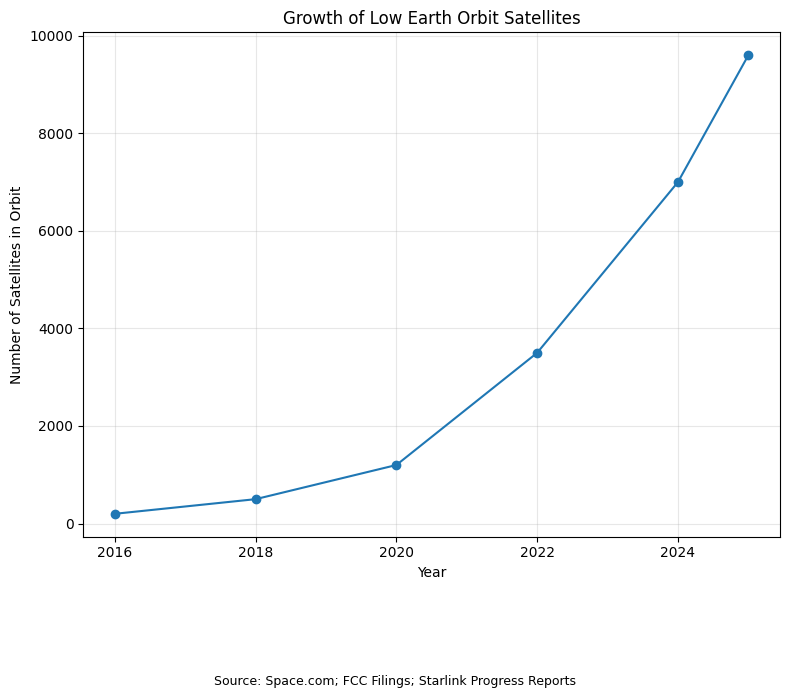
Satellite technologies have become economically relevant because they stabilize these systems where terrestrial networks struggle. Their value is not measured in peak speed, but in fewer outages, shorter downtime, and wider geographic reliability. By reducing the moments when people are disconnected from money, services, and information, satellites shift connectivity from an occasional utility into dependable infrastructure.
Why Legacy Connectivity Models Break Down and How Satellites Are Used
Persistent connectivity gaps are driven less by technological limits than by cost structures that collapse at the margins. Fiber and tower-based mobile networks were optimized for density, stable power, and predictable revenue. In remote, low-income, or fragile regions, those conditions rarely exist. Sparse populations, weak purchasing power, difficult terrain, and unreliable electricity turn network expansion into a capital-intensive exercise with diminishing returns.
The economics deteriorate sharply as networks extend outward. In many emerging markets, reaching the final five percent of the population can consume 20–30 percent of total network investment. Fiber deployment requires long-distance trenching, complex land rights, and payback periods that often exceed a decade. Mobile towers require continuous power, secure sites, and reliable backhaul, all of which raise operating costs where infrastructure is weakest. In regions where average monthly income may fall below $150, these investments struggle to clear commercial thresholds.
This pressure explains why coverage expansion slows despite clear demand and why reliability has become the binding constraint. Across rural and peri-urban regions, outages are frequent and prolonged. Power instability alone can take mobile sites offline for hours during grid failures, while environmental damage, theft, and congestion compound interruptions. For users, access works some days and disappears on others.
Global Mobile Internet Coverage vs Usage
| Population Category | Share of Global Population (%) | Interpretation |
|---|---|---|
| Outside Mobile Broadband Coverage | 4% | Pure access gap driven by infrastructure absence |
| Within Coverage but Not Using Mobile Internet | 39% | Usage gap driven by affordability, skills, and reliability |
| Active Mobile Internet Users | 57% | Population with consistent digital participation |
Source: GSMA – Mobile Internet Connectivity Report; ITU – Facts and Figures
Satellite technologies are integrated into connectivity strategies because they address these failures at the architectural level. Once deployed in orbit, satellites are not constrained by roads, terrain, or local power grids. Coverage extends across wide geographies with relatively low marginal cost per additional user, allowing service to reach regions where terrestrial expansion becomes prohibitively expensive long before social need is met.
Modern low Earth orbit constellations operate at altitudes of a few hundred kilometers, reducing latency to roughly 20–50 milliseconds, compared with 500 milliseconds or more for earlier systems. This shift enables real-time communication and transactional services that were previously impractical.
Access now arrives through three complementary models. Fixed satellite broadband connects households, clinics, schools, or businesses via a dedicated terminal. Global subscriptions number in the high single-digit millions, with download speeds often exceeding 100 Mbps. Equipment costs and monthly fees limit household adoption, but shared institutional use spreads costs across communities, making schools, clinics, and enterprises reliably connected years ahead of fiber rollout.
The most economically consequential model is satellite-supported mobile connectivity. Tens of thousands of mobile base stations already rely on satellite backhaul to maintain service continuity, accounting for up to 20–30 percent of rural coverage in some low-income countries. For users, the layer is invisible, but downtime during floods, storms, or grid failures falls from days to hours, stabilizing mobile money and public service delivery.
Direct-to-device connectivity removes towers and user equipment entirely by allowing satellites to communicate directly with standard mobile phones. Early deployments focus on messaging and basic voice, delivering high economic return at minimal bandwidth cost. For populations beyond any signal, the difference between zero access and basic access is immediate.
Together, these models form a layered system. Dense terrestrial networks deliver capacity where economics support them. Satellite-supported mobile stabilizes service at the margins. Direct-to-device fills the final gaps. Connectivity becomes adaptive rather than uniform, matched to geography, income, and use case.
When the Network Holds
The most meaningful change introduced by satellite-enabled connectivity is not that people can do more online, but that they can stop planning for failure. In much of the world, connectivity has never been assumed. Payments are tested before they are attempted, trips to agents are taken cautiously, and critical tasks are delayed until the signal appears stable. Reliability alters that posture. When the network holds, behavior changes with it.
That shift matters because digital systems now sit at the center of everyday economic life. Mobile money alone moves roughly $1.4 trillion in value each year through more than 85 billion transactions, supported by about 1.75 billion registered accounts. In many low- and middle-income countries, this is not a complement to banking infrastructure but the banking system itself. Wages, remittances, food purchases, school fees, and emergency savings move through a handset. When connectivity fails, the consequences are immediate. Merchants lose sales, workers wait for wages, and households make repeated trips to agents that have nothing to give them.
Connectivity Failure Pathway and Economic Impact
| Failure Point | Immediate Human Impact | Economic Consequence | Systemic Risk |
|---|---|---|---|
| Mobile payment outage | Missed wages and purchases | Household liquidity stress | Erosion of trust in digital systems |
| Network shutdown | Blocked communication | Regional commerce disruption | Macroeconomic loss |
| Backhaul failure | Service unavailability | Business downtime | Informal sector contraction |
Source: GSMA; Internews; Global Network Initiative
The cost of these failures rarely appears in national accounts, but it accumulates in lost time, risk, and behavioral retreat. Roughly 3.1 billion people live within mobile broadband coverage yet do not use mobile internet services. Affordability and skills explain part of that gap, but experience explains another. When systems fail often enough, people learn not to rely on them for essentials. Reliability functions as a behavioral threshold rather than a technical feature.
Satellite-supported connectivity pushes against that threshold by reducing the frequency and duration of breakdowns. Where mobile networks once dropped for hours or days during power failures, floods, or damaged backhaul, satellite integration shortens outages or keeps systems running entirely. The difference is incremental in isolation and decisive over time. Fewer failed transactions mean fewer lost workdays. Digital tools become habits rather than gambles.
Small businesses are often the first to respond. Informal enterprises dominate employment across much of the Global South, and many operate close to viability. A payment that fails at the counter is not a technical inconvenience but a lost sale. When connectivity becomes predictable, merchants accept digital payments without hesitation, coordinate with suppliers beyond local markets, and stabilize cash flow, which is often the binding constraint on survival.
Public systems respond through consistency rather than expansion. Governments increasingly distribute transfers, pensions, and emergency support through mobile platforms because physical delivery does not scale. Yet unreliable connectivity reproduces geographic inequality, delaying or blocking benefits in remote areas. Satellite-supported reliability narrows that gap not by changing eligibility, but by making delivery predictable, reducing missed payments and administrative exclusion.
Health and education systems feel the impact through continuity. Rural clinics depend on communication for referrals, diagnostics, and supply coordination. Schools rely on access that works consistently rather than intermittently. Reliable connectivity does not solve staffing or resource shortages, but it removes uncertainty that quietly undermines service delivery.
Age and gender shape how these gains are absorbed. Younger users integrate connectivity quickly, while older adults adopt cautiously and abandon quickly when systems fail. Women, who often manage household finances and rely heavily on mobile money, benefit disproportionately from fewer failures, fewer trips, and lower exposure to risk.
The environmental balance remains complex. Satellite connectivity can reduce local ecological disruption by limiting the need for roads, towers, and trenching through sensitive terrain. At the same time, large constellations introduce global externalities through manufacturing, launches, and orbital congestion. These costs are diffuse and long-term, while the benefits are immediate and local, making them a governance challenge rather than a purely technical one.
Inequality does not disappear when the signal improves; it reorganizes. Fixed satellite broadband reaches institutions and higher-income users first, while direct-to-device services deliver basic reliability at scale with limited functionality. Whether this gradient narrows or hardens depends on pricing, integration, and policy design.
What ultimately changes is not access in the abstract, but the rhythm of daily life. Fewer failures mean fewer missed payments, fewer lost hours, and fewer moments when geography quietly dictates opportunity. At that point, connectivity stops behaving like infrastructure and starts functioning as economic stability.
When Connectivity Becomes a Utility, Governance Becomes Price and Power
Satellite-enabled connectivity is scaling fast enough that many countries are crossing a threshold. Connectivity stops being an access project and starts behaving like a utility. Once households rely on networks for wages, remittances, public transfers, and emergency communication, tolerance for failure collapses. At that point, governance shifts from permission to operate toward rules governing continuity, pricing, accountability, and national control.
This transition is being accelerated by scale that did not exist a few years ago. One major satellite broadband operator now reports service availability across more than 150 markets and roughly 9 million active customers. Connectivity layers are expanding faster than the institutions meant to govern them. When dependence forms before oversight, utilities create habits, habits create political sensitivity, and political sensitivity forces regulation.
The governance challenge now extends well beyond telecom licensing. Data governance has converged with connectivity policy because satellite networks are inherently cross-border. With privacy laws in force across most of the world and widespread data localization measures, traffic routing collides with national control once payments and digital public services rely on satellite architecture. What had once been compliance questions increasingly resemble utility governance concerns.
Regional Governance Trade-offs in Satellite Connectivity
| Region | Primary Connectivity Need | Governance Risk | Likely Regulatory Response | Long-Term Economic Risk |
|---|---|---|---|---|
| Sub-Saharan Africa | Inclusion and reliability | External dependency | Access-first, governance-later | Lock-in and weak bargaining power |
| Middle East | Resilience and continuity | Sovereignty exposure | Strict licensing and routing control | Slower consumer rollout |
| South Asia | Scale and affordability | Internal inequality | Price and bundling regulation | Stratified access |
| Latin America | Coverage extension | Regulatory fragmentation | Institutional deployment focus | Delayed mass adoption |
Source: World Bank; ITU;
Africa illustrates how quickly the utility moment arrives in mobile-first economies. The region combines deep reliance on phone-mediated finance with a rising incidence of deliberate connectivity disruption. In 2024, shutdowns across Sub-Saharan Africa were associated with estimated economic losses exceeding $1.6 billion. Satellite systems can reduce outage impact, but they also introduce sovereignty and dependency risks when regulatory capacity lags deployment. Rapid inclusion can coexist with long-term bargaining weakness if governance follows rather than leads.
The Middle East reflects a different trade-off. Connectivity is treated as strategic infrastructure shaped by resilience, conflict risk, and state control. Satellite deployment tends to be slower, but governance around routing, licensing, and lawful access is stronger once adoption deepens. In this environment, satellite connectivity stabilizes systems while simultaneously triggering tighter state oversight because the stakes are political as well as economic.
South Asia’s challenge is scale and affordability. Satellite layers can close rural and geographic gaps, but pricing determines whether access becomes ubiquitous or stratified. Regulation functions as economic design, shaping whether satellite connectivity integrates into mass-market plans or remains a premium overlay. Latin America highlights a separate constraint, where fragmented licensing and spectrum regimes reduce scale efficiency, pushing deployments toward institutions while delaying consumer ubiquity.
Market concentration reinforces the utility analogy. Orbital networks require immense capital and produce a small-provider structure by design. As dependence rises, pricing power, switching costs, and accountability move to the center of economic policy. Connectivity disruptions are no longer technical incidents but macroeconomic shocks. Once the cost of absence becomes measurable, connectivity behaves like a utility in every economic sense.
From Expansion to Stewardship
Satellite connectivity is no longer experimental infrastructure. As access stabilizes and dependence deepens, the challenge shifts from expansion to stewardship. Fiber and dense terrestrial networks will continue to dominate capacity where economics allow. Satellites will define the minimum level of connectivity societies are no longer willing to fall below.
The most persistent digital divide is increasingly not coverage but dependable use. Billions live within mobile broadband reach yet do not adopt consistently, shaped by affordability, skills, and lived experience with unreliable systems. Satellite-supported mobile connectivity and direct-to-device services matter most where they reduce failure rather than raise peak speed.
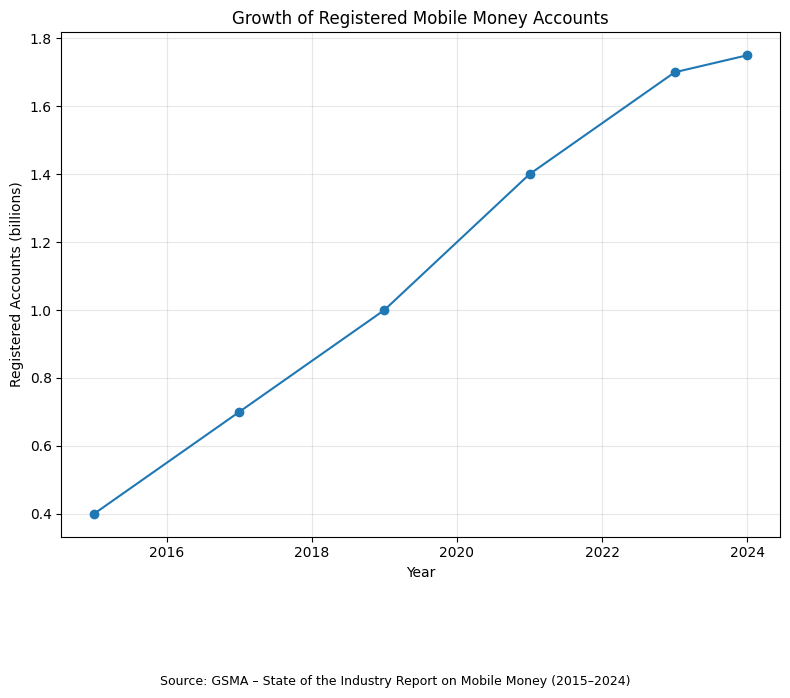
As digital systems mediate wages, commerce, and public services, the economic shadow price of connectivity loss continues to rise. Once failure becomes unacceptable, connectivity is governed like other essential utilities, with oversight focused on pricing, continuity, interoperability, and accountability. Satellite systems will be judged less by how fast they extend access and more by how well they integrate into national economies.
The long-run outcome will be hybrid rather than orbital-only. Satellites will not replace terrestrial networks but will anchor the floor of access. Direct-to-device services will expand gradually, while satellite-supported mobile layers stabilize service where ground economics fail. The decisive factor will be policy design, not engineering.
Satellite technologies matter because they compress timelines and reduce the penalty of geography, bringing societies faster to the point where connectivity is assumed and failure is intolerable. From that moment on, the challenge is stewardship. The signal may come from orbit, but the future of connectivity will be decided on the ground, in the rules that shape affordability, reliability, accountability, and control once connectivity becomes non-negotiable.
Key Takeaways
-
Satellite-enabled connectivity is pushing many markets from “access expansion” into “utility dependence,” where failure carries immediate economic costs and forces harder regulation around pricing, continuity, and accountability.
-
The dominant inclusion barrier is increasingly the usage gap – billions live inside coverage but do not adopt consistently – and reliability is a major driver of whether digital systems are trusted for essentials like payments and public services.
-
Satellite-supported mobile connectivity and direct-to-device services shift universal service economics by lowering the marginal cost of reaching remote, poor, and infrastructure-fragile regions, but they also concentrate power in a small set of cross-border operators.
-
Governance risk grows as dependence rises: cross-border routing, lawful access, and data localization regimes collide with orbital architectures, turning telecom policy into sovereignty and economic policy.
-
Regional pathways diverge: Africa captures rapid inclusion but faces higher lock-in exposure; the Middle East tends to trade rollout speed for stronger sovereignty controls; South Asia’s outcome hinges on affordability and internal inequality; Latin America’s constraint is regulatory fragmentation limiting scale efficiencies.
-
Connectivity disruptions are no longer “technical incidents” but macroeconomic shocks; shutdowns and outages impose measurable losses that intensify the case for utility-style oversight.
-
The long-run contest is not orbit versus الأرض infrastructure; it is whether hybrid stacks can deliver baseline, affordable reliability without entrenching market concentration or weakening national control.
Sources
- GSMA; New GSMA report shows mobile internet connectivity continues to grow globally but barriers for 3.45 billion unconnected people remain; – Link
- GSMA; Maturing global mobile money market hits $1.4tn in transaction value; – Link
- GSMA; State of the Industry Report on Mobile Money; – Link
- International Telecommunication Union; Facts and Figures: Measuring Digital Development; – Link
- International Association of Privacy Professionals; Data protection and privacy laws now in effect in 144 countries; – Link
- Center for Global Development; The Inequitable Impacts of Data Localization; – Link
- Institute for Security Studies Africa; Offline and silenced: Africa’s quiet rise of internet repression; – Link
- The Guardian; Internet shutdowns hit record high in Africa in 2024; – Link
- Top10VPN; The Cost of Internet Shutdowns 2024; – Link
- Global Network Initiative; The Economic Impact of Disruptions to Internet Connectivity; – Link
- Internews; The Price of Disruption: Economic Impacts of Internet Shutdowns; – Link
- Starlink; Starlink Progress Report 2025; – Link
- Starlink; Starlink Availability Map; – Link
- Business Insider; SpaceX’s Starlink customer numbers surge past 9 million; – Link
- Space.com; SpaceX Starlink satellite launch coverage and constellation scale reporting; – Link
- The Verge; FCC approves SpaceX request for 7,500 more Starlink satellites; – Link
- The Verge; Iran’s internet blackouts and the role of satellite connectivity; – Link