
Consider two distributors confirming orders over mobile connections as afternoon traffic builds: both purchase internet access, but one also pays for priority. During congestion, its confirmations keep moving while the other business waits, turning preferential network treatment into completed work.
In advanced economies, businesses coordinating production through cloud systems increasingly need control over when operating information arrives. Once everyone is connected, the next competitive advantage is whose traffic gets served first. That control can be purchased where communication timing affects production.
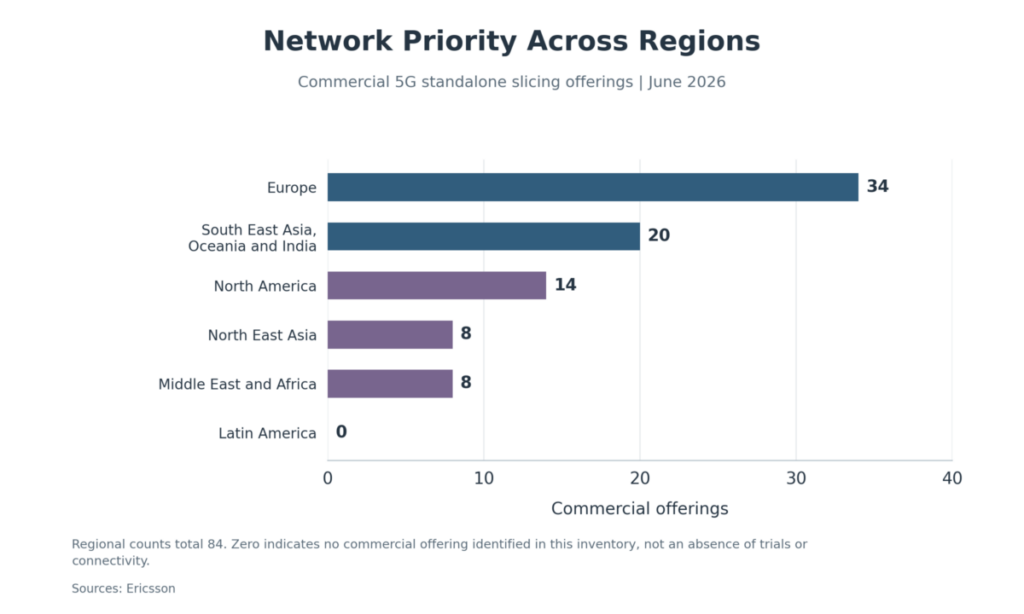
Internet use reached 94% in high-income countries in 2025, against 23% in low-income countries. As access becomes established, connection quality and affordability take on economic significance. Within connected markets, paid priority makes that transition an economic question about allocating network resources, with consequences extending through international suppliers to countries seeking investment in productive industries.
| Global market measure | November 2025 | June 2026 |
|---|---|---|
| Commercial 5G standalone slicing offerings | 65 | 84 |
Sources: Ericsson
Why Connectivity Is Becoming Programmable
Paid cloud services reached 52.7% of surveyed EU enterprises in 2025, up 7.4 percentage points from 2023. The enterprise figures cover selected sectors and businesses with at least 10 workers; they include cloud software alongside infrastructure as a service, or IaaS. They establish the scale and growing commercial importance of activity conducted through remotely delivered computing.
An order arriving through a manufacturer’s cloud platform can trigger production adjustments and notify an overseas supplier without human intervention. Agents extend those operating decisions. A historical sales report tolerates delay; an instruction coordinating a time-sensitive operation has a narrower window, making consistent delivery worth purchasing.
Through an application programming interface, or API, software requests an available performance profile for specified traffic and duration. The Quality on Demand framework addresses latency, the delay in communication, or throughput, the rate of data delivery. Buying bandwidth adds capacity; priority influences treatment when resources are contested.
China Unicom’s SpeedLink sells acceleration for particular applications and assured uplink connectivity for live streamers. Its software interface specifies traffic and session duration. Application-specific charges create a revenue stream, with dependable service providing an incentive for customers to stay.
Standardized interfaces make established priority mechanisms accessible to applications across participating carriers, with intermediaries reducing integration work while operators remain responsible for capabilities within their supported networks. Common purchasing interfaces do not create an internet-wide performance guarantee.
| Cloud function | Share of EU cloud buyers, 2025 |
|---|---|
| Finance or accounting | 58.2% |
| Database hosting | 45.5% |
| Enterprise resource planning | 30.1% |
| Computing power for business software | 28.2% |
Sources: Eurostat
Buying Performance as a Production Input
Delayed communication has a price when equipment waits for instructions or inventory accumulates against uncertainty. Better execution must cover service charges and integration costs.
Verizon’s Enhanced Internet network slice, introduced in December 2025, advertised 200 Mbps downloads and 45 Mbps uploads with priority during congestion. Its fixed monthly subscription includes commitments backed by a service-level agreement. This US service differs from an application requesting treatment for individual sessions.
Standing arrangements suit persistent requirements, whereas programmable requests offer a way to concentrate spending on critical operations. A manufacturer receiving dependable production updates can coordinate replenishment more closely, reducing precautionary slack as it reorganizes work around timely information. Without that adjustment, premium connectivity may simply add expense.
For smaller firms unable to finance dedicated infrastructure, purchasing selected treatment could make demanding operations affordable. Larger companies retain negotiating advantages and spread integration costs across more activity, so commercial terms influence who can use the service competitively. Local processing or conventional network controls may solve the same problem more economically, depending on timing requirements and the difficulty of integrating the service.
An operator selling priority can create value before it adds capacity. If the manufacturer’s urgent instructions move ahead of a transfer that can wait, production gains may exceed the cost imposed on other users. The manufacturer’s payment reflects avoided losses; a clinic’s limited budget may understate the social value of keeping its consultations connected. Revenue alone cannot establish the benefit. Some of it may finance expansion, improving what the network can deliver. Where premiums merely collect scarcity rents without better allocation or investment, the operator earns more while the economy gains little.
| Motion-control application | Target cycle time | Typical message size |
|---|---|---|
| Printing machine | Under 2 milliseconds | 20 bytes |
| Machine tool | Under 0.5 milliseconds | 50 bytes |
| Packaging machine | Under 1 millisecond | 40 bytes |
Sources: Qualcomm, 3GPP
From Business Advantage to National Advantage
Paid cloud adoption reached 79.2% among surveyed enterprises in Finland in 2025, compared with 17.8% in Bulgaria. These figures describe different starting positions for remote computing, rather than purchases of priority. Where businesses already coordinate production digitally, greater control over communication can improve the usefulness of automation and influence subsequent industrial investment.
Suppose the manufacturer adjusts orders closer to demand, expecting its overseas supplier to respond within tighter delivery windows. The contract need not name a telecom product: dependable execution becomes the commercial requirement. The supplier must decide which changes to its systems will meet it, including whether selected network treatment justifies its cost.
A cheaper wage bill loses attraction when unreliable coordination repeatedly interrupts the buyer’s production, leaving the supplier’s competitive position partly dependent on services beyond its premises and on infrastructure decisions made outside its control.
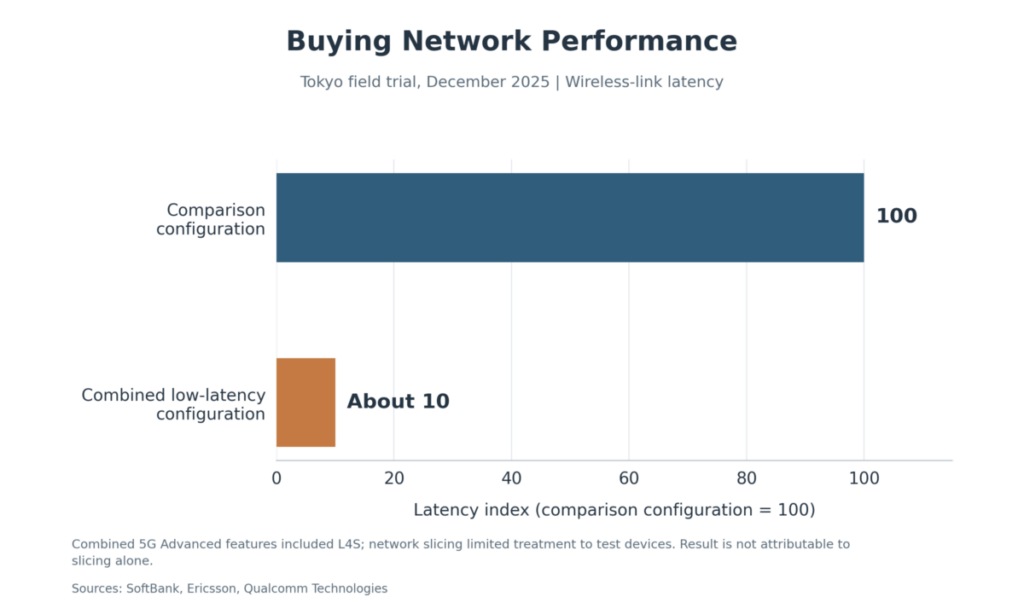
An industrial district may enjoy broad internet coverage yet lack affordable treatment for demanding traffic, making physical capacity and commercially accessible services complementary location advantages. Investors choosing between comparable production sites have reason to consider whether local firms can obtain both, especially when their operations depend on continuous coordination across company boundaries.
Through such relationships, standards established by leading firms can raise the practical threshold for entering higher-value markets. Repeat purchases of performance services and communication requirements appearing in supplier contracts would signal that transition. Governments can anticipate demand across industrial communities. Waiting until exporters lose contracts makes adaptation more urgent and expensive, particularly when individual firms must finance what shared provision could make accessible to a wider group of producers.
| Economy | Enterprises using sophisticated cloud services, 2025 |
|---|---|
| Finland | 65.9% |
| Denmark | 65.0% |
| Netherlands | 62.0% |
| European Union | 40.9% |
Sources: Eurostat
The Next Threshold for Following Economies
Countries expanding connectivity can anticipate these requirements when planning investment, allowing domestic suppliers to purchase selected treatment rather than build private arrangements. A critical production window may justify enhanced service without requiring the same expenditure throughout the day.
In 2025, 5G covered 84% of people in high-income countries and 4% in low-income countries. Coverage does not establish programmable priority availability, but it reveals unequal foundations for advanced mobile services. Electricity reliability and technical skills also determine whether firms can integrate requests and verify their value.
A supplier cannot commit to delivery schedules on the strength of an API demonstration. Difficult onboarding and uncertain commercial value can prevent adoption even where testing succeeds. Membership in an API ecosystem does not establish commercial coverage: the carrier must provide the service wherever the supplier operates. Standardization can simplify the request without making the required network treatment available.
For smaller suppliers, the price of priority becomes another cost to recover from orders. Transparent terms help them decide whether to buy, but ordinary service must remain credible if the premium is to purchase an improvement rather than preserve existing operations. European regulators consulted on draft network-slicing guidance in 2026, examining compatibility with open internet principles. Countries investing in shared capacity can make specialization more useful by extending it beyond established industrial centers. The commercial test is whether local firms can meet buyers’ requirements at costs that leave room to grow.
| Income group | Fixed broadband basket, 2025 |
|---|---|
| High income | 1.0% of monthly GNI per capita |
| Upper-middle income | 2.6% |
| Lower-middle income | 5.6% |
| Low income | 28.4% |
Sources: International Telecommunication Union
Who Receives the Prosperity?
A supplier retaining orders through better coordination can expand work and sustain employees’ incomes, while purchases from neighboring firms spread demand through the community. Household spending carries those gains into businesses unconnected to the network purchase. How much reaches them depends on the division of value among producers and infrastructure owners.
Public institutions have to consider who a performance purchase will reach. In 2025, 85% of urban residents worldwide used the internet, against 58% of rural residents. Giving a clinic’s specialist consultation dependable transmission can improve an existing service, but cannot benefit patients who remain disconnected. Schools face the same distinction. Priority purchasing must sit alongside wider access, with neither expense consuming the resources needed to provide care or teaching.
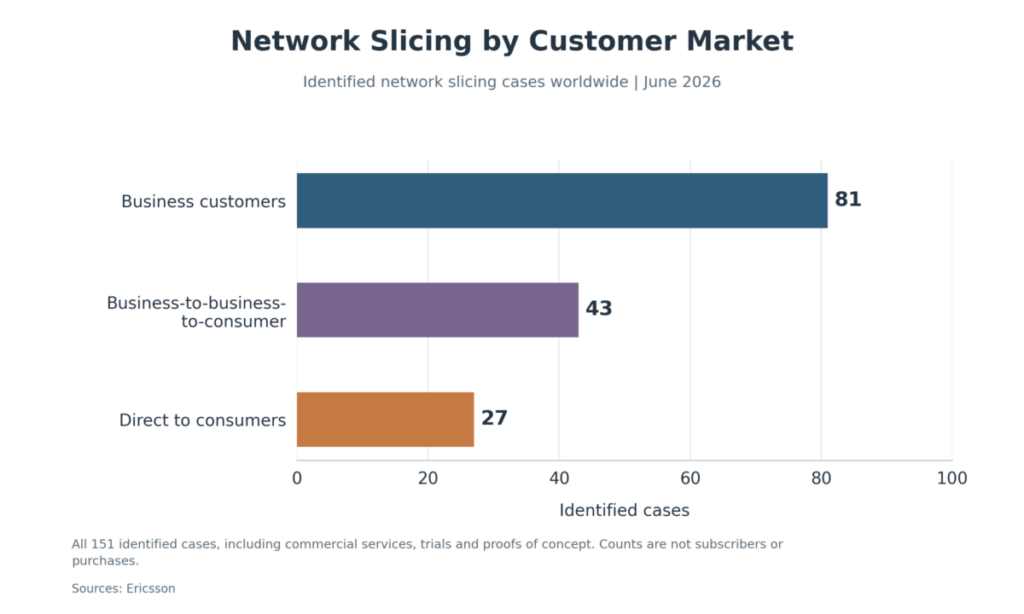
The productive infrastructure sought under Sustainable Development Goal 9 supports Goal 8 when firms translate improved execution into employment and rising incomes. Goal 10 concerns who shares that opportunity, including smaller suppliers and communities outside favored locations. Network differentiation contributes when it makes useful capabilities accessible at prices these users can sustain.
For countries following the leaders, the next competitive threshold may arrive through an overseas customer’s operating requirements. Preparing firms to meet it can preserve contracts and support local livelihoods. The prosperity test is whether purchasing priority enables more people to participate in productive activity, rather than merely increasing what they must pay to remain competitive.
| Income group | Fixed broadband basket, 2025 |
|---|---|
| High income | 1.0% of monthly GNI per capita |
| Upper-middle income | 2.6% |
| Lower-middle income | 5.6% |
| Low income | 28.4% |
Sources: International Telecommunication Union
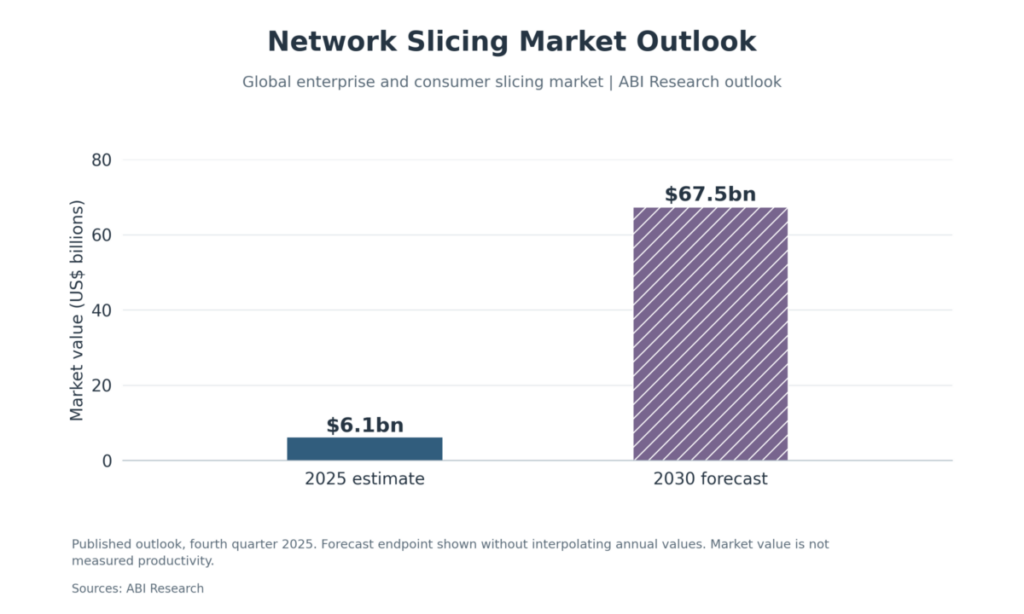
TL;DR
- Purchased priority makes network treatment a production input.
- Cloud dependence increases the economic importance of timely communication.
- Programmable interfaces let applications request particular performance profiles.
- Commercial priority services already exist in the United States and China.
- Business benefits must justify service charges and integration costs.
- Reallocating existing capacity can create value when gains exceed delay costs imposed elsewhere.
- Smaller firms could obtain capabilities previously requiring dedicated infrastructure.
- Leading firms’ requirements can raise operating expectations throughout international supply chains.
- National infrastructure choices influence firms’ ability to retain contracts and attract investment.
- Prosperity depends on productive gains reaching households and public services.
Sources
- International Telecommunication Union; Facts and Figures 2025: Progress in Connectivity and Persistent Digital Divides; – Link
- Ericsson; Differentiated Connectivity Entering the Market at Speed; – Link
- ABI Research; Global 5G Network Slicing Market Size: 2025 to 2030; – Link
Why Connectivity Is Becoming Programmable
- CAMARA Project; Quality on Demand; – Link
- Telefónica Open Gateway; Architecture, Requirements and Use Cases of the Quality on Demand Open Gateway; – Link
- GSMA and China Unicom; China Unicom Tailors Connectivity to Users’ Requirements; – Link
- Heavy Reading, commissioned by Qualcomm; Ultra-Reliable Low-Latency 5G for Industrial Automation; – Link
Buying Performance as a Production Input
- Verizon Business; Wireless Internet for the AI Era: Network Slicing Enables SLA-Backed Service; – Link
- Vodafone Deutschland; Vodafone Brings Standard Tariffs for 5G Network Slicing to Market; – Link
- Ericsson Technology Review; Advanced Connectivity Solutions for Time-Critical Communication Traffic in 5G Radio Access Networks; – Link
- SoftBank, Ericsson and Qualcomm Technologies; Field Trial of 5G and 5G Advanced Capabilities Including L4S on a Commercial 5G Standalone Network; – Link
From Business Advantage to National Advantage
- Eurostat; Cloud Computing: Statistics on Use by Enterprises; – Link
- Zeydan and colleagues; Network Slicing for Industrial Automated Services; – Link
- International Telecommunication Union; Global Connectivity Report 2025: Infrastructure for Universal and Meaningful Connectivity; – Link
The Next Threshold for Following Economies
- International Telecommunication Union; Facts and Figures 2025: Mobile Network Coverage; – Link
- International Telecommunication Union; Facts and Figures 2025: Affordability of ICT Services; – Link
- BEREC; Assessment of the Digital Networks Act Proposal and Consultation on 5G Slicing Guidance; – Link
- Nokia Network as Code; Network APIs Are Moving from Demos to Production; – Link
Who Receives the Prosperity?
- International Telecommunication Union; Facts and Figures 2025: Internet Use in Urban and Rural Areas; – Link
- United Nations; Sustainable Development Goal 8: Decent Work and Economic Growth; – Link
- United Nations; Sustainable Development Goal 9: Industry, Innovation and Infrastructure; – Link
- United Nations; Sustainable Development Goal 10: Reduced Inequalities; – Link
Keywords: ICT, Connectivity, Telecommunications, Network Priority, Programmable Networks, National Competitiveness, Human Development.