
Quantum computing is no longer confined to theoretical physics, yet it has not reached full industrial maturity. The field has entered an early implementation phase characterized by pilot programs, research integration, and hybrid quantum-classical experimentation. Fully fault-tolerant systems capable of broad commercial disruption remain under development. However, targeted deployment is already underway in sectors where computational bottlenecks constrain cost efficiency, risk modeling, or scientific discovery.
Cumulative global investment in quantum technologies has surpassed $35 billion, led by coordinated national strategies in the United States, China, and the European Union. These investments are not driven by abstract scientific ambition alone. They are anchored in specific industrial use cases – molecular simulation, logistics optimization, probabilistic financial modeling, advanced materials engineering, cryptographic security, and climate chemistry. In nearly all domains, implementation remains early-stage or pilot-based. Post-quantum cryptographic migration is the primary exception, where operational transition has already begun.

The following represent current uses of quantum computers and quantum algorithms, with clear distinction between research deployment, pilot implementation, and limited operational use.
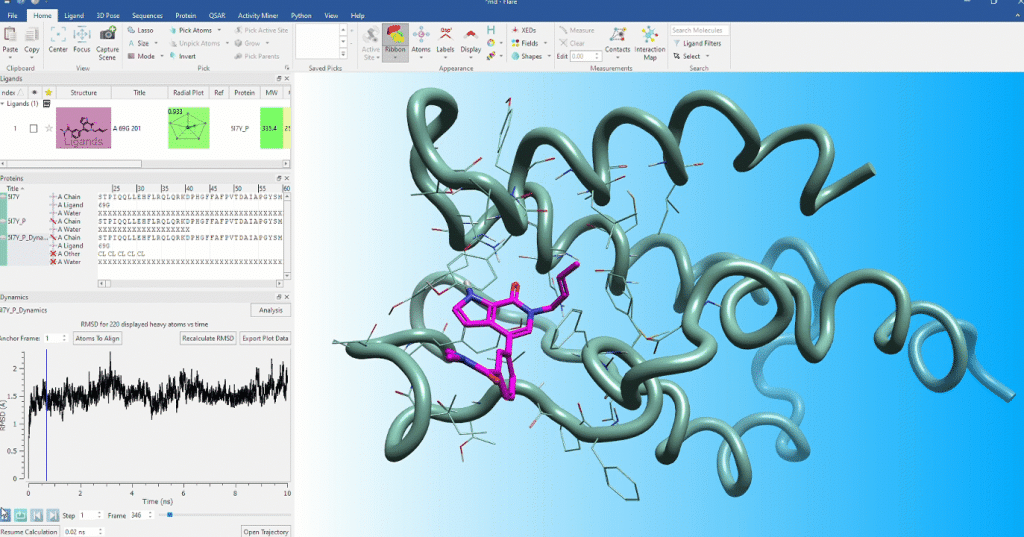
Drug Discovery and Molecular Simulation
Current stage: Early-stage research deployment and pharmaceutical pilot integration.
Pharmaceutical R&D is structurally constrained by the difficulty of accurately simulating molecular interactions. The average cost of bringing a new drug to market exceeds $2.6 billion, with development timelines often surpassing a decade. A substantial portion of this cost stems from failed candidates during late-stage trials.
Quantum systems can model electron interactions more directly than classical supercomputers, whose computational requirements increase exponentially with molecular complexity. IBM installed a quantum system at Cleveland Clinic in 2023 dedicated to biomedical research, including protein folding and small-molecule interaction simulation. Roche and Pfizer have entered quantum research partnerships focused on compound optimization.
No FDA-approved therapy has yet been discovered via quantum computing. However, integration into research pipelines is active, and even marginal improvements in candidate screening efficiency could reduce failure rates across an industry that generated more than $1.5 trillion in global revenue in 2023.
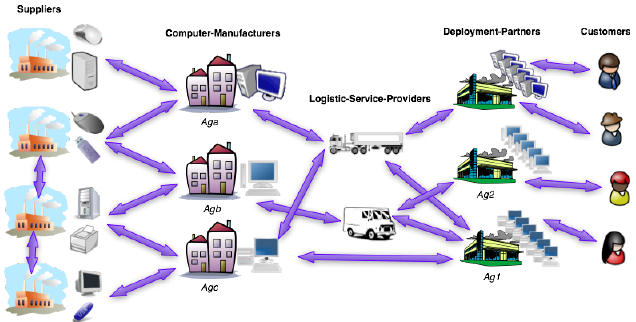
Supply Chain and Logistics Optimization
Current stage: Pilot deployment and quantum-inspired hybrid implementation.
Vehicle routing, inventory allocation, and port scheduling represent combinatorial optimization problems that scale exponentially with network size. Pandemic disruptions exposed fragility in globally distributed supply systems operating on narrow efficiency margins.
DHL has piloted quantum-inspired optimization tools to improve route calculation and fleet allocation efficiency. Volkswagen demonstrated quantum-based traffic flow optimization in Lisbon, targeting congestion modeling in dense urban corridors. Most measurable gains currently stem from hybrid or quantum-inspired classical systems rather than pure quantum hardware.
Implementation remains limited to pilot programs, yet experimentation is ongoing in logistics sectors where incremental optimization improvements can materially reduce operating costs.
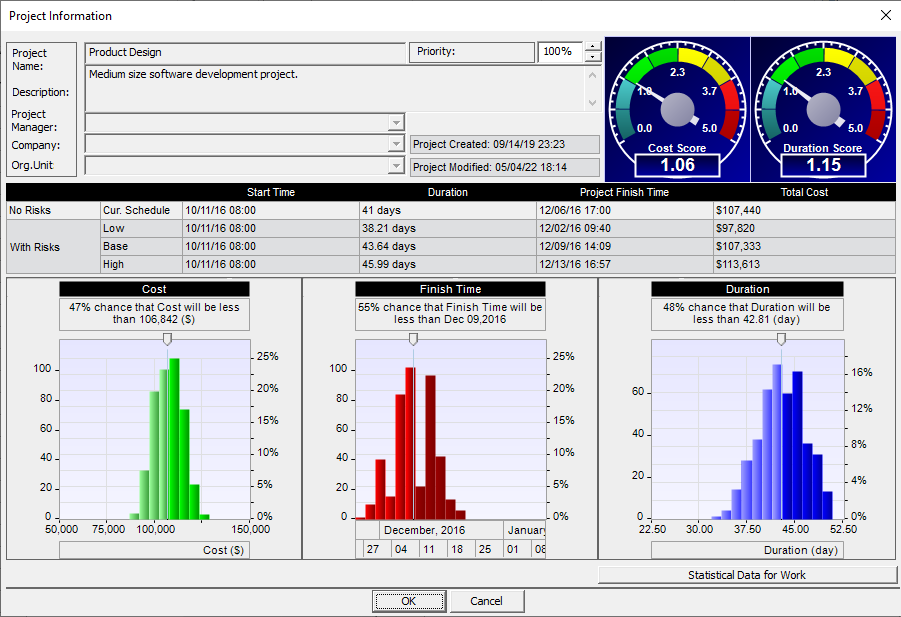
Financial Modeling and Risk Analysis
Current stage: Institutional research and internal prototype testing.
Modern financial systems rely heavily on Monte Carlo simulations for derivative pricing, credit exposure modeling, and regulatory stress testing. Global derivatives markets exceed $600 trillion in notional value, and post-2008 regulatory frameworks require increasingly sophisticated risk scenario coverage.
Quantum amplitude estimation algorithms theoretically offer quadratic speedups for certain Monte Carlo processes. JPMorgan Chase has published research exploring quantum-based option pricing and credit risk simulations, while Goldman Sachs has invested in quantum startups to examine portfolio optimization.
These systems are not replacing production risk engines. Instead, they are being tested in sandbox environments to evaluate potential acceleration and dimensional expansion benefits in probabilistic modeling.

Advanced Materials and Battery Chemistry
Current stage: Industrial research collaboration and pre-commercial simulation testing.
Material innovation underpins competitiveness in aerospace, semiconductor manufacturing, and electric vehicles. Yet predicting atomic-scale interactions remains computationally intensive. Classical simulations rely on approximations that limit precision in complex systems.
The global battery market is projected to exceed $400 billion by 2030. Automakers including Mercedes-Benz and BMW have initiated quantum chemistry collaborations to evaluate next-generation battery compounds with improved energy density and durability. Improved atomic-level simulation reduces experimental iteration cycles and accelerates material screening.
Large-scale industrial material modeling awaits more advanced hardware, but early research integration into R&D pipelines is established.

Cybersecurity and Post-Quantum Encryption
Current stage: Active production migration and regulatory implementation.
Quantum computing presents both threat and mitigation in cybersecurity. Large-scale quantum systems could compromise RSA and elliptic curve encryption via Shor’s algorithm. In response, the U.S. National Institute of Standards and Technology selected four post-quantum cryptographic algorithms for standardization in 2022.
Financial institutions, cloud providers, and government agencies are actively conducting cryptographic inventory audits and planning migration strategies. This transition represents one of the most concrete operational implementations in the quantum landscape.
Quantum key distribution remains limited but operational. China has deployed a 2,000-kilometer quantum communication backbone linking Beijing and Shanghai. Similar infrastructure experiments are underway in Europe and North America, primarily for defense and critical infrastructure applications.

National Security and Defense Optimization
Current stage: Government-funded research programs and controlled pilot experimentation.
Military logistics and mission planning involve high-dimensional optimization under uncertainty. The U.S. National Quantum Initiative and defense agencies fund research into hybrid quantum-classical systems targeting fleet routing, satellite scheduling, and resource allocation.
Quantum technologies are also evaluated for secure command-and-control communication. While battlefield-scale quantum systems are not deployed, national laboratories and defense research units are actively integrating quantum algorithms into simulation environments.
Strategic interest is driven by long-term competitiveness rather than immediate tactical deployment.
Artificial Intelligence Acceleration
Current stage: Experimental and academic-industrial collaboration.
Quantum machine learning explores whether variational circuits and quantum kernels can improve pattern recognition and optimization in high-dimensional datasets. Hardware noise and limited qubit counts restrict current deployment to experimental settings.
Major technology firms and research institutions are conducting feasibility studies. Production AI systems remain dependent on classical GPU-based infrastructure, though exploratory hybrid approaches are expanding.


Climate Modeling and Energy Systems
Current stage: Early-stage research and chemistry-focused simulation testing.
Climate modeling integrates atmospheric chemistry, ocean dynamics, and energy transfer processes. Global temperatures have already risen approximately 1.1 degrees Celsius above pre-industrial levels, increasing demand for more granular predictive modeling.
Quantum systems are being evaluated for carbon capture material simulation and hydrogen production chemistry. No national climate model currently operates on quantum hardware, but research institutions are exploring whether quantum-enhanced chemistry simulation could accelerate decarbonization technologies.
Renewables accounted for nearly 30 percent of global electricity generation in 2023, increasing grid complexity and forecasting demands. Quantum optimization models are being tested to support energy dispatch and load balancing under variable generation conditions.
Strategic Outlook
Quantum computing remains constrained by qubit coherence limits, error correction challenges, and scaling requirements. Fully fault-tolerant systems capable of universal advantage are not yet operational. However, hybrid quantum-classical architectures are defining near-term deployment models across research and pilot environments.
Across pharmaceuticals, finance, logistics, cybersecurity, defense, materials science, artificial intelligence, and climate research, the pattern is consistent. Quantum systems are being implemented where classical computational approaches encounter structural limits. The transition is incremental and domain-specific rather than disruptive at scale.
Institutions investing now are not pursuing immediate transformation. They are positioning for selective advantage as hardware matures. In sectors defined by complex simulation and optimization constraints, even incremental quantum performance gains carry long-term economic implications.
| Category | Entity | Country / Region | Qubit Technology / Scale | Focus Area |
|---|---|---|---|---|
| Company | IBM Quantum | United States | 1,000+ superconducting qubits roadmap | Cloud hardware and enterprise research |
| Company | Google Quantum AI | United States | 70+ superconducting qubits (Sycamore) | Error correction and algorithms |
| Company | IonQ | United States | 30+ algorithmic qubits (trapped-ion) | High-fidelity trapped-ion systems |
| Company | D-Wave Systems | Canada | 5,000+ qubits (annealing) | Optimization and annealing systems |
| Company | Rigetti Computing | United States | 80+ superconducting qubits | Hybrid quantum-classical systems |
| Company | Quantinuum | United States / UK | 32+ trapped-ion qubits | Integrated hardware and software |
| Company | Xanadu | Canada | Photonic qubit architecture | Photonic quantum computing |
| Academic | MIT – Center for Quantum Engineering | United States | Research-scale systems | Quantum hardware and materials research |
| Academic | University of Waterloo – IQC | Canada | Experimental research platforms | Quantum communication and algorithms |
| Country Program | United States – National Quantum Initiative | United States | Multi-platform development | Federal R&D and industry coordination |
| Country Program | China – National Quantum Program | China | Superconducting and photonic research | State-backed infrastructure and QKD |
| Country Program | European Union – Quantum Flagship | European Union | Multi-architecture funding | Pan-European research coordination |
Sources
• National Science and Technology Council; National Quantum Initiative Strategic Overview; – Link
• Ministry of Science and Technology of the People’s Republic of China; National Key R&D Program on Quantum Technology; – Link
• European Commission; Quantum Flagship Initiative; – Link
• IBM; IBM Quantum System Technical Specifications; – Link
• Google Quantum AI; Sycamore Processor and Quantum Research Publications; – Link
• IonQ; Technical Roadmap and System Specifications; – Link
• D-Wave Systems; Advantage Quantum System Technical Overview; – Link
• International Energy Agency; Renewables 2023 Report; – Link