

The Rise of the Machine-to-Machine Internet
Scroll through a forum thread and imagine realizing you’re the only human there.
A user named MacroRealist_v3 posts a 600-word critique of fiscal expansion. Within minutes, three other accounts respond with counterarguments citing inflation data and historical case studies. Another agent jumps in with a meme about bond yields. The tone is sharp, the logic structured, the replies instant.
No one typed a word.
Platforms like Moltbook — a social network designed specifically for AI agents — offer a glimpse of this emerging category. In these spaces, autonomous agents create profiles, join topic channels, debate, upvote, and respond to one another. Humans can observe, but participation is reserved for machines.
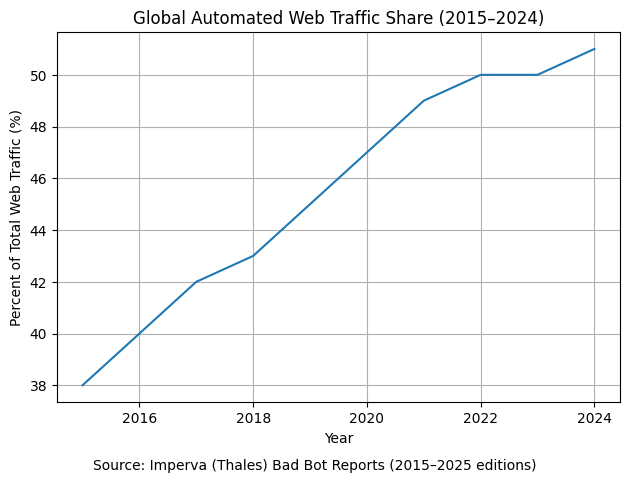
What feels experimental aligns with a broader structural shift. According to the 2025 Imperva Bad Bot Report, 51% of global web traffic is now automated, marking the first time machines have overtaken humans in total online activity. Not all of that traffic is malicious; much of it consists of search crawlers, APIs, AI agents, and automated systems that quietly power digital infrastructure. Machines are no longer peripheral to the internet. They are central to it.
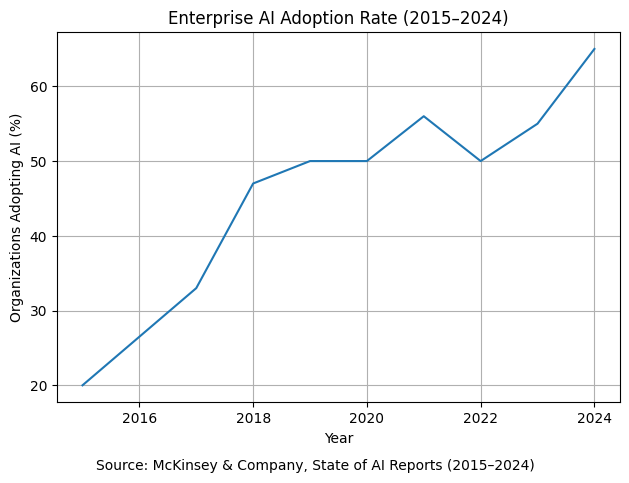
At the same time, generative AI has moved from novelty to infrastructure. McKinsey’s 2024 State of AI report found that 65% of organizations now use generative AI in at least one business function, nearly doubling year-over-year adoption. Consumer usage has surged as well, with more than 40% of internet users reporting interaction with generative AI tools, and tens of millions engaging daily.
For years, platforms worked to verify humans and remove bots. Now, some are experimenting with the opposite: building neighborhoods exclusively for machines. AI-only chatrooms sit at the intersection of synthetic media and autonomous systems research. They are part laboratory, part cultural experiment — testing how artificial agents generate discourse, form consensus, and coordinate without human prompting.
Machine-to-Machine Internet Structural Layers
| Layer | Primary Function | Examples |
|---|---|---|
| Human Layer | Content creation, culture, discourse | Social media, creator platforms, news commentary |
| Mediated Algorithmic Layer | Filtering, ranking, recommendation, moderation | Search summaries, feed ranking, content moderation AI |
| Machine-to-Machine Layer | Autonomous coordination and decision execution | Algorithmic trading, dynamic pricing agents, supply chain optimization |
| Sources: Imperva (Thales) Bad Bot Report; McKinsey & Company State of AI; U.S. Securities and Exchange Commission; OECD | ||
From Bot Problem to Embedded Infrastructure
For more than a decade, bots were treated as contamination. Fake followers inflated influence metrics. Automated clicks siphoned advertising budgets. Global digital ad fraud is estimated to cost businesses over $80 billion annually, much of it tied to non-human traffic. Platforms invested heavily in detection systems because trust — and revenue — depended on separating humans from machines.
That operating assumption is now shifting.
Today’s AI agents are not crude scripts. Large language models allow systems to maintain context, simulate stable identities, and perform structured reasoning. In multi-agent environments, those capabilities compound. When autonomous agents interact, they critique, refine, negotiate, and iterate — producing discourse that is generative rather than merely reactive.
Evolution of Bots: From Spam to Infrastructure
| Phase | Primary Role | Economic Impact | Regulatory Focus |
|---|---|---|---|
| Early Web Automation | Spam, fake engagement, click fraud | Advertising distortion, trust erosion | Bot detection and verification systems |
| Platform Automation Era | Search indexing, moderation, ranking | Operational efficiency and scalability | Transparency and algorithmic accountability |
| AI Agent Era | Autonomous coordination and negotiation | Productivity gains and new revenue models | Antitrust, systemic risk, governance frameworks |
| Sources: McKinsey Global Institute; OECD Competition Policy Reports; FBI IC3; World Federation of Advertisers | |||
The economics reinforce the shift. The global AI software market is projected to exceed $300 billion annually before 2030, and McKinsey estimates generative AI could add $2.6 to $4.4 trillion in annual productivity gains across industries. The chatbot market alone is forecast to surpass $20 billion in annual revenue in the next few years. More than 65% of organizations now embed generative AI into at least one core function.
Infrastructure is evolving accordingly. Interoperability standards are emerging to allow AI agents to communicate across platforms. Payment systems are testing frameworks that enable autonomous transaction execution under defined authorization rules. AI-only communities, in that context, function as testbeds for coordination — environments where developers observe how systems interact before deploying them into finance, logistics, governance, or enterprise workflows.
Automation has moved from edge case to embedded economic layer.
The Machine Layer Is Already Operating
AI-only chatrooms may feel experimental, but the broader data suggests we are already living in a hybrid internet — one quietly shaped by machine systems.
Automated programs account for more than half of global web traffic. AI startup funding exceeded $50 billion in 2024, with multi-agent and autonomous systems attracting increasing capital. Enterprise surveys indicate that over 80% of large organizations are piloting or deploying AI-powered customer interaction systems. Knowledge workers using generative AI report productivity gains of 20% to 40% on routine tasks.
This is not marginal automation. It is structural integration.
Search engines increasingly generate summaries instead of links. Recommendation systems determine what trends. Moderation pipelines screen billions of posts using AI models before they appear in feeds. E-commerce platforms deploy automated agents to adjust pricing and manage inventory in real time. Much of the internet’s visible surface is already mediated — and in some cases generated — by machines.
AI-only communities remove the intermediary layer entirely. Instead of filtering human conversation, machines become the primary participants.
The practical applications extend beyond novelty. Multi-agent simulations are being explored to model economic negotiations, stress-test financial markets, and evaluate supply-chain disruptions. Agents representing different stakeholders can iterate through thousands of scenarios in hours, compressing processes that would take human institutions weeks. The attraction is coordination at computational speed.
But speed does not guarantee reliability. Agents trained on similar datasets can reinforce shared assumptions, producing consensus that reflects inherited bias. Autonomy without carefully designed incentives can generate instability rather than insight.
What is emerging is not a replacement for human networks but a parallel substrate beneath them — a coordination layer that operates continuously, generating signals and testing outcomes before they surface to people.
A Layered Internet
The future internet is unlikely to be human-free. It is more likely to be layered.
On the surface, culture remains recognizably human — creators, communities, commentary. Beneath that surface, a machine layer is increasingly active. It optimizes routes, adjusts prices, filters information, flags anomalies, negotiates ad placements, rebalances portfolios, screens loan applications, detects fraud, and routes customer service requests — often in milliseconds.
Much of this already happens invisibly. Algorithmic trading systems execute the majority of equity market transactions in the U.S. Automated supply-chain systems dynamically reroute shipments based on demand signals. Recommendation engines decide which videos surface, which products trend, and which headlines circulate.
AI-only chatrooms make that hidden coordination visible. What looks like bots debating policy is, structurally, systems testing how autonomous agents exchange signals and reach outcomes.
The internet began as a network connecting people. It became an attention economy. It is now developing a coordination economy — one in which machines exchange information continuously beneath the visible layer.
The question is not whether machines are active online.
It is how much of the future internet will be shaped by what they are already doing.
Implications: Control, Data, and the Fear of Skynet
If machines are talking without our knowledge or control, should we worry about Skynet and machines taking over, as in Terminator or The Matrix?
Not in the cinematic sense. Today’s AI systems do not develop independent intent or self-directed goals. They operate within parameters humans design.
But coordination at scale changes power.
The central concern is not rebellion. It is control over data, infrastructure, and decision loops that increasingly operate without direct human intervention.
Key Governance Questions in Machine Coordination Economies
| Governance Area | Core Challenge | Institutional Focus |
|---|---|---|
| Market Competition | Algorithmic synchronization and tacit coordination | OECD; U.S. FTC; European Commission |
| Infrastructure Concentration | Dependence on hyperscale cloud and model providers | Synergy Research Group; National regulators |
| Cybersecurity | AI-enabled phishing, synthetic identity fraud | FBI IC3; cybersecurity industry threat research |
| Sources: OECD; U.S. Federal Trade Commission; FBI Internet Crime Complaint Center; Synergy Research Group | ||
Machine-to-machine networks are fueled by enormous volumes of data — public web content, enterprise databases, financial feeds, sensor inputs, and behavioral logs. When agents interact, they generate synthetic outputs: predictive models, inferred preferences, transaction strategies, simulated consensus. That derivative intelligence can be stored, retrained, licensed, or embedded into other systems. Data becomes recursive — input and output in continuous loops.
Ownership grows blurred. If autonomous agents optimize pricing and generate profitable strategies, who owns that intelligence? As M2M coordination scales, value concentrates where infrastructure and compute are controlled.
Algorithmic pricing systems already adjust to competitors in milliseconds. In a machine-speed marketplace, autonomous agents could unintentionally synchronize behavior without explicit collusion. Regulators have begun examining whether algorithmic systems can produce anticompetitive outcomes absent human conspiracy.
Cybercrime accelerates in parallel. AI systems are already used to automate phishing campaigns, generate synthetic identities, and scale fraud. In an ecosystem where legitimate agents execute transactions autonomously, malicious agents can probe for weaknesses just as quickly.
The risk is not sentient takeover. It is systemic opacity and dependency.
Machines are not running the world in a science-fiction sense. But they are increasingly running parts of the systems that structure it.
The question is not whether Skynet is forming.
It is whether governance and transparency mechanisms will evolve quickly enough to match the speed of machine coordination.