
A household can now divide its financial life across institutions that once performed many of the same monetary functions. Wages may still arrive through the banking system, while savings or cross-border transfers increasingly move through cryptocurrencies. The dollar continues to anchor wages and prices, but the institutions that hold money no longer have to be the same institutions that move it.
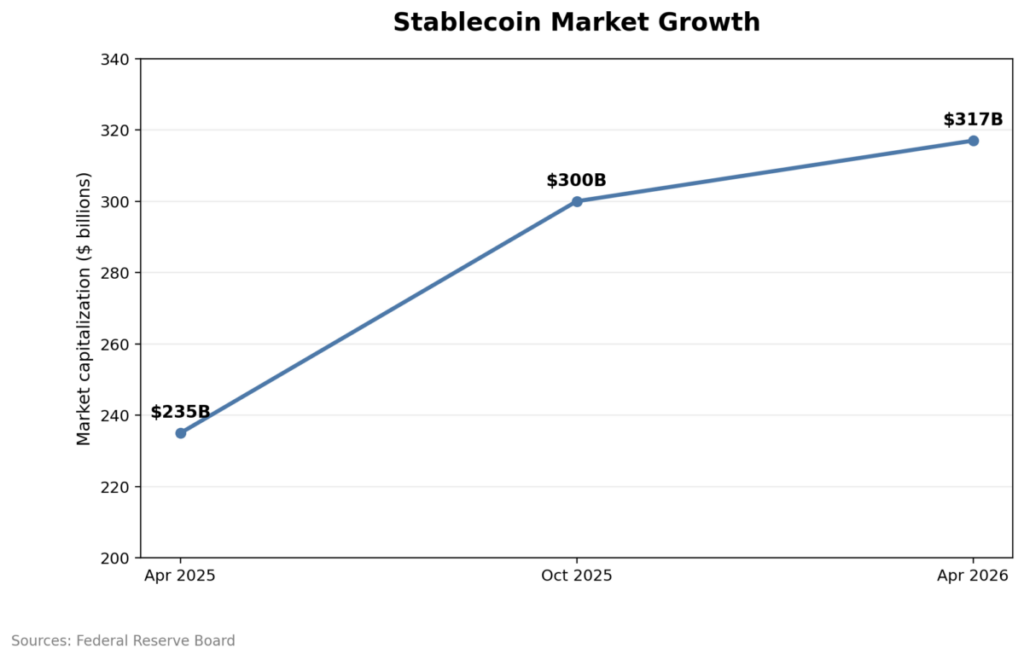
For most of modern economic history, sovereign currencies and regulated banks concentrated much of that activity. Cryptocurrencies do not remove this architecture, but they are beginning to redirect financial flows that once remained inside it. Stablecoin capitalization approached $315 billion in early April 2026 after expanding roughly 50 percent during 2025, while approximately 98 percent of stablecoin value remained denominated in U.S. dollars. Those balances now operate at a scale where their destination affects other parts of the financial system.
Gross activity shows the size of the infrastructure without proving equivalent real-economy use. Stablecoins processed about $35 trillion in transfers during 2025, while payment-related activity was estimated at only about $390 billion. Much of the remaining volume reflects trading and financial settlement. Yet the balances supporting that activity increasingly connect digital markets with banks and Treasury securities, while cross-border flows extend the connection into foreign-exchange markets.
Cryptocurrencies affect the economy through different channels rather than through one uniform monetary role. Bitcoin illustrates how scarce digital assets can move into portfolios and collateral structures. Stablecoins show how digital claims can redirect dollar liquidity toward different balance sheets. Across the sector, the larger consequence is a redistribution of funding that also changes where risk ultimately settles.
━━━━━━━━━━━━━━━━━━━━━━━━━━━━━━━━━━━━━━━━
Cryptocurrencies Turn Digital Scarcity Into Balance Sheet Risk
Bitcoin provides the clearest example of how cryptocurrency scarcity can become a macro-financial issue. Its eventual issuance is capped at 21 million units, so higher demand is absorbed largely through price. As cryptocurrencies become more common on household and institutional balance sheets, those price movements increasingly translate into changes in wealth and borrowing capacity.
A rising market can strengthen collateral values and encourage institutions to increase exposure. A falling market reverses the mechanism. Leveraged positions become harder to maintain, which can force liquidation and deepen the original decline. Losses can then spread beyond crypto-native markets through investors with positions elsewhere in the financial system.
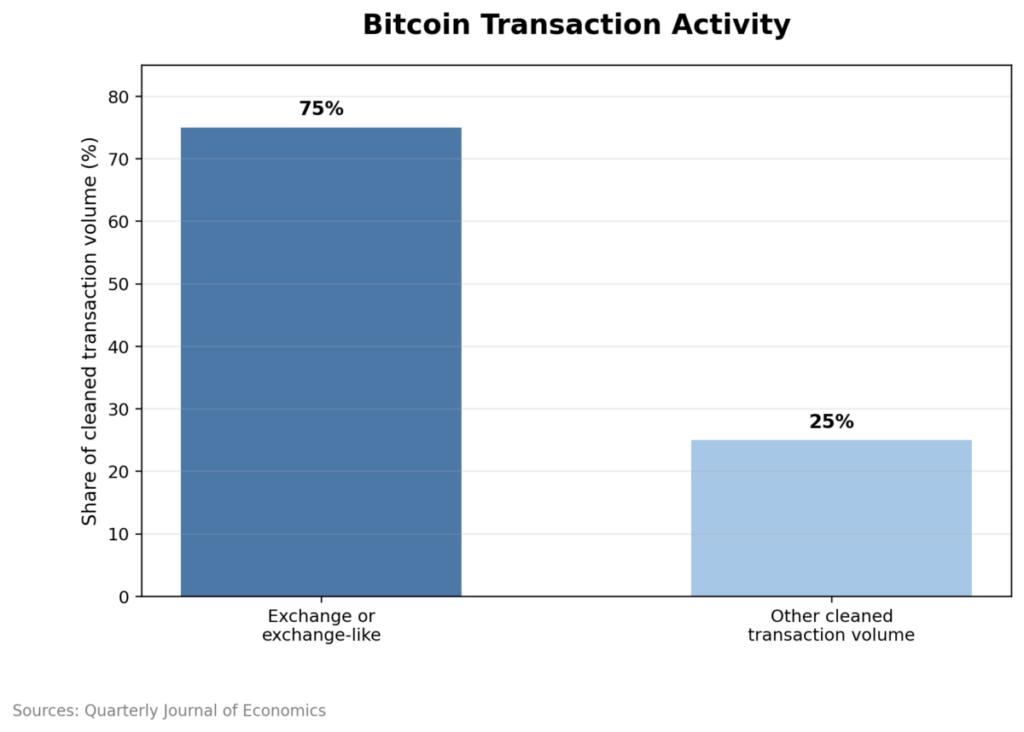
Bitcoin remains the clearest case of this asset-market orientation. Roughly 75 percent of Bitcoin transaction volume since 2015 has involved exchanges or exchange-like entities, reinforcing its role as an investment and trading asset rather than ordinary transaction money. The January 2024 approval of spot Bitcoin exchange-traded products placed that exposure more firmly inside conventional brokerage infrastructure. Wider institutional access can broaden demand while bringing cryptocurrency price cycles closer to corporate and investment balance sheets.
The larger implication is not simply that cryptocurrencies are volatile. Scarce digital assets compete for savings with securities that finance businesses or governments. When capital moves toward cryptocurrencies, the opportunity cost appears elsewhere because those savings are no longer available for the same competing uses.
Macroeconomic conditions can also change the role cryptocurrencies play in that competition. During periods of inflation concern or monetary distrust, they can attract demand as alternative stores of value. When financial conditions tighten, the same assets can behave more like high-risk positions as market liquidity contracts. The economic role therefore changes with the monetary environment surrounding the asset.
The importance of cryptocurrencies rests less on whether they become everyday money than on whether their price cycles become large enough to influence balance sheets beyond crypto markets. Once changes in cryptocurrency values alter collateral or portfolio allocation, their volatility becomes part of the wider financial transmission mechanism.
| Monetary Function | Traditional Channel | Cryptocurrency Channel |
|---|---|---|
| Savings | Bank deposits | Digital assets |
| Settlement | Bank networks | Blockchain rails |
| Dollar liquidity | Bank accounts | Stablecoins |
| Collateral | Financial assets | Cryptocurrency holdings |
Sources: BIS, Federal Reserve Board
━━━━━━━━━━━━━━━━━━━━━━━━━━━━━━━━━━━━━━━━
Cryptocurrencies Redirect Savings Through the Financial System
The most direct challenge to existing financial intermediation comes from stablecoins because they compete with deposits and other liquid dollar claims. For the user, moving money from a bank account into a stablecoin can appear to be little more than a change in where dollars are held. For the financial system, the liability moves away from a commercial bank and toward an issuer whose reserves support a different set of assets.
That shift matters because deposits provide banks with relatively stable funding for lending. If household or corporate liquidity migrates toward cryptocurrencies that function as cash substitutes, banks may have to replace part of that funding at a higher cost. More expensive funding can then feed into loan pricing, making credit more costly even though the original transaction began as a portfolio choice by depositors.
Stablecoins show where some of the money can move instead. In 2025, about 64 percent of Tether reserves were held in U.S. Treasuries. Circle held roughly 34 percent directly in Treasuries, while another 51 percent sat in Treasury-backed repurchase agreements. By December 2025, dollar-backed stablecoins held more than $270 billion in assets, including roughly $153 billion in Treasury bills.
The economic effect is a change in the destination of savings. Money that once funded a bank balance sheet can move into short-term government debt through stablecoin reserves. Issuers purchased about $33 billion in Treasury bills during 2025 after buying around $35 billion in 2024, creating a measurable connection between demand for cryptocurrencies and demand for public debt.
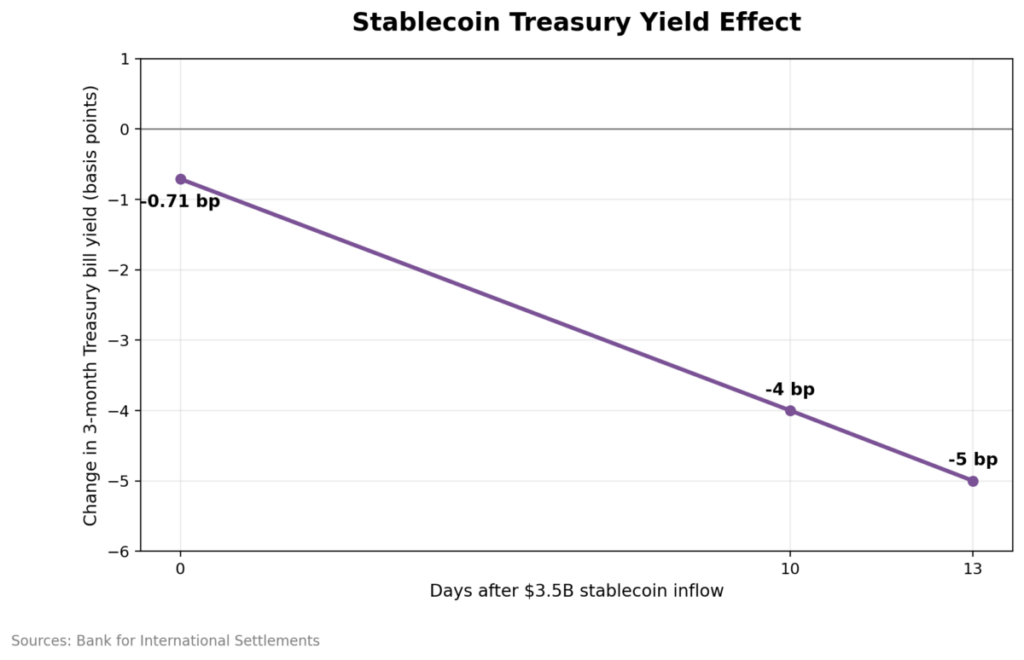
Treasury pricing is already sensitive enough for that channel to appear empirically. A demand shock equal to a 1 percent increase in the combined capitalization of USDC and USDT was associated with an eventual decline of about 1.9 basis points in the one-month Treasury bill yield. Stablecoins remain too small to determine Treasury pricing, but they have become large enough to influence marginal demand for short-term government securities.
If this process continues, the result reaches beyond payment technology. Marginal savings can move away from bank balance sheets while adding demand to markets that finance government borrowing. Banks may respond by competing more aggressively for deposits or by relying more heavily on alternative funding. Either response changes the cost of private credit and influences where it is supplied.
The larger question is therefore not whether cryptocurrencies replace deposits outright. It is how the allocation of savings changes when digital monetary claims connect households to a different intermediation structure.
| Market Change | Balance Sheet Effect | Wider Transmission |
|---|---|---|
| Price rise | Higher asset value | Greater borrowing capacity |
| Price decline | Weaker collateral | Deleveraging pressure |
| Institutional access | Broader portfolio exposure | Wider shock transmission |
| Bitcoin supply | 21 million maximum | Demand adjusts through price |
Sources: Quarterly Journal of Economics, SEC
━━━━━━━━━━━━━━━━━━━━━━━━━━━━━━━━━━━━━━━━
Cryptocurrencies Change the Economics of Monetary Sovereignty
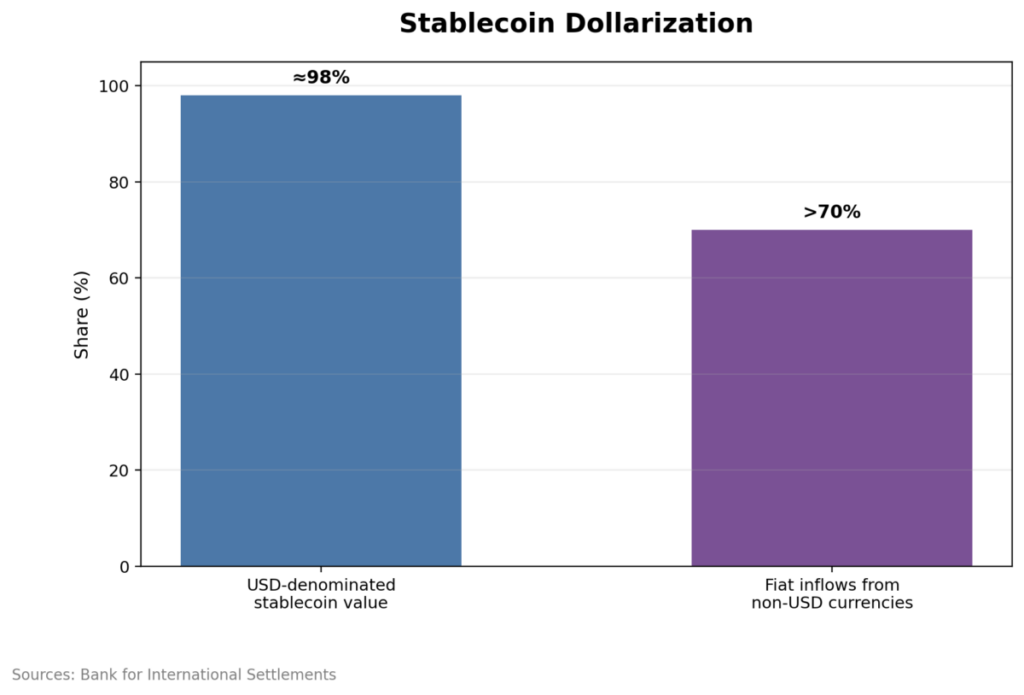
Outside the United States, cryptocurrencies can provide access to monetary assets that sit beyond the domestic currency system. Stablecoins provide the clearest example. More than 70 percent of fiat-to-stablecoin conversions originate in currencies other than the U.S. dollar, even though approximately 98 percent of stablecoin value remains dollar-denominated.
For households in weaker currency systems, that combination creates a new route into dollar exposure without requiring the same banking infrastructure once needed to hold foreign currency. High inflation increases the attraction of the alternative. Restrictions on formal foreign-currency access can make the digital route more valuable, so adoption can accelerate precisely where confidence in domestic money is already under pressure.
The consequences reach quickly into monetary policy. A central bank attempting to stabilize its currency may face faster deposit flight if savers can move into foreign monetary claims more easily. As domestic funding weakens, banks can tighten credit while the exchange rate comes under additional pressure. Defending the currency can then weaken domestic activity at the same time.
Evidence from stablecoin markets suggests that these channels already interact. Across four dollar-pegged stablecoins and 27 fiat currencies, a 1 percent exogenous increase in stablecoin net inflows raised the premium for dollar exposure through stablecoins by about 40 basis points. Local currencies depreciated as the shock moved through the market. Synthetic dollar funding also became more distorted where intermediaries had less capacity to absorb demand.
Cross-border payment costs provide another reason for households to enter these markets. Sending remittances still cost an average of about 6.36 percent in the World Bank’s 2025 data, well above the United Nations target of 3 percent. Cryptocurrencies do not remove the cost of conversion or compliance. Persistent friction in conventional payments nevertheless gives digital alternatives an economic opening that extends beyond speculation.
The asymmetry is substantial. A weak-currency country can lose monetary autonomy as cryptocurrencies make domestic deposits easier to leave. At the same time, dollar-backed stablecoins can increase demand for U.S. monetary claims and the Treasury assets supporting them. What appears as monetary exit in one country can strengthen monetary reach in another.
Cryptocurrency adoption can therefore alter the balance of power between currencies without replacing sovereign money. The more easily households can move between monetary systems, the more aggressively national currencies must compete for confidence.
| Financial Flow | Destination | Potential Effect |
|---|---|---|
| Bank deposits | Bank lending | Private credit funding |
| Stablecoin reserves | Treasury bills | Public debt demand |
| Stablecoin reserves | Repo markets | Secured market liquidity |
| 2025 issuer purchases | About $33B in T-bills | Measurable safe-asset demand |
Sources: BIS, Federal Reserve Board, IMF
━━━━━━━━━━━━━━━━━━━━━━━━━━━━━━━━━━━━━━━━
Cryptocurrencies Create New Rents and Systemic Concentration
As cryptocurrencies grow, private firms increasingly capture income from supplying digital monetary services. Stablecoins provide the clearest example because users supply dollars and receive redeemable claims while issuers invest the reserves supporting those claims. When the investment income is not passed back to holders, the issuer retains the spread.
With more than $270 billion in stablecoin assets by the end of 2025, that spread has moved beyond a niche business model. Some issuers increasingly resemble large reserve managers whose earnings rise when the assets backing their tokens generate more income than users receive for holding them.
Competition can narrow that gap. Platforms that remunerate stablecoin balances return part of the reserve yield to users, bringing digital monetary claims into closer competition with bank deposits and money-market products. As competition intensifies, the pricing of liquid savings can begin to reflect the presence of cryptocurrency intermediaries rather than banks alone.
Yet stronger competition does not necessarily create a dispersed market. Liquidity tends to reinforce itself. A cryptocurrency that is already widely accepted becomes more useful as its market deepens, which can draw still more activity toward the same infrastructure. The economic advantage created by scale can therefore concentrate power even in markets built around decentralized technology.
The concern becomes systemic when a small number of private firms sit between large pools of digital liquidity and the assets supporting them. Their reserve decisions influence where money is invested. Their ability to meet redemptions affects confidence in the claims they issue, while operational failures can spread beyond the original users once other financial institutions depend on the same infrastructure.
Stress exposes the weakness in that concentration. Stablecoin issuers promise redemption at par, but large withdrawals can force reserve liquidation. Other cryptocurrencies transmit stress through falling collateral values and deleveraging instead. The mechanisms differ, yet both can move losses from digital markets into institutions that have become financially connected to them.
Private cryptocurrency markets can therefore concentrate both income and vulnerability. The firms that benefit most when liquidity accumulates may become the same institutions through which stress spreads when confidence deteriorates.
| Economic Condition | Cryptocurrency Channel | Monetary Effect |
|---|---|---|
| High inflation | Digital dollar access | Currency substitution |
| Deposit flight | Stablecoin conversion | Weaker bank funding |
| Capital restrictions | Digital monetary access | Greater capital mobility |
| Dollar stablecoin use | 98% dollar-denominated market | Stronger dollar reach |
Sources: BIS, IMF, World Bank
━━━━━━━━━━━━━━━━━━━━━━━━━━━━━━━━━━━━━━━━
Cryptocurrencies Change Who Absorbs Monetary Shocks
As digital assets move deeper into conventional finance, the larger economic consequence is becoming less about the technology itself and more about where financial shocks ultimately land.
Cryptocurrency price declines can weaken collateral and reduce the wealth of investors with exposure to digital assets. Stablecoin growth can have a different effect by drawing funding away from banks while increasing demand for Treasury securities. In countries where domestic currencies are already vulnerable, digital alternatives can accelerate monetary exit and intensify pressure on policymakers.
Those effects redistribute economic advantages as well as losses. Households can gain access to more portable monetary claims, especially where domestic systems are costly or unreliable. Private issuers can gain reserve income as demand for those claims grows. Banks, meanwhile, face stronger competition for liquid savings, while governments with weak currencies may find that monetary policy has less room to operate.
The United States occupies a different position because much of the stablecoin economy remains dollar-based. Growing cryptocurrency adoption abroad can expand the reach of dollar claims without requiring equivalent expansion by U.S. commercial banks. When the reserves behind those claims flow into Treasuries, foreign demand for digital dollars can also support domestic public borrowing.
The resulting monetary system is not simply more digital. Cryptocurrencies are changing how savings move between institutions and how financial losses travel through balance sheets. They also make it easier for households to change monetary exposure without relying entirely on domestic financial infrastructure.
Banks and governments still retain structural advantages, but they no longer face the same degree of insulation from competing monetary claims. Cryptocurrencies are beginning to rewire the transmission of monetary shocks across the economy.
Their impact will be measured less by whether any single digital asset replaces sovereign currency than by where funding moves when preferences change, which institutions gain influence as a result, and who ultimately bears the adjustment.
| Shock | Transmission | Primary Exposure |
|---|---|---|
| Crypto price decline | Lower collateral values | Investors and borrowers |
| Deposit migration | Higher bank funding costs | Banks and borrowers |
| Digital dollarization | Currency substitution | Domestic monetary systems |
| Stablecoin run | Reserve liquidation | Issuers and asset markets |
Sources: IMF, BIS, Federal Reserve Board
TL;DR
- Cryptocurrencies are becoming economically important through their effect on funding and balance sheets.
- Bitcoin shows how scarce digital assets can translate demand changes into large price movements that affect wealth and collateral.
- Roughly 75 percent of cleaned Bitcoin transaction volume since 2015 has involved exchanges or exchange-like entities, reinforcing its asset-market role.
- Institutional access is bringing cryptocurrency price cycles closer to conventional investment portfolios.
- Stablecoin capitalization approached $315 billion in early April 2026 after expanding roughly 50 percent during 2025.
- Dollar-backed stablecoins held more than $270 billion in assets by the end of 2025, including roughly $153 billion in Treasury bills.
- Stablecoin issuers purchased about $33 billion in Treasury bills during 2025, linking cryptocurrency demand to government financing.
- Migration from bank deposits toward digital monetary claims can raise bank funding costs and change the pricing of private credit.
- More than 70 percent of fiat-to-stablecoin conversions originate in non-dollar currencies even though approximately 98 percent of stablecoin value is dollar-denominated.
- Cryptocurrency adoption can accelerate monetary exit from weaker currency systems while extending the international reach of the dollar.
- Private cryptocurrency intermediaries can capture growing monetary income while becoming more important transmission points during stress.
- The broader economic effect is a redistribution of funding and monetary influence, with losses shifting toward different institutions when financial conditions change.
Sources
Money Is Becoming a Competitive Economic System
- Federal Reserve Board; Stablecoins in 2025: Developments and Financial Stability Implications; – Link
- Bank for International Settlements; Stablecoins: Framing the Debate; – Link
Cryptocurrencies Turn Digital Scarcity Into Balance Sheet Risk
- Quarterly Journal of Economics; Trust at Scale: The Economic Limits of Cryptocurrencies and Blockchains; – Link
- Review of Economic Studies; Monopoly Without a Monopolist: An Economic Analysis of the Bitcoin Payment System; – Link
- U.S. Securities and Exchange Commission; Statement on the Approval of Spot Bitcoin Exchange-Traded Products; – Link
Cryptocurrencies Redirect Savings Through the Financial System
- Federal Reserve Board; Banks in the Age of Stablecoins: Some Possible Implications for Deposits, Credit, and Financial Intermediation; – Link
- Bank for International Settlements; Stablecoins and Safe Asset Prices; – Link
- Bank for International Settlements; The Macroeconomics of Stablecoins; – Link
Cryptocurrencies Change the Economics of Monetary Sovereignty
- Bank for International Settlements; Stablecoin Flows and Spillovers to FX Markets; – Link
- Bank for International Settlements; Dollarisation and Monetary Control: What Lessons for the Rise of Stablecoins?; – Link
- World Bank; Remittance Prices Worldwide; – Link
Cryptocurrencies Create New Rents and Systemic Concentration
- Bank for International Settlements; Stablecoin Remuneration on Centralised Exchanges; – Link
- International Monetary Fund; From Par to Pressure: Liquidity, Redemptions, and Fire Sales with a Systemic Stablecoin; – Link
Cryptocurrencies Change Who Absorbs Monetary Shocks
- International Monetary Fund; Stablecoin Shocks; – Link
- International Monetary Fund; Stablecoin Inflows and Spillovers to FX Markets; – Link