
Part 2 of 2 – See Also – The Internet Of Things Becomes The Internet Of Coordination
Connected Living Truly Emerges
The most important smart device in the future may not be the one people notice.
For years, the Internet of Things has been sold through objects. A connected product could adjust a room, lock a door, track a package, or warn someone that something had gone wrong. That was useful, but it was still a narrow idea of intelligence. The next phase depends less on any single device than on whether devices can describe the physical world in the same structured way.
Matter is a brief reminder of the larger shift: connected devices are beginning to share not only commands, but usable information. As the number of connected IoT devices moves toward 39 billion by 2030, the overlooked question is not simply whether more things can talk. It is whether their data arrives in a shape that can be understood.
That structured data is the overlooked story. When a thermostat reading, a battery status, a leak alert, or a motion signal follows a common structure, it no longer has to sit as a trapped fragment inside one app. It can be compared, analyzed, coordinated, and acted on with the strength of an AI brain behind it.
This is already happening. Homes are learning when to use energy. Buildings are learning when they are empty. Cities are learning where pressure is forming before residents complain. The future of IoT is not only that more things connect to the internet. It is that the physical world becomes easier to read before problems become expensive.
Energy / Smart Grid Systems –

Your Home Could Become a Power Plant
In a more coordinated home, intelligence may first appear as a change in household rhythm. The car is ready when it needs to be, the room feels right when someone walks in, and the home quietly avoids using the most energy at the worst possible hour.
That kind of timing used to sound like a luxury feature, but the household is now part of a much larger energy story. Global electricity consumption in buildings rose by more than 600 TWh in 2024, accounting for nearly 60% of total electricity-consumption growth. Electric cars have also moved far enough into ordinary life that home charging is part of daily infrastructure. As home energy devices become better at sharing usable information, the house can start coordinating demand rather than behaving as a set of separate products with separate instructions.
A home that understands timing is more than a collection of appliances. It offers a small source of flexibility for a grid under pressure, while the resident still gets the ordinary comforts of a working home. The difference is that the house begins to know when those needs are urgent and when they can wait, which is why the power plant of the future may look a lot like a normal kitchen before sunrise.
Homes / Connected Living

The Smart Home Finally Gets Smart
Once the home can coordinate energy, the larger promise of connected living becomes easier to see. The real value is not that a device can send a message. The real value is that the home can understand when a message should turn into an action.
A family leaves for the weekend, and a pipe starts leaking under the sink. In the old smart-home story, a sensor sends an alert that lands on a phone during a gas stop or disappears under travel notifications. In the better version, the home treats the leak as a problem with consequences. The valve closes, the owner receives a clear warning, and the weekend does not end with ruined flooring.
Smart-home adoption is already large enough for this shift to matter. Roughly 45% of U.S. internet households own at least one smart-home device, and many connected households now contain enough technology for coordination to matter more than novelty. A house filled with isolated devices can still feel oddly unintelligent. A house with fewer devices but better shared rules can do more useful work.
That promise becomes practical in this kind of ordinary emergency. A leak sensor should not be trapped inside one brand’s universe, and a shutoff valve should not lose value because the household prefers a different platform. A home starts to feel genuinely smart when its devices understand enough about one another to reduce risk without asking people to manage every decision.
Data / AI / Interoperability
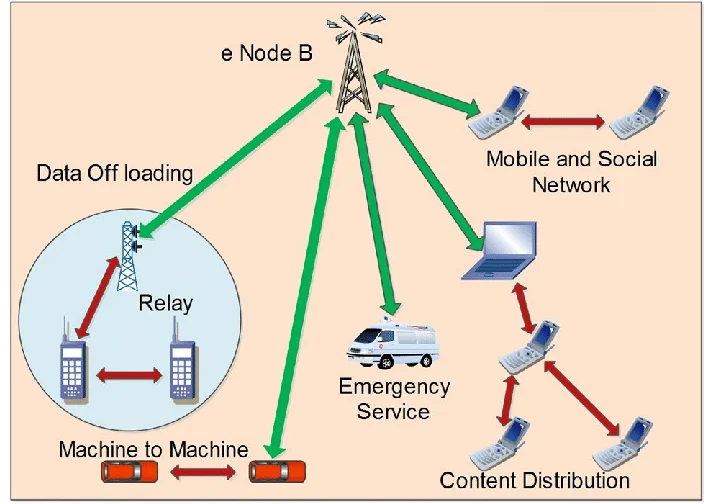
When Devices Start Speaking the Same Language
Artificial intelligence makes the structured-data problem visible in a more personal way. It sounds simple to ask an assistant to reduce electricity use without making the house uncomfortable, but the sentence hides a physical puzzle. The assistant needs to understand the difference between a family away for the afternoon and a child asleep upstairs, because the wrong assumption can turn efficiency into annoyance.
A model can understand the request and still fail at the task if the surrounding devices cannot describe themselves clearly. Language intelligence is not enough. The physical world has to become readable in a consistent way, and the commands moving through it have to be dependable. Without that shared structure, the assistant is less like a household manager and more like a clever guest who cannot find the switches.
At that scale, shared device language shifts from convenience to foundation. A crowded world of connected products is not automatically a smart world. It can become a confusing one if every device speaks in its own private dialect. AI does not need a house full of gadgets as much as it needs a house whose signals make sense.
Personal / Health
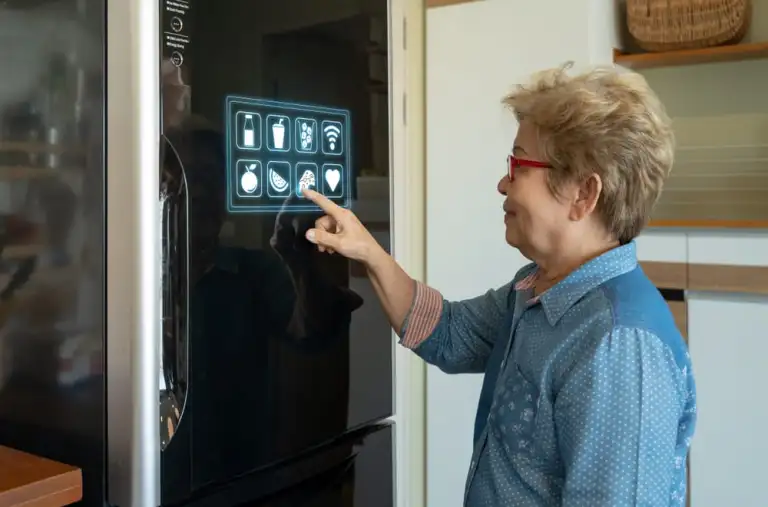
Homes That Quietly Look Out for People
As homes become more readable, the question moves from convenience to care. An older adult lives alone, and the morning does not follow its usual rhythm. The kitchen stays quiet longer than normal. The hallway does not register the familiar movement of the day. Nothing dramatic has happened yet, but the pattern has changed.
The most humane version of this technology does not turn private life into a camera feed. It notices small departures from routine and gives families or caregivers a chance to respond earlier. That distinction matters because many households will need a middle ground between total independence and institutional care. Ambient support can help create that middle ground when it is designed around dignity rather than surveillance.
By 2030, one in six people worldwide will be 60 or older. By 2050, the global population over 60 will reach 2.1 billion. Those numbers are not just demographic facts; they describe millions of homes where care will have to stretch further without becoming colder. A connected home cannot replace human attention, but it can make absence, risk, and routine more visible.
The goal is not a house that watches people. It is a house that helps people be found in time, while letting daily life remain private enough to feel like life.
Public / Civic Infrastructure

Cities That Sense Problems Before People Do
The movement from home to city is smaller than it first appears. Both are physical systems that often react late because they cannot see enough. A home misses a leak until the floor is wet. A city misses congestion until the intersection has already hardened into a knot.
For a traffic light, useful intelligence does not have to look like a futuristic control room. It has to mean enough information to respond before a delay spreads. The shared machinery of city life faces a similar challenge: it is asked to serve more people with systems that were often built for slower feedback. When infrastructure cannot sense change early, residents become the warning system. They lose time and absorb the cost.
Urban pressure is rising. In 2018, 55% of the world’s population lived in urban areas. By 2050, that share is expected to reach 68%. As more people depend on the same physical systems, the price of late response grows. A city that can read congestion, maintenance strain, crowd pressure, or changing conditions has a better chance of acting before inconvenience hardens into failure.
Smart-city technology is strongest when it feels less like spectacle and more like public competence. The civic value is a morning commute that does not lose another hour because the system noticed trouble too late.
Water / Waste / Ecological Efficiency
The End of Invisible Waste
The waste problem makes the value of early sensing even clearer. A pipe can leak underground for weeks without looking like a crisis. A refrigerator can drift out of range before food visibly spoils. A utility can lose water because the network cannot see itself clearly enough to know where the loss begins.
Waste often survives because it hides inside ordinary systems. People tend to notice the bill or the damage after the important moment has passed. Standardized IoT changes the timing. It gives the systems that carry, store, and consume resources a better chance to notice abnormal use or changing conditions while the problem is still small.
Food waste reached 1.05 billion tonnes in 2022, and households were responsible for 60% of it. That figure is enormous, but its meaning is intimate. A great deal of waste begins not as carelessness but as missed information. People cannot fix what they cannot see, and systems cannot prevent what they cannot recognize.
Efficiency begins when the invisible becomes readable.
Commercial / Real Estate

Buildings That Run Themselves Better
In commercial life, the same failure often hides in plain sight. An office floor is nearly empty after 4 p.m., but the building continues to behave as if the workday is still at full volume. The air feels too cold in a room no one is using. The lights make an empty corridor look busy. The building is not malicious or careless; it simply lacks enough awareness to behave differently.
A smart building can begin to understand use without turning the workplace into a dashboard for its own sake. It can make rooms feel ready when people arrive and less wasteful when they leave, while helping staff spot trouble before it becomes a late-night repair call. The experience does not have to feel automated for the people inside it to feel the difference.
Buildings are a major energy target. Operational energy use in buildings represents about 30% of global final energy consumption, and building electricity consumption rose by more than 600 TWh in 2024. Those figures make small improvements matter. A better-run building is not only an environmental gain; it is also the difference between a space that drains attention and one that quietly supports the day.
A building grows smarter when it stops treating every hour as the same hour.
Commercial / Supply Chain
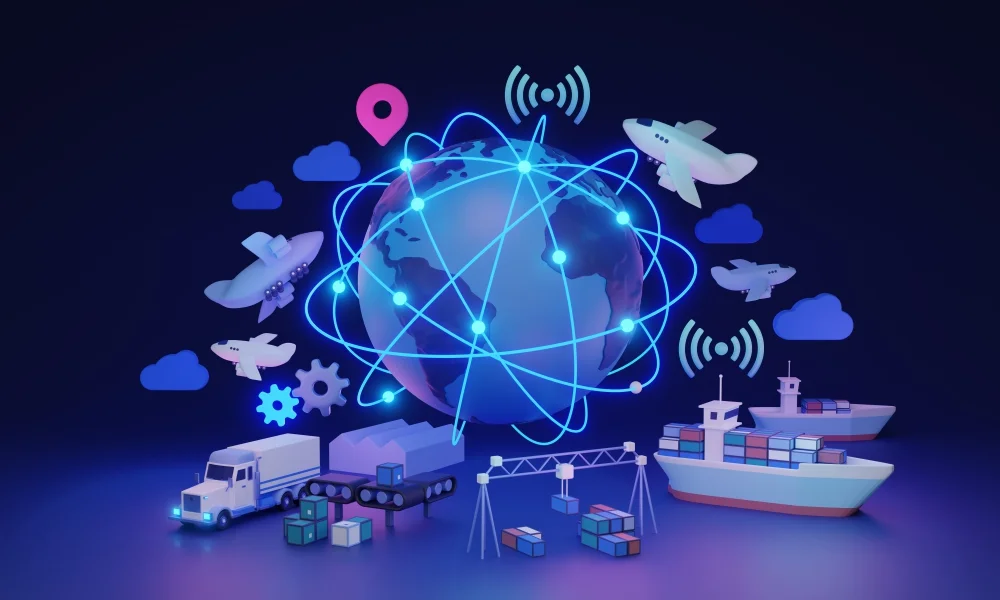
Supply Chains That Stop Going Blind
Once a building can understand its own conditions, the argument moves naturally to the goods passing through it. A shipment of medicine sits too long in a warm loading area. In an older logistics system, the problem may not become clear until arrival, when the only question left is how much value has already been lost.
Connected sensing changes the timing of responsibility. The package can become part of the warning system while someone can still act. That is especially important for goods whose value depends on conditions that cannot be judged from the outside. Paperwork can describe where something was supposed to be. Sensors can show what happened while it was there.
The cold-chain monitoring market reached $35.03 billion in 2024 and is projected to reach $119.74 billion by 2030. The growth reflects a simple reality: goods whose value depends on staying within safe conditions cannot be protected by records alone. They need visibility while they are moving, waiting, and changing hands.
A better supply chain gives people a chance to protect value before the loss becomes paperwork.
Industrial / Predictive Maintenance
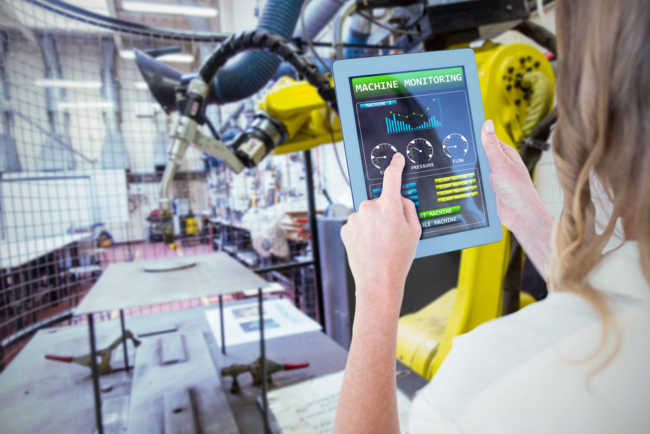
Machines That Warn Before They Break
Industrial systems make the same point with less romance and more consequence. A factory motor starts vibrating differently, and the change may be easy to miss. It is not yet a breakdown. It is the beginning of a warning.
Machines often whisper before they fail. Industrial IoT is useful because it can hear that whisper early enough to change the story from emergency response to planned repair. The benefit does not stay inside one machine. Downtime spreads into the wider chain of work around it, which means earlier warning can protect more than a balance sheet.
Predictive maintenance can reduce machine downtime by 30% to 50% and increase machine life by 20% to 40%. Those gains explain why this is one of the clearest cases for connected systems. The technology does not have to make a factory look different. It has to help people trust the signal before the failure becomes visible.
The machine that asks for help early can keep a shift, a deadline, and a safety plan from unraveling at once.
Agriculture / Environmental Monitoring
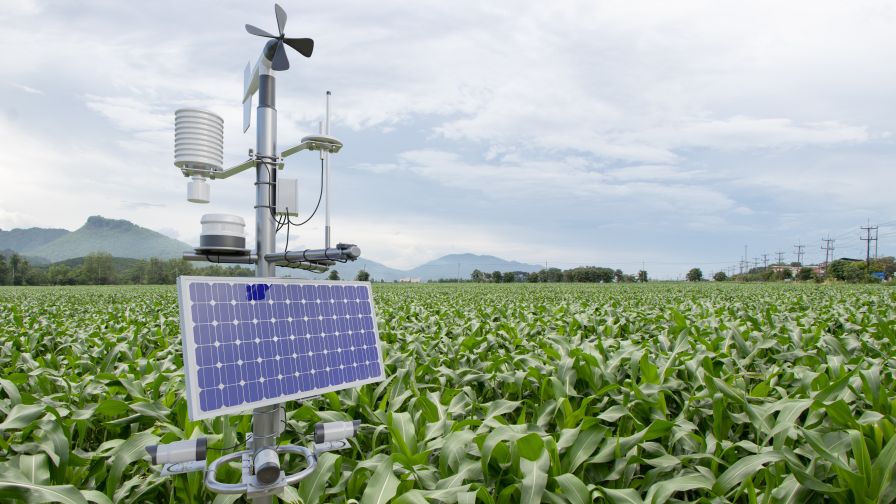
Farms That Know What the Land Needs
From the factory floor, the argument reaches the field, where sensing has a different but equally concrete purpose. A farmer walks across dry land and sees one field from a distance, but the soil does not experience the week evenly. One area may still hold moisture. Another may need water sooner. The field looks like a single surface until better information reveals its smaller truths.
Connected agriculture can help farmers act on those smaller truths. Instead of treating the land as one uniform problem, a farm can respond to the changing conditions around a crop with more care. That does not remove uncertainty from agriculture, but it can reduce some of the waste created by guessing too broadly.
Agriculture accounts for about 70% of freshwater withdrawals worldwide. In lower-income countries, the agricultural share can reach 90%. Water efficiency is therefore not a narrow technical issue. It sits close to the resilience of communities that cannot afford to waste either water or harvest.
A farm gets smarter when the land gains a clearer voice. That voice does not replace the farmer’s judgment; it gives that judgment better ground to stand on.
The Quiet Power of Standardization
A world moving toward 39 billion connected IoT devices cannot rely on every object speaking in isolation. The promise depends on whether those devices can describe what they sense in ways that other systems can use, because isolated signals do not build connected living or connected cities. They only add more noise.
Standardization is easy to underestimate because it does not behave like an invention in public. It does not sit on a countertop, glow from a dashboard, or arrive in a box. Its work is quieter: it lets the systems people depend on explain what is happening before people are left reacting to damage.
The promise of IoT is not that every object becomes smart. The promise is that the world becomes readable before small failures become public costs.
Sources
Connectivity Standards Alliance; Matter 1.4 Enables More Capable Smart Homes; – Link
IoT Analytics; Number Of Connected IoT Devices Growing 14% To 21.1 Billion; – Link
Your Home Could Become A Power Plant
- International Energy Agency; Global Energy Review 2025: Electricity; – Link
The Smart Home Finally Gets Smart
- Parks Associates; Parks Associates To Share Smart Home Device Research At Wi-Fi NOW; – Link
Homes That Quietly Look Out For People
- World Health Organization; Ageing And Health; – Link
Cities That Sense Problems Before People Do
- United Nations Department Of Economic And Social Affairs; 2018 Revision Of World Urbanization Prospects; – Link
The End Of Invisible Waste
- United Nations Environment Programme; Food Waste Index Report 2024; – Link
Buildings That Run Themselves Better
- International Energy Agency; Buildings; – Link
Supply Chains That Stop Going Blind
- Grand View Research; Cold Chain Monitoring Market Size, Share & Trends Analysis Report; – Link
Machines That Warn Before They Break
- McKinsey & Company; Manufacturing: Analytics Unleashes Productivity And Profitability; – Link
Farms That Know What The Land Needs
- Food And Agriculture Organization Of The United Nations; Water And One Health; – Link
- World Bank; The Impact Of Food Production On Water Consumption; – Link
Keywords: Internet Of Things, IoT, Connected Living, Smart Cities, Structured Data Interoperability, AI-Enabled Infrastructure