
In November 2026, more than 100 humanoid robots performed a synchronized dance routine in Shenzhen, China. Elsewhere in the city, machines prepared coffee, served ice cream and demonstrated martial arts. Robots had become part of the entertainment, attracting audiences curious to see how closely machines could imitate human movements.
Some of the most extraordinary inventions emerging from robotics laboratories bear little resemblance to humans. Laboratory-grown muscles are powering miniature swimming machines, while engineers experiment with robots scarcely larger than a red blood cell. Others have borrowed ideas from insects that assemble their bodies into floating rafts.
Advances in artificial intelligence and connected technologies are allowing machines to perform more activities independently. Robots can acquire physical skills by watching people, while others navigate unfamiliar environments by listening to the sounds around them.
The familiar image of a robot as a mechanical servant hardly encompasses what is emerging from laboratories and engineering workshops today. Some inventions are already commercially available; others are experiments in entirely new forms of robotics.
When Robots Become Athletes and Entertainers
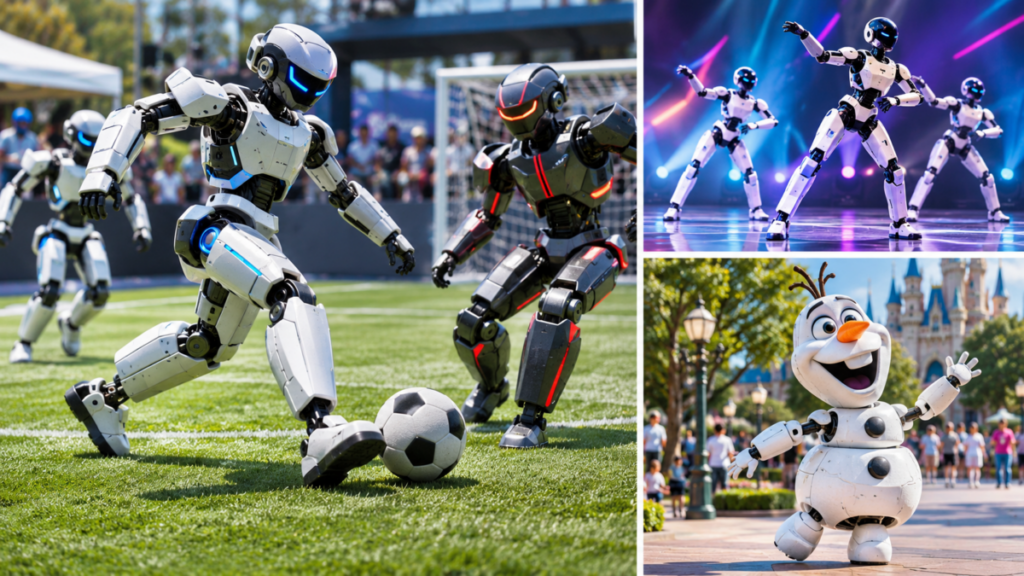
Getting a humanoid robot to perform a backflip requires considerable engineering. Getting an entire formation of robots to dance together creates an entirely different challenge, with dozens of mechanical joints in each machine moving in carefully coordinated sequences.
In July 2026, two German humanoid robot teams competed in the first full eleven-a-side soccer match in Incheon, South Korea. The Bremen team won 4–0, marking a step toward RoboCup’s long-standing ambition of developing a robotic team capable of defeating the human World Cup champions by 2050.
Soccer presents challenges that a choreographed performance does not. While maintaining its balance, each machine must follow the ball and respond to other players moving around the field. Even a relatively simple pass requires cooperation between independently operating robots.
Disney Imagineering has taken entertainment robotics in another direction, developing a walking version of Olaf from Frozen. Considerable engineering has gone into reproducing the snowman’s distinctive movements and gestures, giving a mechanical creation something of the personality audiences recognize from the animated films.
Robots That Learn by Watching Us

Teaching a robot to fold a towel is considerably more complicated than programming a machine to move a rigid object between two locations. Fabric changes shape every time it is handled. Engineers cannot simply prescribe a fixed sequence of movements and expect it to work under every circumstance.
An updated robotics AI model introduced by Google DeepMind in November 2026 was evaluated across more than 200 physical tasks, including delicate activities such as handling food with tongs and untying ribbons. In selected tests involving physical obstacles, the updated system improved safe task completion by 33%, demonstrating progress in how machines adapt their movements to surrounding conditions.
One method of collecting training material involves people wearing cameras while going about ordinary activities. Recorded from the person’s perspective, the footage shows how people approach unfamiliar objects and position their hands while working with tools, providing examples that robots can use to learn physical movements.
Combined with information from cameras and tactile sensors, these demonstrations allow machines to practice activities for themselves. Learning to handle one kitchen utensil could eventually give a robot much of the knowledge needed to operate another.
Robots Made From Living Tissue
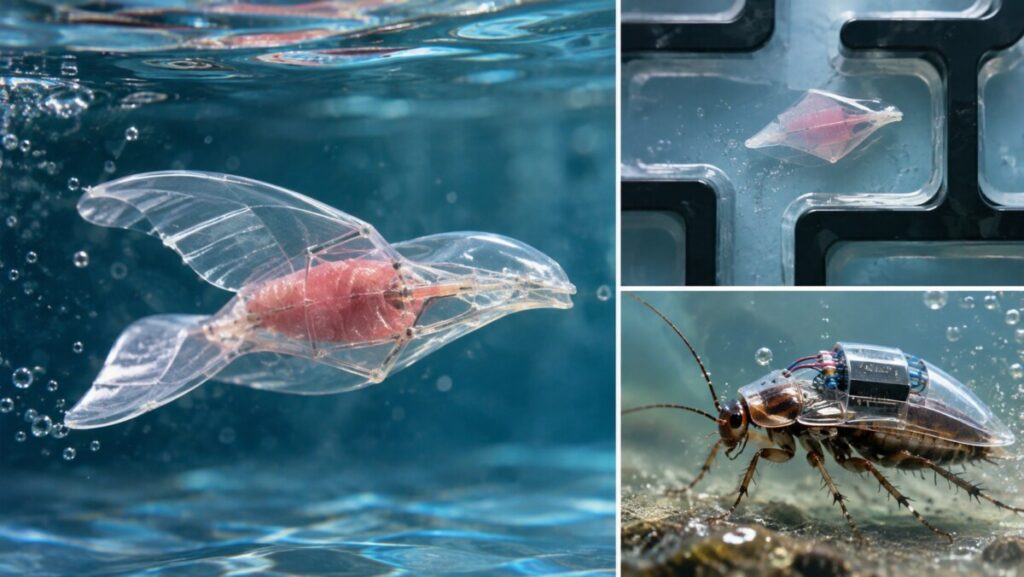
A thin robotic swimmer developed at MIT moves through water using living muscle cells. Exposed to pulses of light, the muscles contract, generating the motion that propels the machine and allowing researchers to guide it around obstacles.
Biohybrid robotics brings together biological materials and artificial structures. In Switzerland, researchers demonstrated miniature muscle-powered machines in 2026 capable of swimming and grasping objects. Their engineered muscles achieved up to eleven times the range of motion of earlier designs containing comparable amounts of muscle tissue. One walking version traveled 6.2 millimeters per second, an impressive pace relative to its miniature body.
Living components introduce unfamiliar engineering problems. Muscles require nutrients and oxygen, creating complications that do not ordinarily arise when building a conventional electric motor.
Other researchers have equipped electronically controlled cockroaches with miniature diving suits, enabling them to remain underwater for up to three hours. Rather than recreating biological capabilities through mechanical engineering, these experiments incorporate capabilities that nature has already developed.
Robots That Can Transform and Assemble Themselves
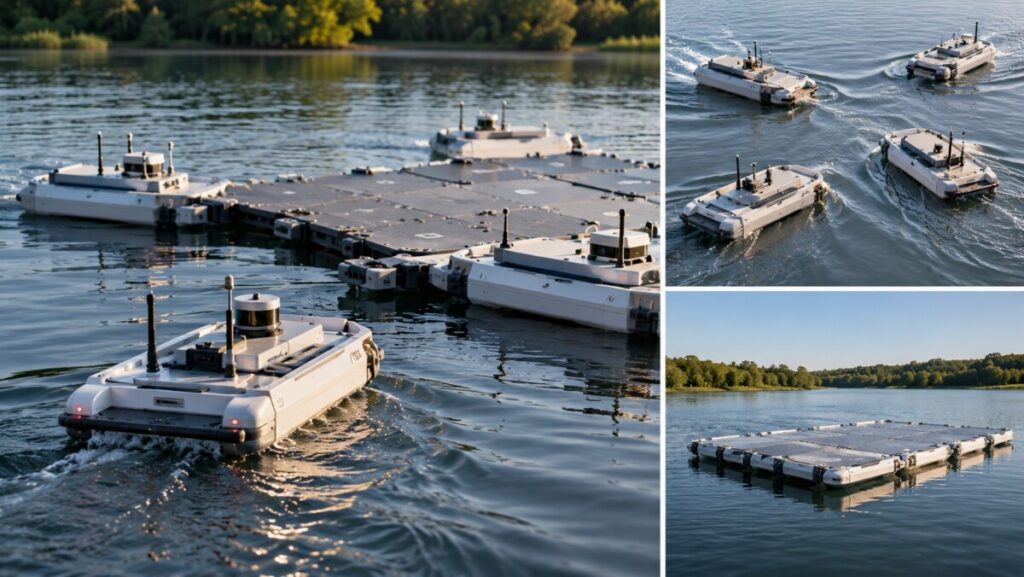
Imagine a collection of small robots arriving independently at a location, joining together to form a useful structure and separating again when their work is finished. Researchers have demonstrated something remarkably similar on water.
FloatForm uses miniature robotic boats measuring approximately 21 centimeters across. Developed in 2026, each independently propelled vessel relies on sensors to navigate and magnetic connectors to attach itself to neighboring machines. Researchers demonstrated eight vessels working together as a connected, moving assembly.
The design draws inspiration from fire ants, which survive floods by linking their bodies to form floating rafts. Larger versions of the technology could provide temporary platforms during floods or serve as adaptable waterfront structures, although the engineering remains experimental.
The boats do not lose their ability to move once connected. An assembled group can travel across the water as a single structure, separate and rearrange itself into an entirely different configuration.
Robots Entering Our Homes and Everyday Lives
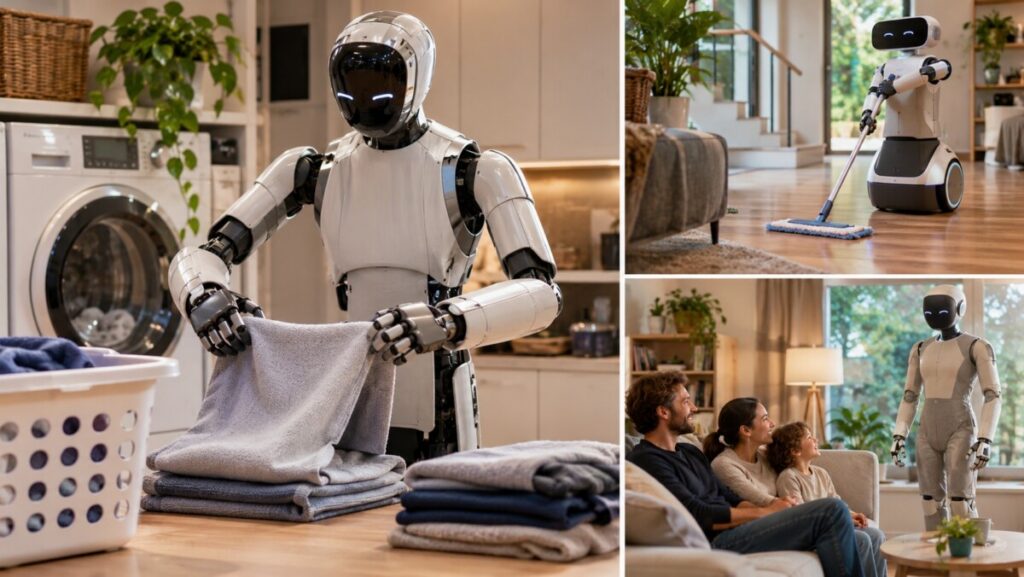
Spend a few minutes considering the physical movements involved in putting away groceries or tidying an untidy room. Objects vary enormously in shape and weight, and rarely occupy precisely the same location twice. These are the conditions under which household robots are being designed to operate.
In September 2026, DYNA Robotics introduced a two-armed, wheeled machine designed to perform commercial laundry workflows. A developer demonstration showed the robot working with appliances, folding tables and storage shelves during an hour-long sequence of activities.
Specialized kitchen robots are already making sushi and preparing drinks. Machines can even serve ice cream, although managing an entire kitchen demands considerably more adaptability than operating a single piece of equipment.
Household robots such as NEO are designed to perform a wider variety of household tasks. Its developer introduced an early-access purchase price of $20,000 or a subscription of $499 per month, illustrating how expensive general-purpose domestic robotics remains. Some unfamiliar tasks still require remote human assistance, but developers are working toward machines capable of managing more household activities independently.
Robots Farming With Lasers and Flying Fruit Pickers
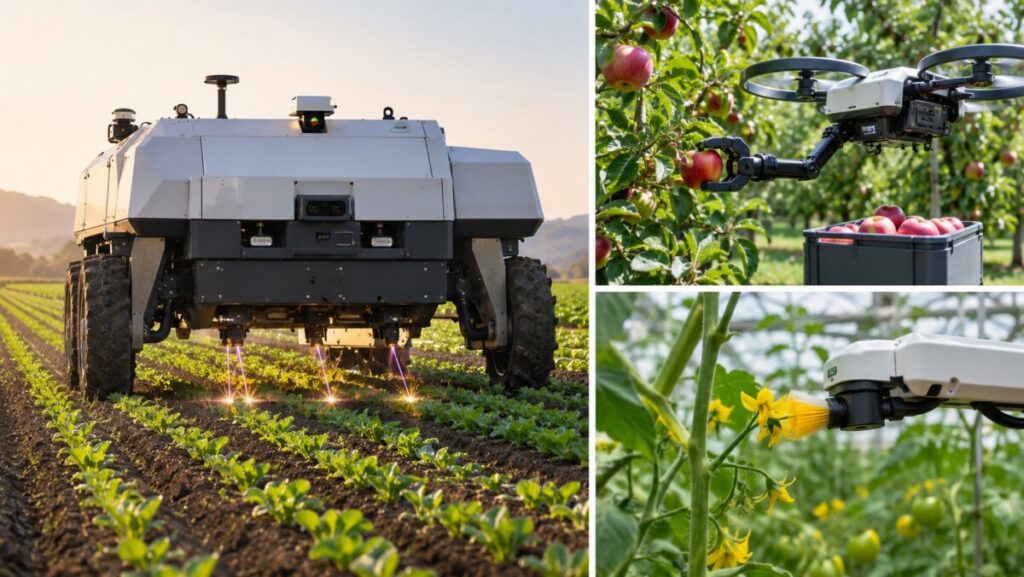
A machine travels slowly across a field, examining the plants beneath it. Upon identifying a weed, it directs a concentrated laser beam toward the plant’s growing point, targeting unwanted vegetation while avoiding nearby crops.
Manufacturers of commercial laser-weeding equipment report treatment capacities exceeding 5,000 weeds per minute. In a German carrot-field experiment, researchers achieved a 95% success rate among targeted weeds. Across the field, weed reduction reached approximately 76% because some plants escaped detection.
In orchards, small flying robots maneuver between branches, locating individual fruits with cameras before removing them from trees using specialized picking mechanisms. Each fruit presents a slightly different harvesting problem.
Robots are even taking on duties ordinarily performed by insects. Inside commercial tomato greenhouses, machines identify flowers ready for pollination and direct pulses of air toward them, reproducing the vibrations normally generated by bumblebees. Commercial greenhouse trials have reported tomato-yield improvements of 2–6% compared with conventional pollination methods, although results vary according to growing conditions.
Robots Operating Inside the Human Body
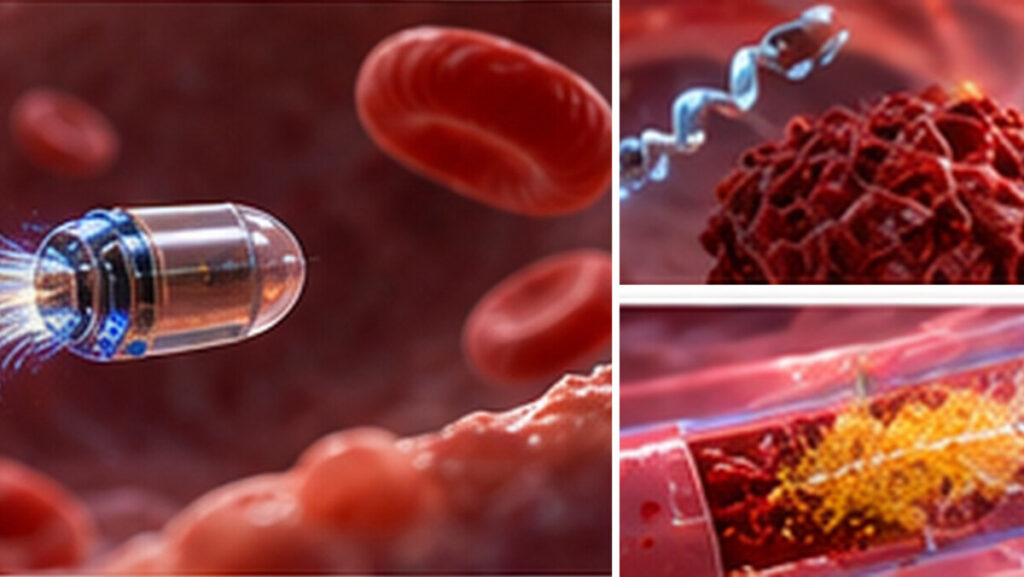
A blood clot can restrict circulation so severely that the medication intended to dissolve it has difficulty reaching the obstruction. Researchers are testing microscopic robots to overcome this problem, moving medication through blood vessels toward areas where circulation has been interrupted.
In November 2026, researchers in Switzerland demonstrated robots made from a gel containing magnetic nanoparticles. At approximately eight micrometers in length, each machine is roughly the size of a human red blood cell.
Controlled by a magnetic field generated outside the body, the robots advance along the vessel wall in a succession of tiny somersaults. Their rotations disturb the surrounding fluid, carrying medication toward the obstruction.
Laboratory experiments found that robotic assistance enabled medication to dissolve blood clots six times faster than medication alone. In experiments involving live pigs, the area of restored blood flow after 30 minutes was twice as large with robotic assistance. The machines remain experimental and have yet to be tested in human patients.
Robotic Suits That Help People Walk Again
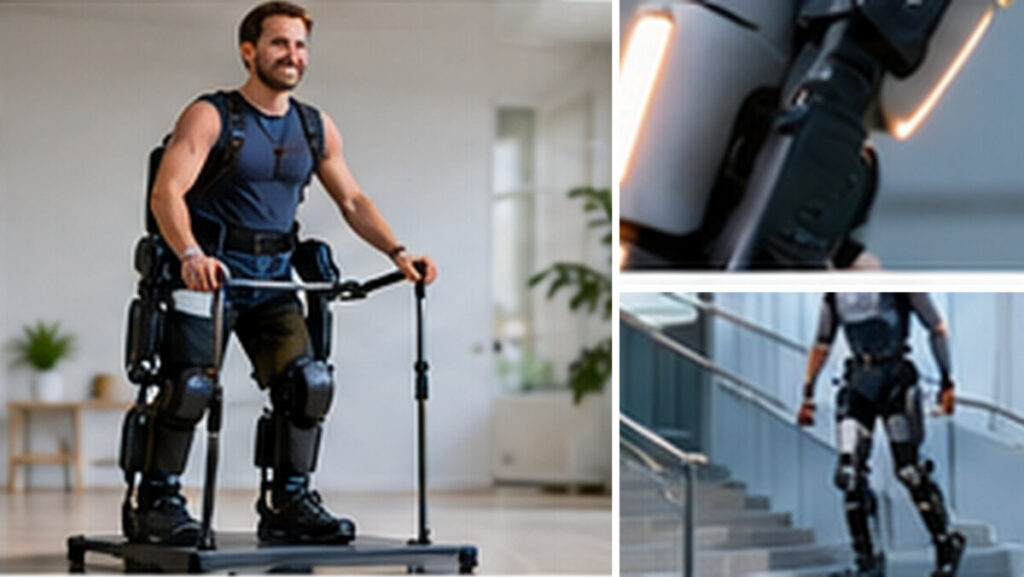
For people with certain spinal cord injuries, robotic technology offers a very personal application. Worn around the body, powered exoskeletons use sensors and motorized joints to support standing and walking.
Maintaining balance has traditionally required many users to rely on crutches or other walking aids. Even someone capable of walking with robotic assistance may have difficulty carrying an object or opening a door.
In August 2026, the U.S. Food and Drug Administration cleared the Eve personal exoskeleton, followed by its commercial introduction in September. The device enables eligible adults with spinal cord injuries to walk and perform everyday activities without conventional walking aids, using computerized balance control. Individualized fitting, training and supervision from a specially trained companion remain necessary.
These machines complement rather than replace wheelchairs. For some users, their greatest achievement may be something as ordinary as standing at a kitchen counter again.
Robots Protecting People and Restoring Nature
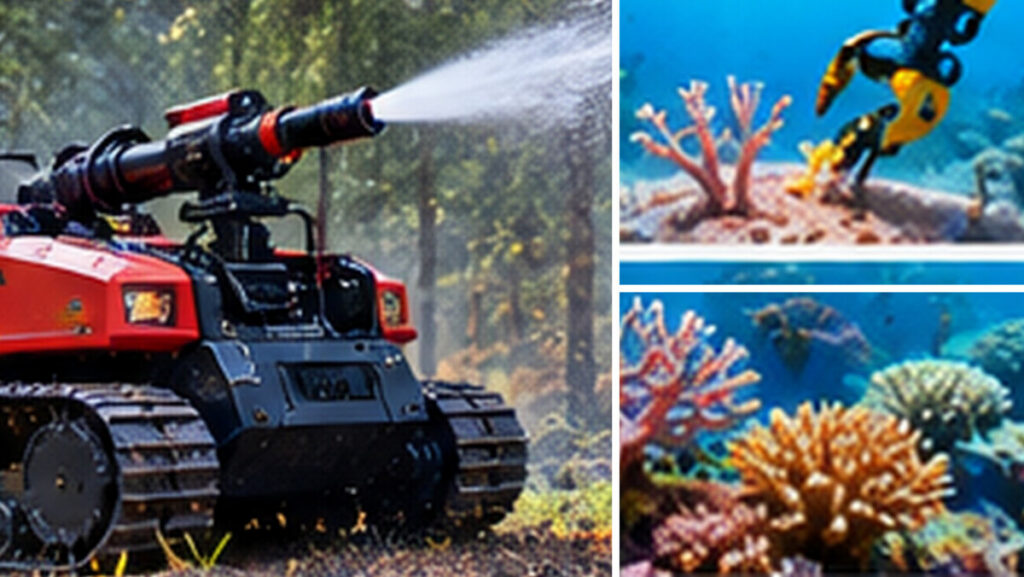
In February 2026, South Korea received four remotely operated firefighting robots designed to enter hazardous environments ahead of firefighters. Their protective cooling systems are engineered to withstand external temperatures reaching 800°C, while onboard cameras give operators a view of conditions inside.
Equipped with water cannons, the robots can begin suppressing fires while firefighters remain at a safer distance. Where visibility is poor and entry particularly dangerous, remote operation provides another way to assess conditions and respond before exposing emergency personnel.
In Western Australia, robots are helping researchers restore damaged coral reefs. Coral Maker’s manufacturing process has the capacity to produce up to 10,000 artificial coral skeletons daily, each designed to support several living fragments. Robotic handling could expand restoration beyond small, labor-intensive projects, although manufacturing capacity does not necessarily translate into successful reef recovery.
Another underwater robot, developed in the United States, actually listens for marine life. During research conducted by Woods Hole Oceanographic Institution, it helped identify an underwater reef feature where fish densities were nearly 25 times higher than in surrounding areas. By following biological sounds, the machine directed scientists toward an unusually active part of the underwater environment.
Robots Exploring and Working Beyond Earth
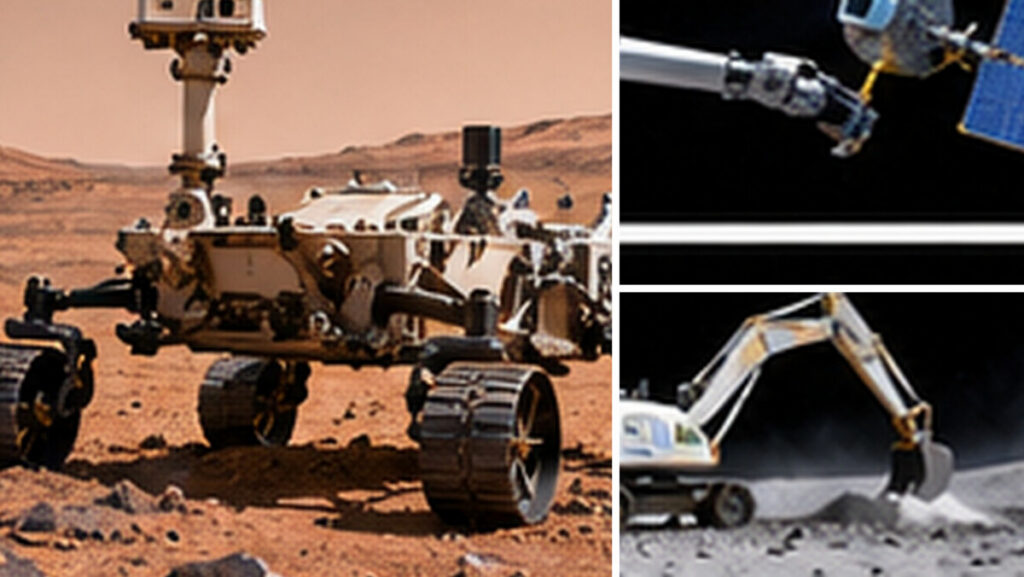
On Mars, even determining precisely where a vehicle is located presents a considerable engineering challenge. There are no GPS satellites, and obtaining an updated position from Earth can interrupt a rover’s journey for a day or more.
In February 2026, NASA’s Perseverance rover independently established its location by comparing photographs of the surrounding landscape with images taken from orbit. The machine accomplished this in approximately two minutes, determining its position to within 25 centimeters.
Closer to Earth, a spacecraft equipped with two robotic arms launched in July on a satellite-servicing mission. Among its intended tasks is attaching small propulsion modules, essentially jetpacks for satellites, some 22,000 miles above Earth. The modules are designed to extend the operational lives of existing satellites by six years or more, potentially avoiding the expense of replacing functioning spacecraft simply because their station-keeping fuel is exhausted.
Engineers are also developing robotic excavators and construction systems capable of working with lunar soil. The first construction crews on another world may well be machines, preparing the ground before their human counterparts arrive.
Keywords: Robotics, Artificial Intelligence, Automation, Biohybrid Robotics, Embodied Intelligence